Sapa Paragliding · Safety
No Rush in Paragliding: A Safe & Systematic P1 – P2 Roadmap
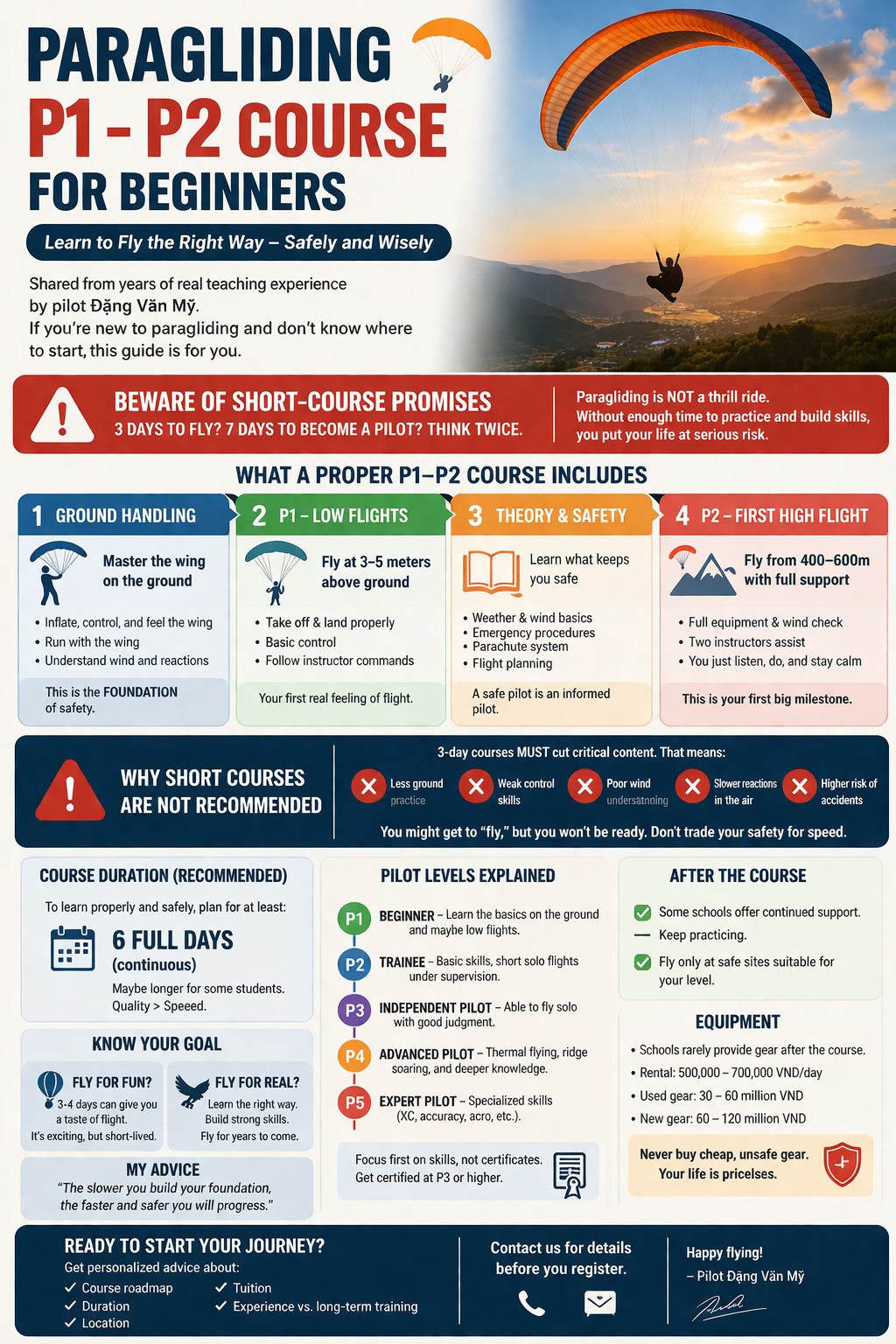
Pilot Đặng Văn Mỹ shares his years of teaching experience. This article helps beginners understand how to learn to fly safely, effectively, and correctly.

Paragliding is an extreme sport, so learning must follow a structured path, building a solid foundation to become a professional pilot. Even for those seeking just the thrill of flying, following proper training is essential to ensure a safe, enjoyable, and memorable experience.
🤔 Beginners often do not know where to start
✔️ Many people get overwhelmed by online information: learn in 3–7 days, get an international certificate, fly solo after the course… ⚠️ Warning: A too-short training period is insufficient to fully grasp basic skills. Fast-track learning increases the risk of accidents and does not ensure proper reflexes or wing control. ✔️ The important thing is not the advertising, but what you learn, who you learn from, and whether you have enough time to master the skills.
📘 What does a basic paragliding course actually look like?
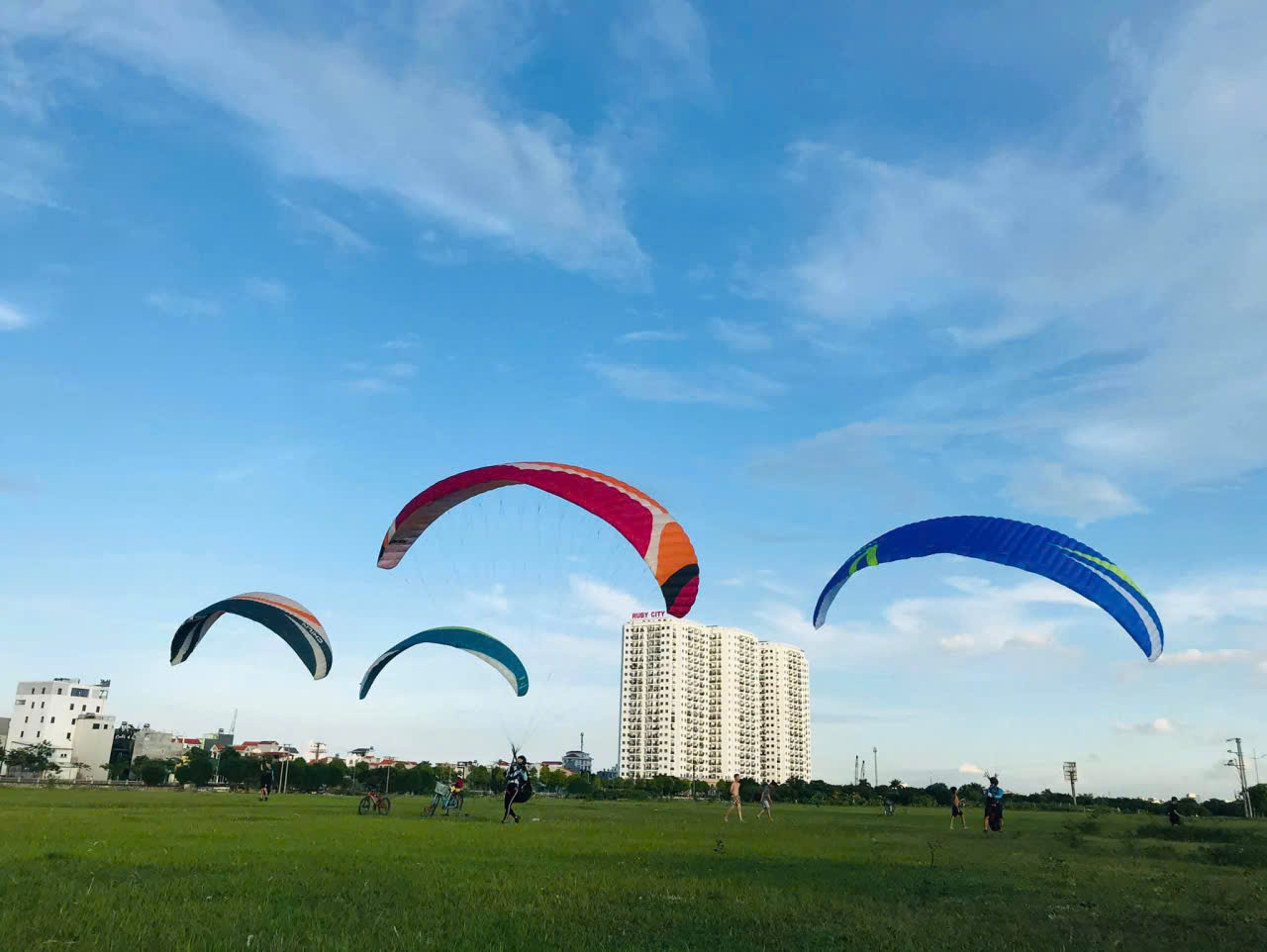
If properly trained, a beginner paragliding course usually follows four main steps: The foundation of safety. Students learn: ✔️ Setting up and controlling the wing ✔️ Running while controlling the wing ✔️ Feeling the wing’s reaction to wind Practice depends on your focus, fitness, and diligence. The better you train on the ground, the safer you’ll be in the air. 🟩 Step 2 – P1 Level: Low Flights Practice flying at 3–5 meters to get used to: ✔️ Leaving the ground ✔️ Initial control reflexes ✔️ Proper take-off and landing ✔️ Following instructor commands Low flights are a transition, not full flights yet. 🟨 Step 3 – Theory & Safety Skills Learn essential knowledge for safe flying: ✔️ Basic theory, wind, and weather ✔️ Reading flying conditions ✔️ Reserve parachute use ✔️ Handling unusual situations ✔️ Flight planning A safe pilot knows when to fly and when not to. 🟥 Step 4 – P2 Level: High Flights First high flight from 400–600 meters. Instructors assist with: ✔️ Equipment and wind checks ✔️ Take-off and landing guidance ✔️ Flight monitoring Most important: 🎯 Listen, follow instructions, stay calm.
⏳ So, is three days enough?
This is a question almost everyone asks me. And the honest answer is: ❌ NO – if your goal is to learn properly and thoroughly. Unless you’re a rare “natural,” with excellent fitness, strong intuition, and quick reflexes—able to master each exercise in just half a session—most people need 2–3 days per stage to get familiar, repeat, correct mistakes, and build reflexes. So, if you want to learn correctly, a proper beginner course usually requires: ⏳ at least 6 consecutive days. ❗ What if you only do 3 days? You’ll have to skip content. And skipping means you might get to “fly,” but you won’t fully understand the wing, read the wind properly, develop solid reflexes, or build a strong foundation for future progress. Don’t sacrifice 1–2 days at the start, only to risk unnecessary accidents later. From years of experience, my advice is: “The more thorough your early training, the faster and safer your progress later.”
🎯 Set your learning goals before you start
In my experience, paragliding students usually fall into two types: 🎈 Type 1 – Learning for the experience If you just want to: ✔️ Try flying solo ✔️ Feel take-off and a short flight ✔️ Say “I’ve flown before” …then a 3–4 day course is enough to get that experience. But honestly 😄: this kind of flying is boring. You only hover for a few seconds, barely feel anything, don’t go high or far, and it doesn’t feel satisfying. As I jokingly say: “That’s not really flying, it’s just a little jump 😄.” 🦅 Type 2 – Learning to become a real pilot If you want to: ✔️ Fly safely ✔️ Pursue paragliding long-term ✔️ Make real progress ✔️ Eventually fly freely on your own …then my advice is: learn properly from the start. The reason is simple: Proper training → safer flying Solid foundation → further progress Careful practice → faster skill improvement And here’s my straight talk: 💬 Don’t cut corners early on. If you’re serious about paragliding, invest in: Basic training time Good instructors A structured course A serious learning environment Don’t just pick a cheaper course without checking who your instructor is, because the difference is huge. For example: An instructor who’s never had a wing collapse can’t teach you how to handle one. An instructor who’s never done acrobatics can’t teach complex wing maneuvers. An instructor who hasn’t flown high or far can’t take you to that level later. It sounds blunt, but it’s the truth.
🏅 Paragliding skill levels explained
🟢 P1 – Beginner You start getting familiar with paragliding: ✔️ Fold and set up the wing ✔️ Control the wing on the ground ✔️ May or may not fly low Think of P1 as “falling in love with paragliding”—just getting started, not yet a real pilot. 🔵 P2 – Trainee Pilot You have the basics to start real flights: ✔️ Minimum 30 hours of ground practice ✔️ Basic wind knowledge ✔️ Basic wing control ✔️ Take off / land with instructor guidance ✔️ Fly solo, but not fully independently 🎓 P2 = Trainee Pilot, still under direct supervision. 🟣 P3 – New Pilot You can now: ✔️ Prepare and make basic flight decisions ✔️ Control flights safely You can: Fly at more sites Reduce instructor supervision Start real pilot training Typically requires 50–100 flights or 15–30 flight hours, plus skills like 360° turns, pitching, big ears, and solid theory. 🟠 P4 – Intermediate Pilot Essential for true free flying: ✔️ Thermal and ridge soaring ✔️ Rapid descent ✔️ Handle basic wing collapses ✔️ Advanced meteorology and flight techniques ✔️ Usually 100+ flight hours 🌤️ P4 = when you truly “live” paragliding. 🔴 P5 – Advanced Pilot Specialized level: ✔️ Cross-country flights ✔️ Precision landings ✔️ Acrobatics Typically requires ~200 flight hours and at least 2 years of serious practice.
🤝 Will I get ongoing support after the course?
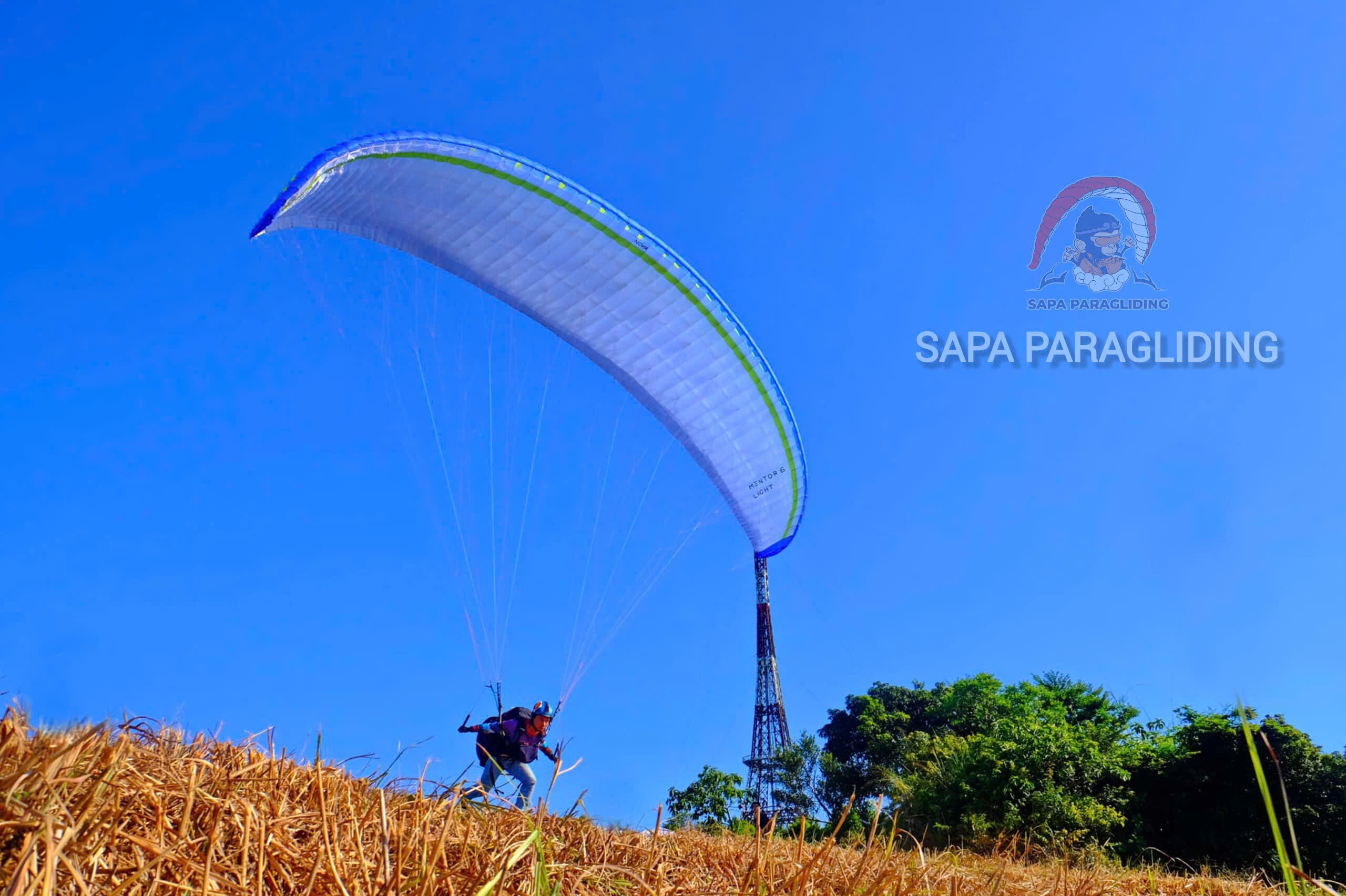
✔️ Ongoing Support: Not all schools provide follow-up, but some instructors will help with your first flights, adjust your skills, and assess flying conditions. ✔️ Flying Sites: Only fly at safe locations suitable for your skill level. ✔️ Equipment: Usually, you cannot use the school’s gear. You can rent or buy your own wing (used: 30–60 million VND, new: 60–120 million VND). Note: Don’t chase cheap options—safety is more important.
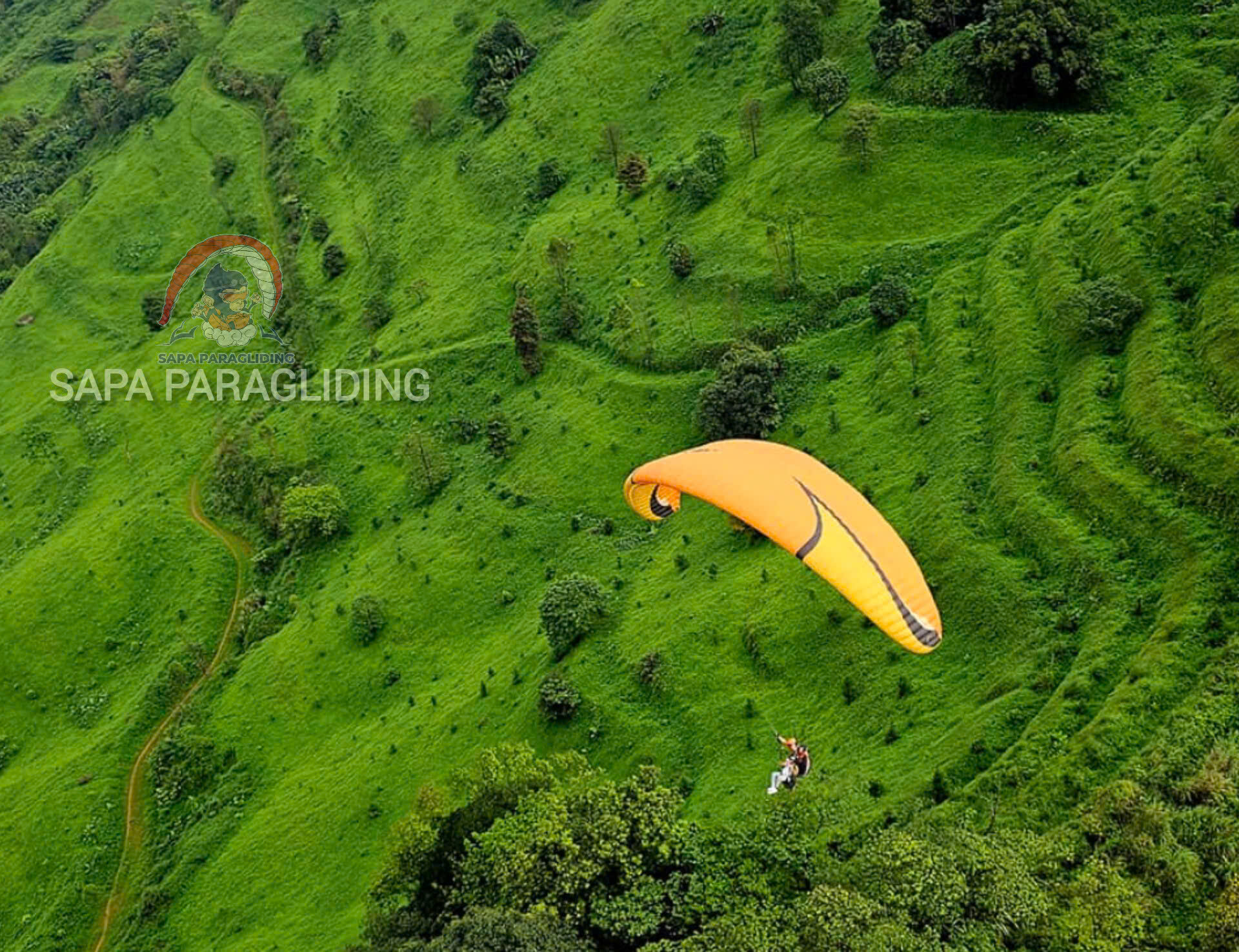
🧭 If you are a beginner, here is how I suggest you learn
If you ask me for my honest advice, here’s what I’d say: ✅ If you want to pursue paragliding long-term, follow these steps: ✔️ Choose an instructor with real, hands-on experience ✔️ Pick a school that teaches properly without skipping content ✔️ Dedicate enough time to build a solid foundation ✔️ Don’t focus only on “how many days until I can fly” ✔️ Don’t rush for certificates ✔️ Prioritize safety, skills, and real reflexes 🧭 In paragliding, those who go far aren’t the fastest learners—they’re the ones with the strongest foundation.
If you’re truly serious about paragliding, my sincerest advice is: Take it slow, but learn thoroughly. In paragliding, those who go far aren’t the ones in a hurry—they’re the ones who build the strongest foundation from day one. If you learn properly, you won’t just fly—you’ll fly safely, skillfully, and for many years to come.
— Chief Pilot Dang Van My