Sapa Paragliding · Safety
Flight Theory: Why Does a Paraglider Wing Fly?
This article explains the fundamentals of paragliding flight, including lift, drag, angle of attack, and how the wing generates force to maintain stable flight in the air.

For any flying device to stay in the air, it must generate enough upward force (lift) to support both the weight of the aircraft and the pilot. So how does a non-motorized aircraft like a paraglider create this lift? It comes from the wing’s structure, which generates an upward force as it moves through the air at a slight angle. The speed of the wing moving through the air is referred to as “airspeed,” while the slight angle between the wing and the airflow is called the angle of attack.
💨 Airspeed
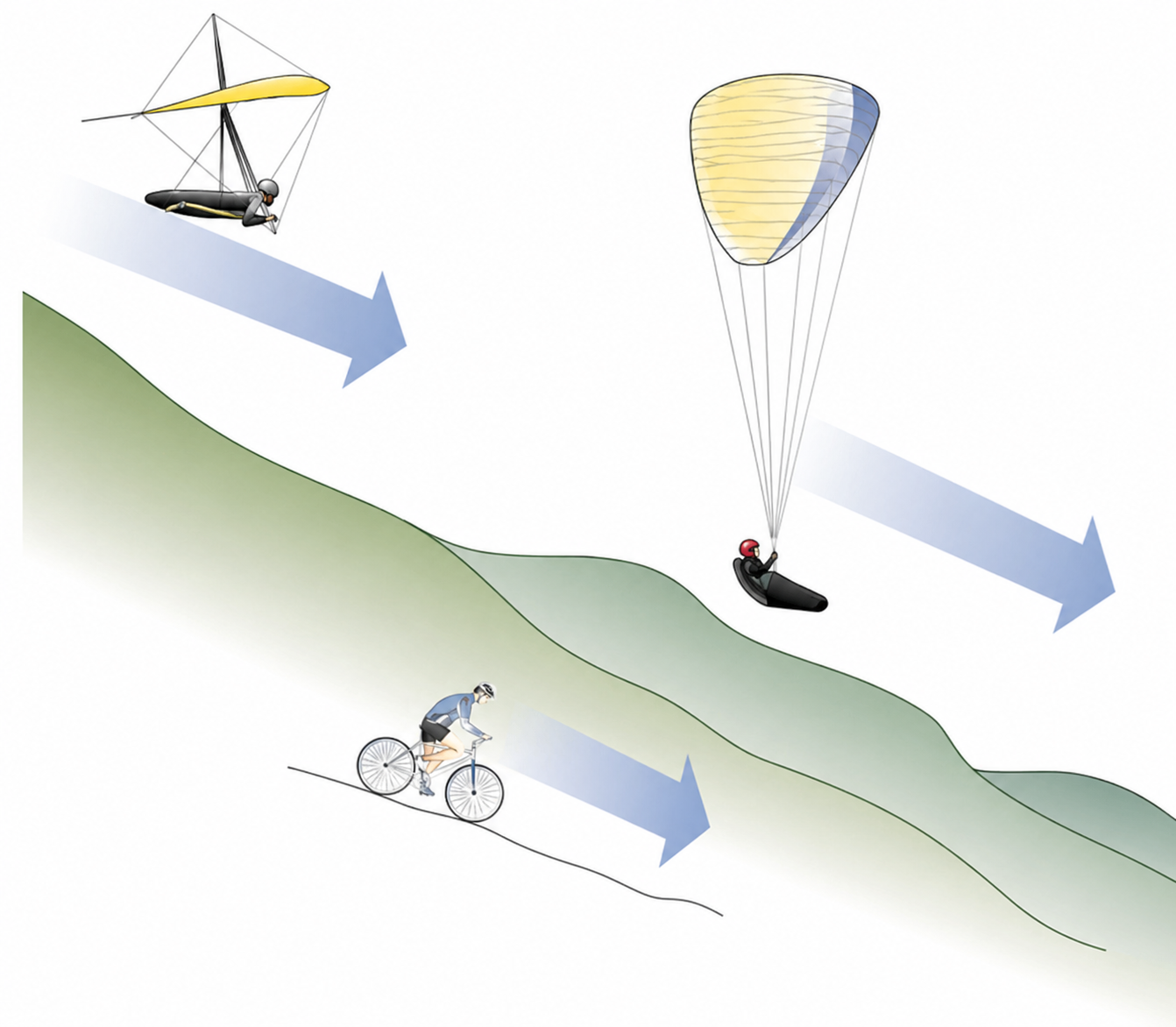
After takeoff, the paraglider wing maintains its airspeed by gliding forward and slightly downward through the air. It is driven by gravity, much like a bicycle coasting downhill.
⚖️ Forces acting on the wing
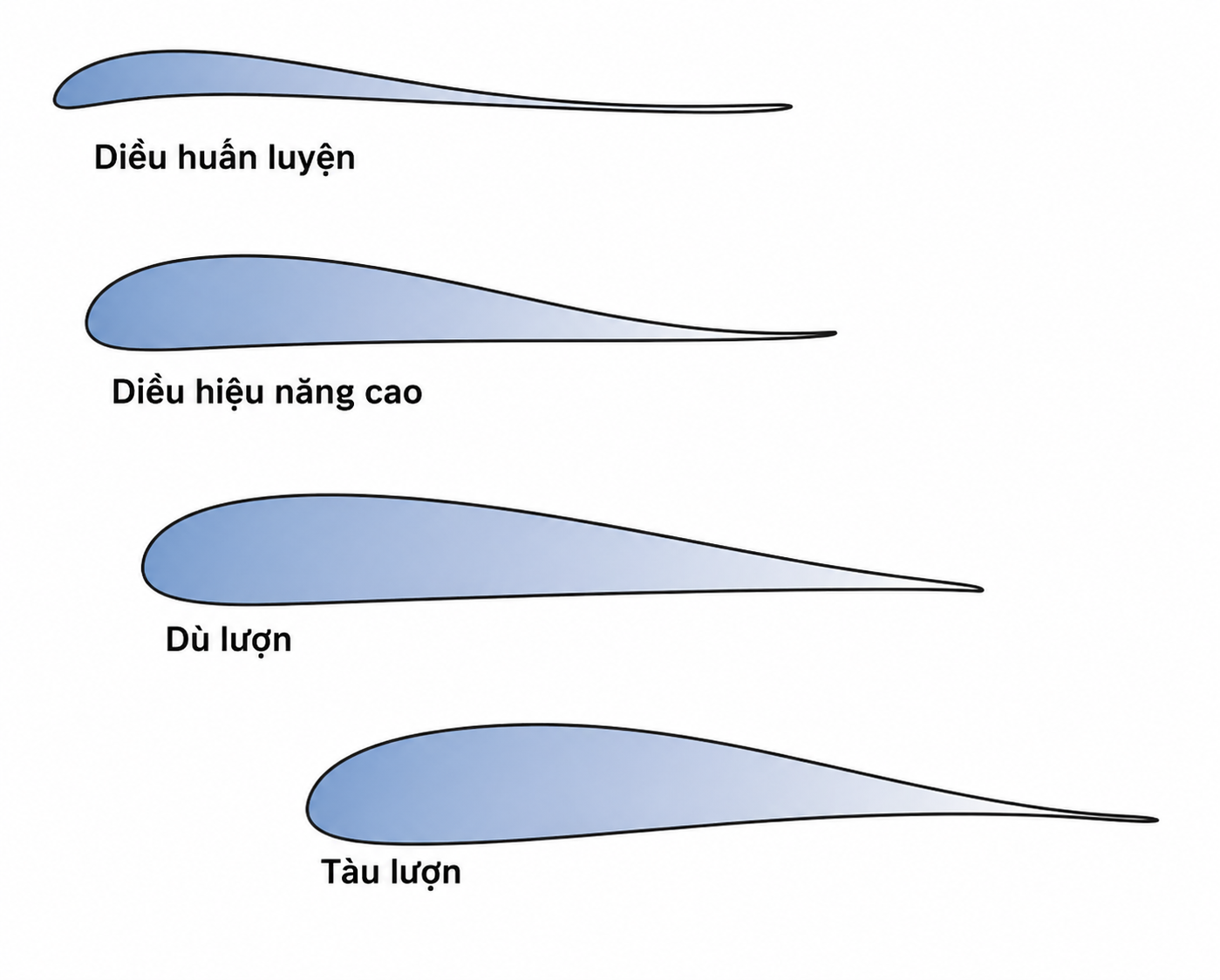
Any relatively flat surface placed in an airflow and set at a certain positive angle to the airflow (angle of attack) will generate an upward force. This happens because air is compressed under the wing, increasing pressure below, while the pressure above the wing decreases. In the diagram below, the force vectors are shown: the component acting perpendicular (90°) to the direction of motion is called lift, while the component acting opposite (180°) to the direction of motion is called drag. A rough or flat surface is not an ideal choice for wing design. The amount of lift it produces relative to drag (the L/D ratio – Lift-to-Drag ratio) drops significantly with even small changes around the optimal angle of attack. A wing profile with a curved upper surface (airfoil shape) performs much better. As air flows over the curved top surface, it accelerates, which significantly reduces pressure above the wing. This design also provides a more stable performance with a less critical angle of attack. That is why paragliders and hang gliders are designed with this shape. In fact, almost all aircraft wings—from gliders to large jet airplanes—use this aerodynamic profile.
⚠️ Stall
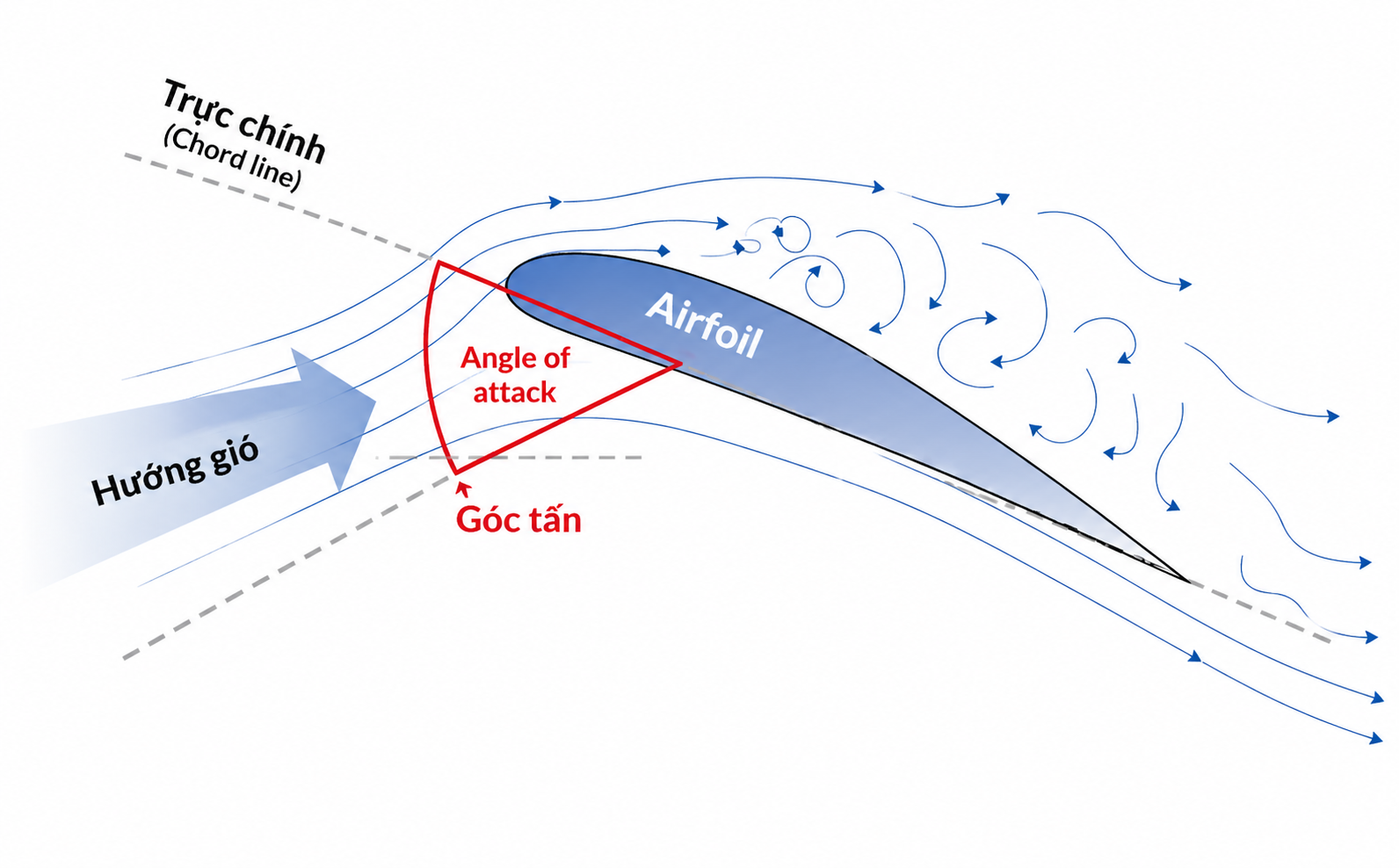
For a paraglider, airspeed is controlled by pulling down the trailing edge of the wing, which increases the angle of attack. However, if the airspeed is reduced too much (for example, when trying to slow down), the angle of attack can exceed its critical limit. At this point, the airflow that previously moved smoothly over the wing surface breaks down, creating turbulence and vortices. This disrupts the pressure difference between the upper and lower surfaces of the wing, causing a loss of lift. This condition is known as a stall.
🌀 The effects of a stall
For paragliding, each wing behaves differently when it enters a stall, and it can lead to serious consequences—especially if it occurs close to the ground. Recovering from a stall requires proper skills and sufficient altitude to handle the situation safely. Therefore, when flying a paraglider, it is important to avoid actions that may lead to a stall. This includes avoiding excessive brake input, not holding the brakes too long, and staying away from turbulent air that could trigger a stall.
🛑 Drag force
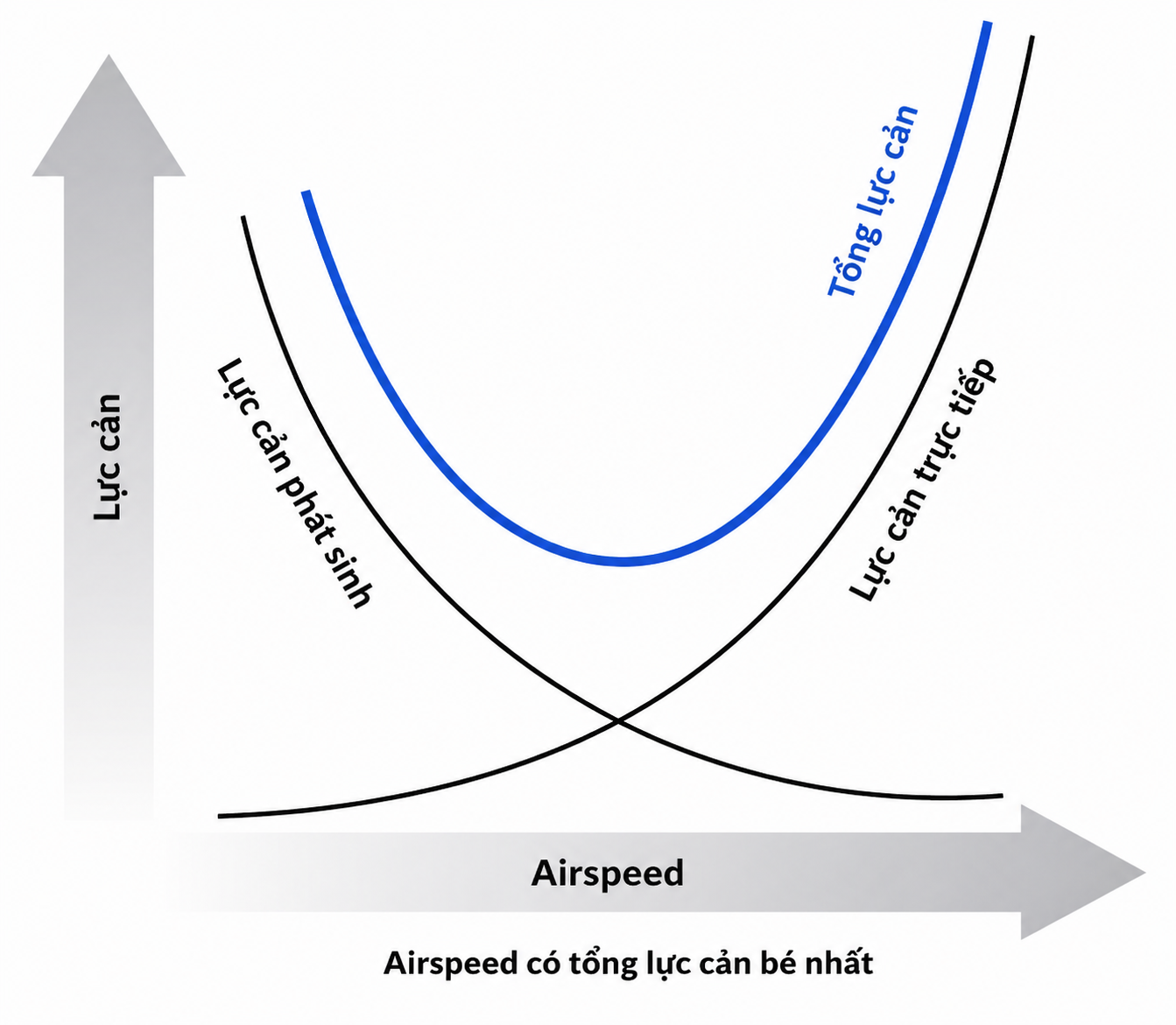
Anything moving through the air disturbs it, creating resistance that opposes motion. This is known as drag. The total drag acting on an aircraft is made up of two main components: parasitic drag and induced drag. Parasitic drag is generated when parts of the paraglider—such as the leading edge of the wing, the pilot, harness, lines, and other components—directly collide with the air, along with surface friction. It is called “parasitic” because it results from direct interaction between solid surfaces and the airflow. This type of drag increases rapidly as airspeed increases. Induced drag, on the other hand, is unavoidable and is directly related to the generation of lift. It is largely caused by vortices formed at the wingtips, representing energy lost in the disturbed airflow behind the wing. Induced drag decreases as speed increases, but becomes significant at lower speeds (when the angle of attack is high). As a result, there is a specific airspeed at which the total drag is minimized. Flying at this speed provides the best glide angle, also known as the best glide speed or maximum glide ratio.
📐 Glide ratio
Glide ratio is a measure of a paraglider wing’s performance. It describes the relationship between the horizontal distance traveled and the altitude lost. For example, a wing with a glide ratio of 10:1 can travel 100 meters forward while losing 10 meters in height. All paragliders are designed to fly at a specific speed that provides the best glide ratio. (The glide ratio is directly related to the lift-to-drag ratio (L/D).)
⬇️ Sink rate
Sink rate is the rate at which a paraglider loses altitude in still air, typically measured in meters per second (m/s). In general, the sink rate is lowest when flying at a speed slightly slower than the best glide speed. This speed is known as the minimum sink speed. (Note: all non-motorized aircraft lose altitude in calm air. To stay airborne longer or gain height, pilots must find rising air currents—called thermals—that have a vertical speed greater than the sink rate.)
🎯 Force balance
When a paraglider wing is in stable flight, three main forces act on it: lift, drag, and gravity. These forces are balanced with each other.
🪶 Stability
While pilots need to control the wing to perform maneuvers in the air, the paraglider must also have a certain level of stability. This means the wing should naturally tend to maintain a normal, steady flight even with minimal pilot input. Training wings are designed with a high level of stability to reduce errors and make it easier for beginners to learn. As a result, during your first flights, you may not immediately notice how important this stability really is.