
Sapa Paragliding · Conseils
Cloud Hunting in Sapa: A Pilot's Guide to Timing
How Sapa's cloud seas form, the three signs the night before, the best hours, where to stand, and how to read a forecast so you don't miss the morning
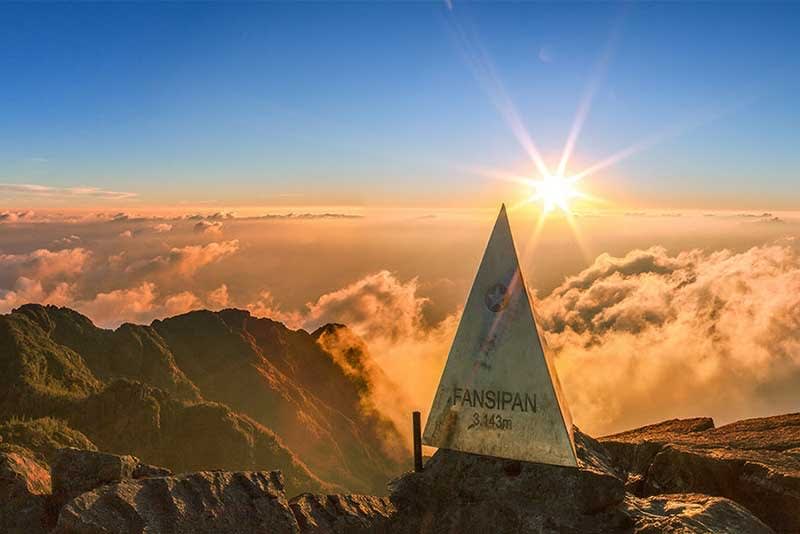
Every morning in Sapa I am up early looking at the sky, not to take photos but to know whether we can fly that day. After enough mornings you start to see the pattern, and you realise a sea of cloud is not the lottery most people think it is
Visitors book a room a month ahead and then simply hope for cloud on the morning they arrive. Pilots work the other way round: we have to judge how high that layer sits, how thick it is and what time it will clear, because the whole flying day depends on it
This article is simply how the Sapa Paragliding pilot team reads the Sapa sky: how the cloud sea forms, the three signs on the evening before, the best hours, where to stand so you end up above the cloud instead of inside it, and how to read a forecast so you do not get up at four in the morning for nothing
☁️ What Sapa cloud sea actually is
Most people assume the cloud sea is high cloud sinking down. It is the opposite: a very low stratus layer sitting inside the valley, with a flat top, so from anywhere higher you look down on it like water
It is born on a clear, windless night. The ground radiates its heat away, the air at the valley floor cools to its dew point, and the moisture rising off the streams and the Muong Hoa terraces condenses into fog and then into cloud
Cold air is heavy, so it settles and stays at the bottom of the valley while a warmer layer sits on top of it like a lid. Pilots call this an inversion, and that lid is exactly what gives the cloud its sharp, level surface
Which gives you the single most important rule in this article: cloud hunting is not about reaching a pretty spot, it is about standing higher than the top of that layer. In Sapa the top usually sits somewhere around 1,300–1,700m, and below it you are simply inside the fog with nothing to see
🌙 Three signs on the evening before
The decision gets made the evening before, around nine or ten at night, not when the alarm goes off. There are three things to look at, and when all three line up the next morning is close to certain
The first sign is the sky clearing before dark. The afternoon brightens, the cloud thins out, and by evening you can see stars, which is what lets the ground lose its heat overnight
If at nine or ten you look up and see no stars at all, just a closed grey sheet, the odds for the morning drop sharply. That upper layer traps the heat and the valley floor never gets cold enough to make fog
The second sign is a night that turns properly cold and stays still. The wider the gap between the afternoon and the pre-dawn temperature the thicker the layer, while wind simply stirs it away and nothing settles
Dew soaking the grass and the saddle of a parked bike, or your breath showing in the air, is a good sign. In winter the best mornings usually come just after a cold surge has passed through and the air has dried out again
The third sign is a valley that is still damp. There has to have been rain in the previous day or two, or humidity still high, otherwise there is not enough moisture to condense
The easiest formula to remember is rain the day before, clearing and bright in the afternoon, then a cold still night. When those three come together I barely need to check anything else
The one that fools people is a sky that stays evenly grey all evening and never clears. That is thick cloud covering everything from above, and in the morning you arrive at the viewpoint standing inside it rather than above it
⏰ How a cloud-hunting morning runs, hour by hour
The cloud sea does not hold still. It is thickest while it is still dark, best at the moment the sun touches it, then it clears quickly. This is the rhythm of a typical Sapa morning
- 4:30–5:00am: leave now if you are heading for O Quy Ho pass or Fansipan, the mountain road is dark and often foggy
- 5:30–6:15am: the layer is at its thickest and stillest, the light is deep blue, good for long exposures
- 6:15–7:00am: the sun comes up, the surface turns pink then gold, and this is the best window
- 7:00–8:30am: sunlight reaches the valley floor and the surface starts to tear open
- 8:30–10:00am: the layer thins, lifts and breaks apart, and the peaks come out
- 3:30–5:30pm: cloud gathers on the ridges again, beautiful but a different thing, not a cloud sea
It clears because the sun warms the valley floor, that air starts to rise in columns, and those columns punch through the inversion lid. A few holes are enough for the whole layer to fall apart quickly
Afternoon cloud is a different animal. It forms as wind pushes damp air up the slopes, and while it looks spectacular it sits at eye level rather than spreading out as a flat surface below you
📅 The months when a cloud sea is most likely
The cloud season in Sapa runs from late September through April and peaks between November and February. That is when the air is dry, the nights get properly cold, and cold surges keep arriving and then clearing
October and March to April give fewer mornings but are far more comfortable: milder air, softer light, and no need to get up in biting cold. October in particular is the clearest month of the year, so when a cloud sea does appear it is unusually crisp
From June to August it is rare, and when it happens it is usually after heavy rain has cleared completely overnight. Treat it as a bonus in those months rather than planning a whole trip around it
| Months | Chance of a cloud sea | Dawn temperature | Notes |
|---|---|---|---|
| Nov–Feb | Highest | 3–10°C | Thickest, and common right after a cold surge |
| Sep–Oct | Good | 10–15°C | Season opens, clearest air of the year, comfortable |
| Mar–Apr | Good | 10–16°C | Fewer mornings but mild, with soft light |
| May–Aug | Low | 16–20°C | Only after heavy rain clears completely overnight |
🗺️ Where to stand so you are above the cloud, not in it
There is only one rule: your viewpoint has to be higher than the top of the layer. The photo you saw online was taken on a morning when the cloud sat low, and if it sits two hundred metres higher on your day, that same spot gives you nothing but white fog
A quick way to judge it is to see how far the cloud has swallowed the facing slope: if it only reaches the villages down in the valley the top is still low, but if it is lapping up towards the town you need to go higher
When in doubt, take the highest option you can reach. O Quy Ho and Fansipan rarely fail, simply because they sit well above any valley layer
These are the spots we usually point people to, with their heights so you can compare them against the layer on the day
- Fansipan summit, 3,143m — almost always above the layer, but you are tied to cable car hours
- O Quy Ho pass, around 2,000m — you can drive right to it and stand on the edge of the cloud
- Ham Rong mountain, around 1,800m — inside the town itself, good when you do not want to travel
- Doi Bo and the grass hills around town, around 1,600m — lovely, but it depends on where the top sits that morning
- The paragliding launch at Hang Da village, around 1,500m — looking straight down the Muong Hoa valley
- Cafes on the valley rim, 1,400–1,600m — waiting for the cloud somewhere warm
- Moana Sapa, around 1,400m — a viewing deck looking straight down the valley, good with family
- Ta Van village, around 1,000m — low enough that most mornings you are inside the cloud rather than above it, and it only works when the cloud surface rises
Fansipan is the safest bet for height but you are tied to the cable car timetable, so you often arrive after the best light has gone. If you want sunrise and the cloud sea together, pick somewhere else
O Quy Ho is the most common choice because you can drive straight up and stand right on the edge of the cloud. The trade-off is a dark, foggy stretch of pass, so go slowly and never tailgate
Ham Rong and the grass hills around town suit anyone who does not want to travel far, or who has small children along. On a morning when the layer sits low they are every bit as good, and when it rises you simply miss out
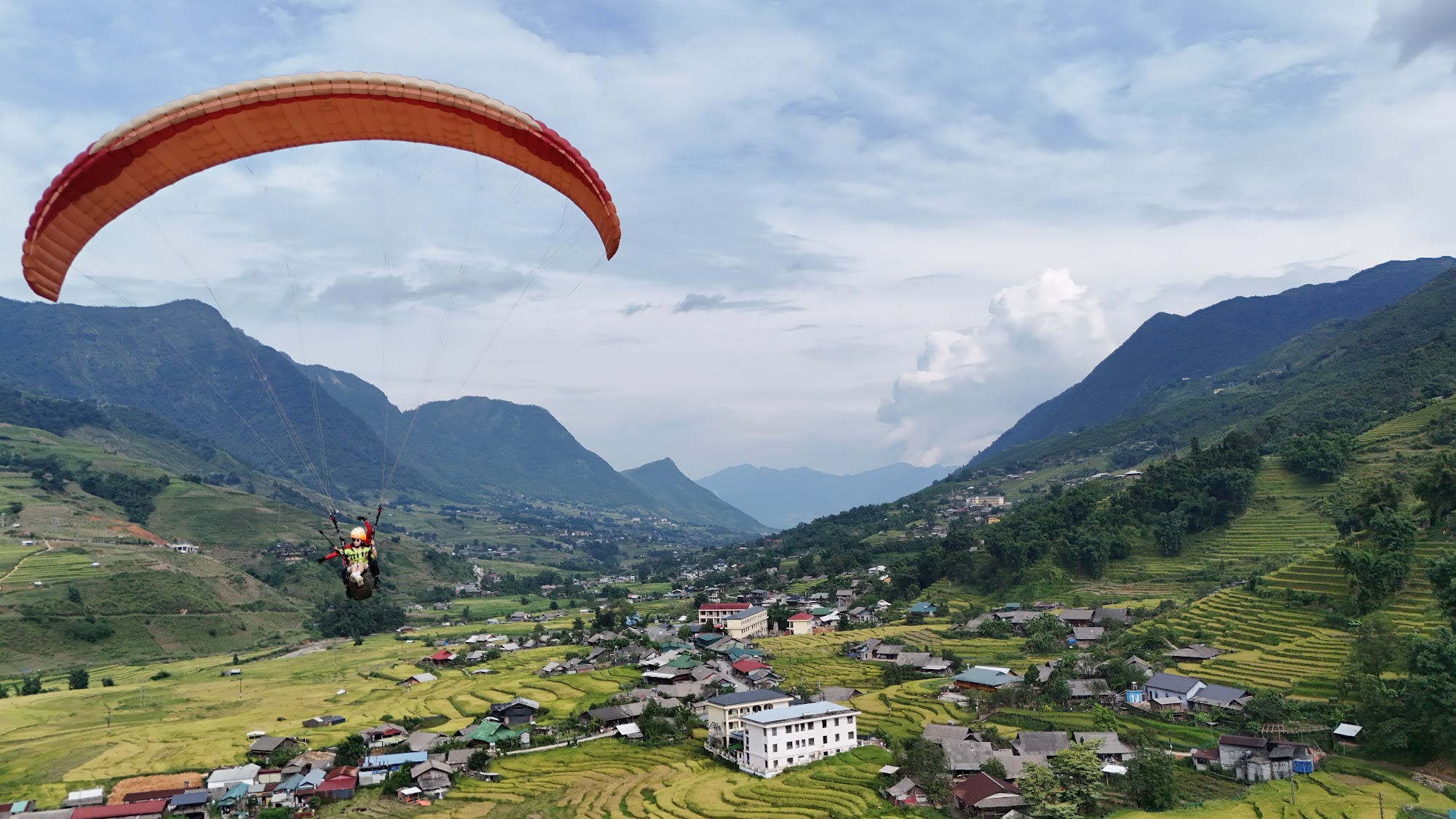
Our launch site at Hang Da village is about fifteen minutes by car from the centre of Sapa and sits at around 1,500m, looking straight down the Muong Hoa valley. What makes it different is that you can watch the cloud and then wait right there until the sky is clear enough to fly
If you are going out in the dark, dress warmer than you think you need: at five in the morning on the pass in winter it can be three to five degrees with wind on top. Gloves, a wool hat, a windproof jacket, and fully charged batteries, because the cold drains them fast
On forecasts, do not just look at the little sun or cloud icon. The four lines worth reading are low cloud, humidity, wind speed near the ground, and the overnight minimum temperature
The pattern you want is plenty of low cloud before dawn, almost nothing higher up, wind under 10 km/h and an overnight low well below the daytime figure. Our 15-day flying forecast lays all of this out hour by hour, so you can check the week ahead before you book a room
Finally, do not hold out for the exact photo you saw. The layer is different every morning, and a few bands of cloud draped across the valley often look better than a sea that runs all the way to the horizon
🪂 The cloud sea seen from a paraglider
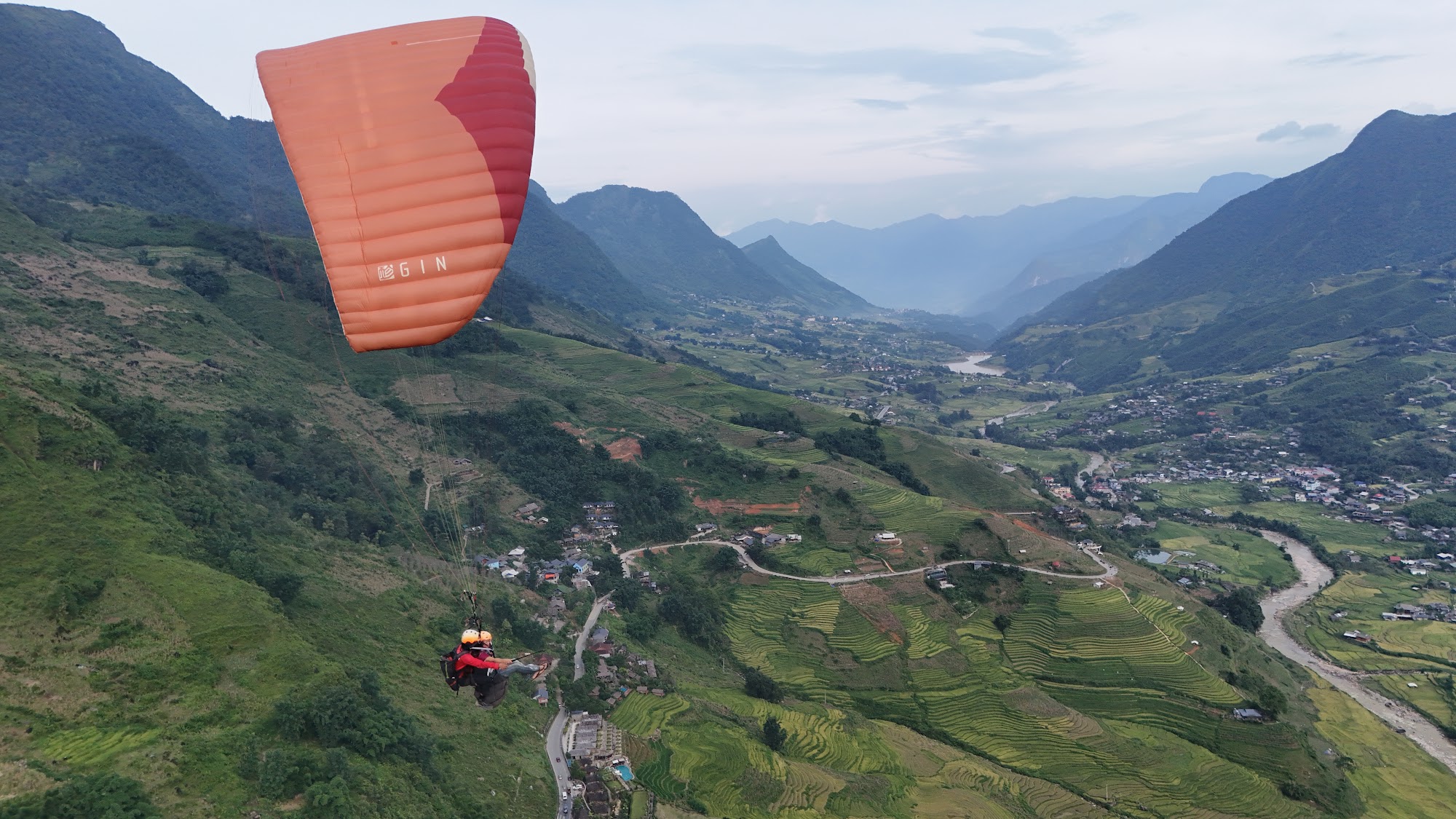
From a viewpoint you see the cloud sea from the side. Under a wing you are properly above it, and the thing passengers remember most is their own shadow running across the surface inside a complete circular rainbow
But let me be honest: at the moment the valley is full of cloud we do not fly. The landing field at Lao Chai sits on the valley floor, and once it is covered the pilot loses sight of it, and flying into cloud is something nobody is allowed to do
So the sensible way to build a morning is this: watch the cloud sea at sunrise from high ground, have breakfast, then fly between nine and eleven once the layer has torn open and only patches are left drifting below. You still get cloud to look at, and the ground stays in sight
A tandem flight with us launches from Hang Da village at around 1,500m and lands at Lao Chai, with the whole experience taking about 90 minutes including transfers and preparation. We fly between 7am and 6pm depending on conditions
If you are coming up to Sapa on a spell that looks promising, message the team the day before. We read the sky every morning, so we will tell you honestly where to go for the cloud and what time flying becomes possible
Sapa Paragliding launches from Hang Da village at around 1,500m, fifteen minutes by car from the centre of Sapa, so mornings with a cloudbase around 1,300–1,400m are when climbing above the cloud sea is easiest
📸 How to Actually Photograph a Cloud Sea
A cloud sea is easy to photograph badly: your eye is overwhelmed by it, while the camera records a flat white sheet. A few things our team usually tells passengers
The best light is not once the sun is fully up but roughly fifteen minutes before and thirty minutes after it clears the ridge, while the cloud surface still takes on pink and orange
Your camera meters off the white cloud and darkens the whole frame, so dial in about +0.7 to +1.3EV of exposure compensation and the result will match what your eye sees
Mist makes autofocus hunt, so if it keeps missing, switch to manual focus, set it to infinity and leave it there
Composition matters most: a frame of nothing but cloud falls flat, so you need a dark anchor in the foreground, a ridge breaking through, a tree, or the person you came with
Shooting on a phone, wipe the lens before every shot, because condensation makes everything look smeared, and turn HDR on to hold both the bright and dark areas
With a drone there is one rule that matters: keep it below the cloudbase and never fly it into the cloud, where you lose all visual reference, and where moisture on the lens fogs the frame anyway
If you have a drone, the thing worth capturing is not a still but a timelapse: let it run for fifteen to thirty minutes while the cloud is moving, because a cloud sea shifts fast and that is the footage people remember
❓ Common questions about cloud hunting in Sapa
Which months are best for cloud hunting in Sapa? November to February is the thickest and most reliable stretch. September to October and March to April give fewer mornings, but the air is milder and the light much softer
What time should I be at the viewpoint? Before 5:30am if you want both the blue hour and the moment the sun touches the surface. Arrive after 7:30am and you will usually find only the last patches left
Where can I go without my own vehicle? Ham Rong and the grass hills inside the town are the closest, while the paragliding launch at Hang Da village is about fifteen minutes away by car and easy to reach by taxi
Can I fly on a morning with a cloud sea? Not while the valley is still full, because the landing field is inside the cloud. It usually opens up between nine and eleven, and that is the best time to be in the air
Do I need to book a tour to see it? Not at all. Pick the right morning, leave on time and stand high enough. If you want a second opinion, just ask our team, because we read the sky every morning anyway
Flying above the cloud sea costs the same as any other morning: 2,090,000đ for the base package if you make your own way to the launch site, 2,190,000đ with hotel pickup and drop-off both ways, and 2,990,000đ for the full package adding drone and 360 footage. For a cloud-sea morning I would take the package with pickup, because the start is early and it is still dark