
Sapa Paragliding · Guide
Best Time to Visit Sapa: A Month-by-Month Guide
Sapa changes month by month: flooded terraces in May-June, green rice in July-August, gold in September, cloud seas October-April. A 12-month guide
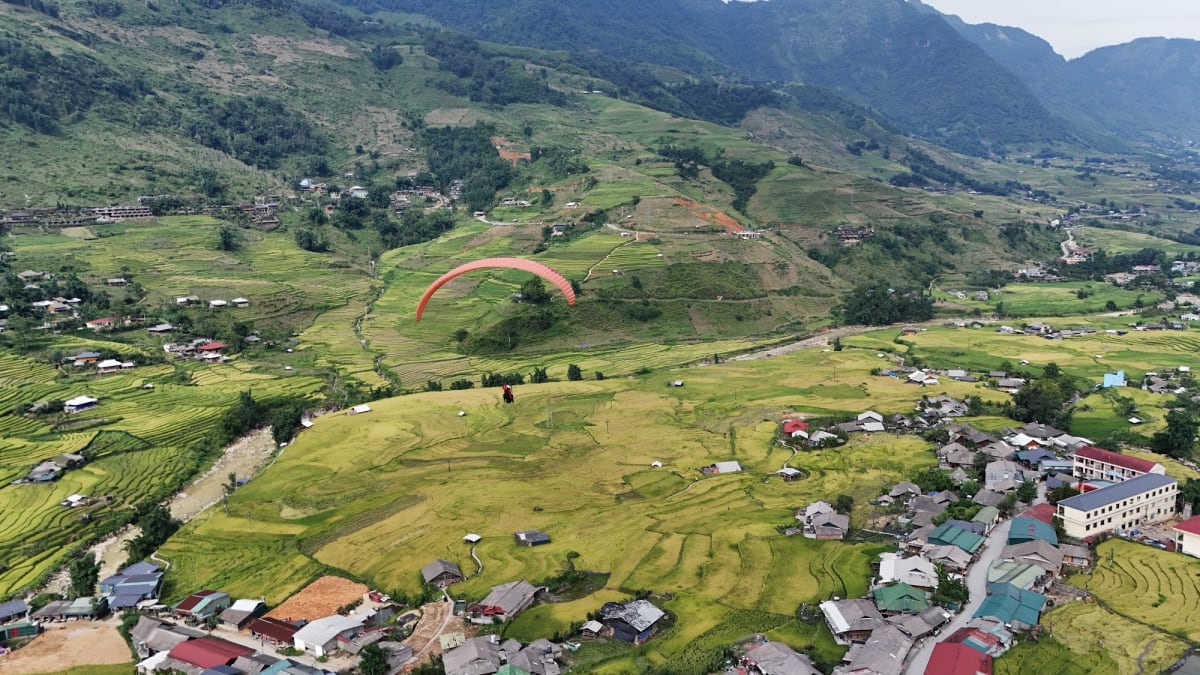
The question I get most from passengers is "which month is best for Sapa". The honest answer is that no month is best — only the month that matches what you came to see
Sapa changes face almost monthly. Flooded terraces are one landscape, green rice another, golden rice another again, and winter has no rice at all but the thickest cloud seas of the year
The Sapa Paragliding pilot team lives here all year and flies on almost every day the sky allows, so this guide is written from what we actually see over Muong Hoa Valley rather than copied from a general Northwest Vietnam season chart
📅 Quick table: what each month gives you
| Month | Main scene | Weather | Crowds |
|---|---|---|---|
| Jan–Feb | Peach and plum blossom, frost | Coldest, 5–15°C | High at Lunar New Year |
| Mar | Rhododendron, warming up | Cool, little rain | Moderate |
| Apr | Clear skies, fine sun | 15–25°C, showers begin | Low |
| May–Jun | Flooded terraces like mirrors | Strong sun, afternoon rain | Moderate |
| Jul–Aug | Deep green rice | Wettest months | High, summer |
| Sep | Golden harvest | Drying out, fine | Highest |
| Oct | Clearest skies, cloud season opens | Dry, 15–22°C | Moderate |
| Nov | Thick cloud seas, buckwheat flowers | Dry, cooling | Moderate |
| Dec | Cloud seas, cold spells | Cold, 5–15°C | High at Christmas |
🌸 January and February — coldest, but in flower
These are Sapa’s coldest months: 10–15°C by day, 3–5°C at night, lower in a cold spell, with occasional frost up high
The compensation is blossom. Peach and plum flower around the villages, and dry air brings many sharply clear days. Lunar New Year is busy and room rates climb
The terraces are dry or planted with winter vegetables, with no rice. If you come for the fields, skip these two months
Flying works fine in January and February, with good visibility from the dry air, but dress warm: it is noticeably colder in the air than on the ground
🌺 March — rhododendron and warmer air
March is when Sapa warms up. Rhododendron flowers along the Hoang Lien Son range, and this is the month Fansipan trekkers like best
Little rain, few visitors, easy room rates. The terraces still have little to show, but the hills are green again and the air is reasonably clear
☀️ April — the underrated month
April gets little attention and is one of the easiest months to travel. 15–25°C, fine sun, showers starting but still short
It is the lull before peak season, so it is quiet and cheap. If you want good weather and are not here for the fields, April suits well
💧 May and June — the water season
This is the season I think most people miss. Farmers flood the terraces for planting and the whole valley becomes hundreds of mirrors holding the sky
It looks good from the road, but only from the air do you see all of it: every step reflecting cloud and sky, catching the light by angle, and the shape of Muong Hoa valley reading more clearly the higher you go
May and June bring hard midday sun and frequent afternoon showers, so go in the morning, both for the fields and for flying
This is also when strong midday thermals begin, so we tend to put passengers on early or late-afternoon slots for a smoother flight
🌱 July and August — green rice, and rain
The rice grows in and fills the valley with the bright green that is so particular to midsummer Sapa. It is also the school holidays, so it is busy
The thing to say plainly: July and August are the wettest months of the year. Rain usually arrives in the afternoon, sometimes all day, and the Ô Quy Hồ road often sees landslides
If you travel in July or August, put anything that matters in the morning. Sapa mornings in this season are usually still dry; the rain comes later
For flying this is the hardest season, with more rescheduled flights than any other time. Book your flight for the first day of your trip so you keep a spare day
🌾 September — the golden month, if you came for rice
If you pick a single month to see Sapa’s terraces, it is September
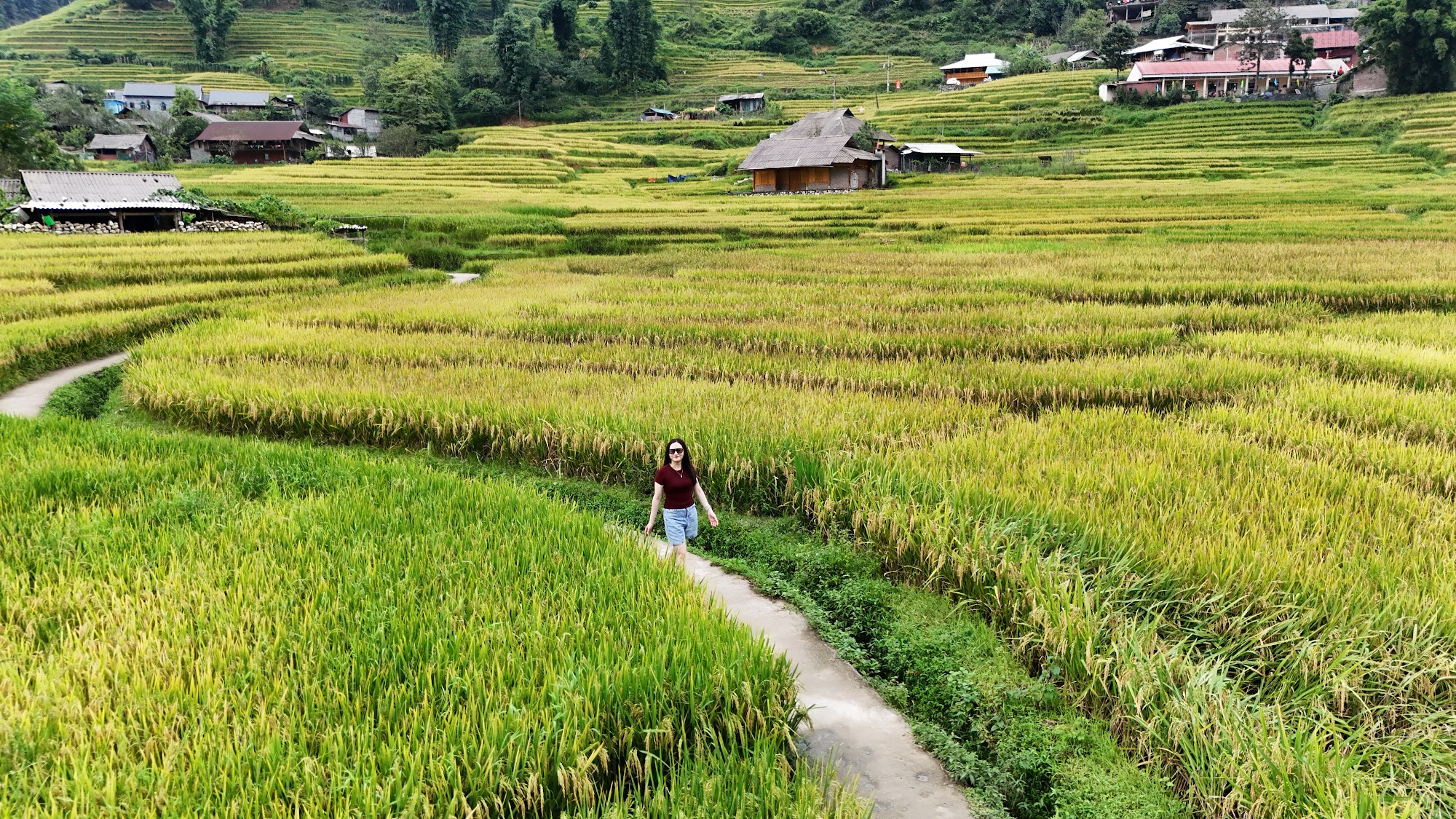
The fields at Muong Hoa, Lao Chai and Ta Van are planted early, so they turn gold from late August, blaze through the first half of September, then get cut through the month. The air is drying out by then too, so you get gold rice and sun together
The trade-off is the busiest, priciest month of the year. If you come in September, book rooms and flights early, as our schedule usually fills in peak season
One thing to keep straight: Mu Cang Chai’s golden season runs about a month behind Sapa’s, ripening from September into October. The two are not on the same calendar, so do not rely on articles that lump the northwest together
🍂 October — the clearest skies of the year
By October the rice is largely cut, but this is the clearest month. Dry air, long visibility, the whole Hoang Lien Son range and Fansipan in view
It also opens cloud season. Early mornings fill the valley with stratus, burning off by 8–9am
For flying, October is one of the easiest months: dry, steady wind, plenty of flyable days
☁️ November — thick cloud, few people
November is dry and cooling, 12–20°C by day. Cloud season comes into its own, and the mornings after a cold front bring thick, wide cloud
Buckwheat and wild sunflower bloom around the villages. There are fewer visitors than September and October, so the pace is easy and rooms are reasonable
This is the month I suggest to people on a second visit, who want Sapa quiet rather than crowded
❄️ December — cold, and the best cloud seas
December is properly cold: 8–15°C by day, dropping to 3–5°C on cold nights. Frost appears up high, and snow is rare rather than an annual event
In exchange, December cloud seas are among the thickest and most reliable of the year, because the nights are deeply cold and the air is dry
Christmas and New Year are busy, while the weeks in between are fairly empty
🪂 Choosing a month for the view from the air
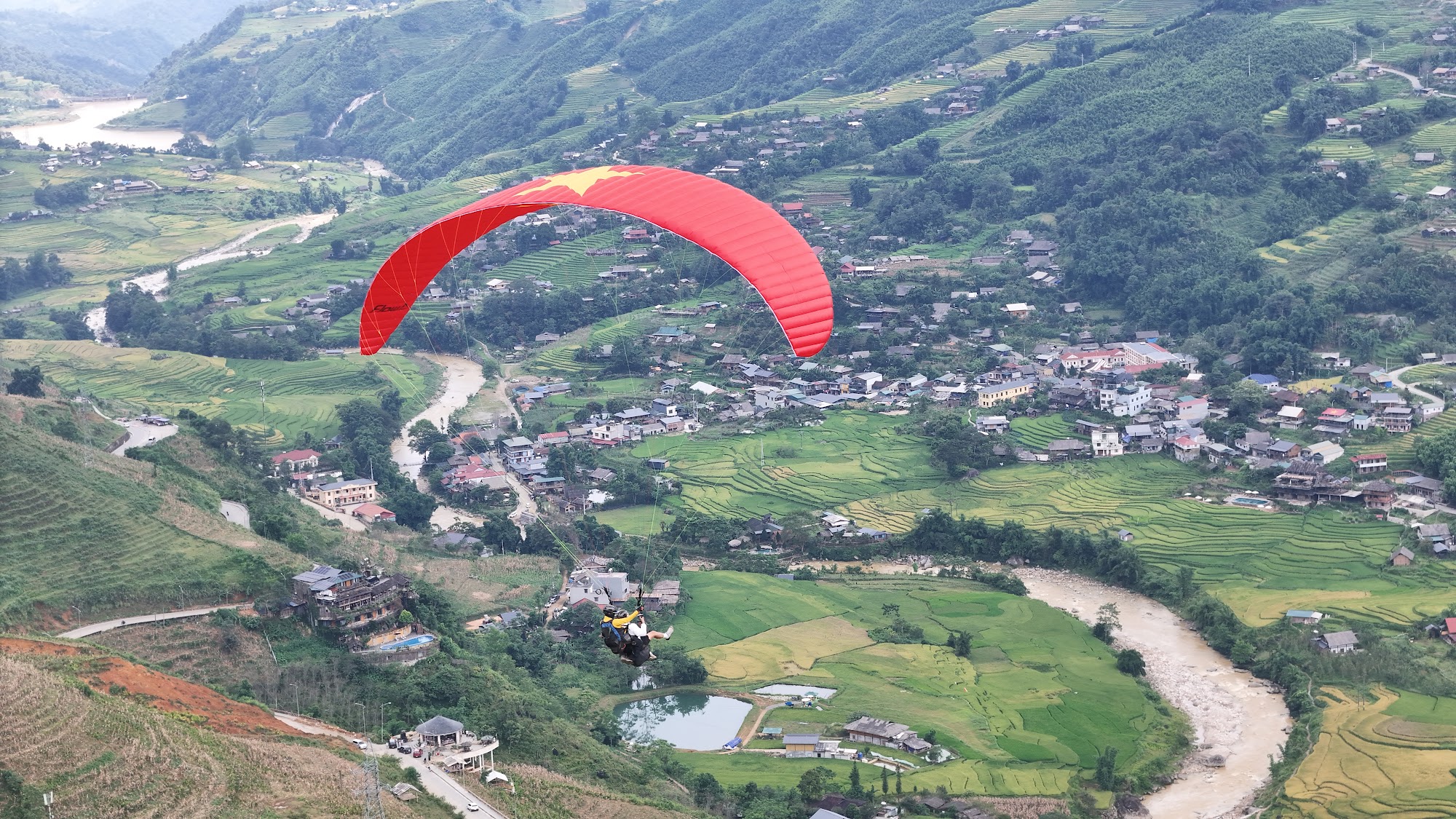
Few guides cover this, but passengers ask, so here it is separately
The view under the wing changes with the seasons far more than the view from the road, because up there you see the whole valley rather than one terrace
Here is how I usually advise passengers when they ask which season to fly in
- Mirror terraces: May–June, water season, fly in the morning
- Deep green: July–August, accepting the weather risk
- Blazing gold: early to mid-September, book well ahead
- Longest visibility: October–December, dry air reads furthest
- Cloud sea from above: November–February, pick a day after a cold front
Take-off is at Hang Da village at 1,500 m, 15 minutes by car from central Sapa, and landing is at Lao Chai village. The whole experience including transfers is about 90 minutes, so it fits into any month’s plan without costing you a day
The Sapa Paragliding team flies over Muong Hoa Valley all year round, so in any month we know what colour the valley is and how high the cloudbase is sitting. If you are unsure about your dates, just call and ask first
Prices do not change with the season: 2,090,000đ for the base package if you make your own way to the launch site, 2,190,000đ with hotel pickup and drop-off both ways, and 2,990,000đ for the full package adding drone and 360 footage. It is the same in every month, so choosing a month is only about the scenery you want
🕑 Only Two Days and One Night? Choose the Month Carefully
Passengers on short trips always ask me which month is the safest bet. With two days and one night your entire weather risk lands on a single morning, so I tell people to pick a dry month
October and November are the two months I am most confident about for a short trip. Dry air, few long rain spells, cloud seas in the early morning, and flights running on almost every day
September is still beautiful because the rice is gold, but it is crowded and room rates are high, and at weekends both the launch site and the photo spots are packed. If you come in September, arrive on a Thursday
June, July and August are the months I usually talk short-trip passengers out of. Rain here tends to arrive in spells of two or three days, and if you hit one the whole trip is spent in a cafe watching the mist
One tip for a two-day trip: put anything weather-dependent on the first morning rather than the second, so you keep one morning in reserve
📷 Coming for Photos? Choose the Month by Colour
Photographers tend to choose by month, when the thing that actually decides the picture is the colour of the valley in that month
Silver is May and June, when the terraces have just been flooded and at sunrise the whole valley looks like broken glass
Green is July and August, when the rice is tall and dense, and the best light comes right after a shower as the sky opens
Gold is September, the colour most passengers come to Sapa for, lasting about three weeks and shifting from village to village
Brown and white is October to December, after the harvest, and what you get instead is the cloud sea and very clear air, which is when shooting from the air works best
Shooting from under a wing works differently: what matters is not the colour of the terraces but the cloudbase. A low cloudbase gives you nothing but cloud, while a high one lets you see the whole valley
⚠️ Five Common Mistakes When Choosing When to Visit Sapa
The first mistake is booking transport and rooms a month ahead and only then looking at the weather. In Sapa a forecast is only worth trusting five to seven days out, so a flexible window is worth more than one fixed date
The second is trusting a monthly average. July averages a lot of rain but still has weeks of unbroken sun, while October averages beautifully and still produces three-day spells of low cloud
The third is coming for the golden season without asking which villages have already been harvested. The rice in Lao Chai, Ta Van and Hau Thao ripens up to a week apart, and once it is cut only stubble is left
The fourth is putting outdoor activities in the afternoon. Mornings in Sapa are more stable, while afternoons build cloud and showers, so anything that depends on the sky belongs in the morning
The fifth is choosing a month from photos online. A lot of golden-season photos were taken two or three years ago and reposted in season, so check the date on a photo before you plan around it
📌 Three pieces of advice for any month
Book your flight for the first day of the trip. Weather can turn in any month, and flying on day one leaves you a day to reschedule into
Put outdoor plans in the morning. Sapa mornings beat afternoons in almost every month, and emphatically so in the rainy season
Follow the roads, do not zigzag. The Muong Hoa road holds Moana, the Alpine Coaster, the Hang Da take-off, Lao Chai and Ta Van. The southwest road has Fansipan and Cat Cat. The Ô Quy Hồ road has Silver Waterfall, Heaven’s Gate and the Rong May glass bridge
❓ Frequently asked questions
Which month is best in Sapa?
It depends what you want to see: May–June for flooded terraces, September for golden rice, October–December for clear skies and cloud. If a first-time visitor must pick one, September or October
Which months should I avoid?
July and August if rain worries you. They are still workable, but you need a flexible plan
When is Sapa’s water season?
May and June
When does the rice turn gold in Sapa?
Late August to mid-September, cut through September. By October most of it is harvested
When is cloud hunting best?
November to February, especially after a cold front. Cloud season starts in October
Which month is best for paragliding?
October to December for flyable days and visibility. May–June and September for the best fields below you