Best Time of Day to Paraglide in Sapa: Hour by Hour
Sapa flies from 7am to 6pm, but every slot gives a different flight: when the fog clears, when the air is smoothest, when flights run longest and when the light is best

Passengers booking a flight always ask what time they should come. There is no single answer, because Sapa flies from 7am to 6pm and every slot gives a different flight: mornings are smooth, midday flights last longest, late afternoon gives the best light. This article splits the flying day into slots, with the numbers behind each one, so you can pick the one that suits you
Shared by Dang Van My — Vietnamese paragliding pilot, chief pilot at Sapa Paragliding
🕖 How long a flying day in Sapa actually is
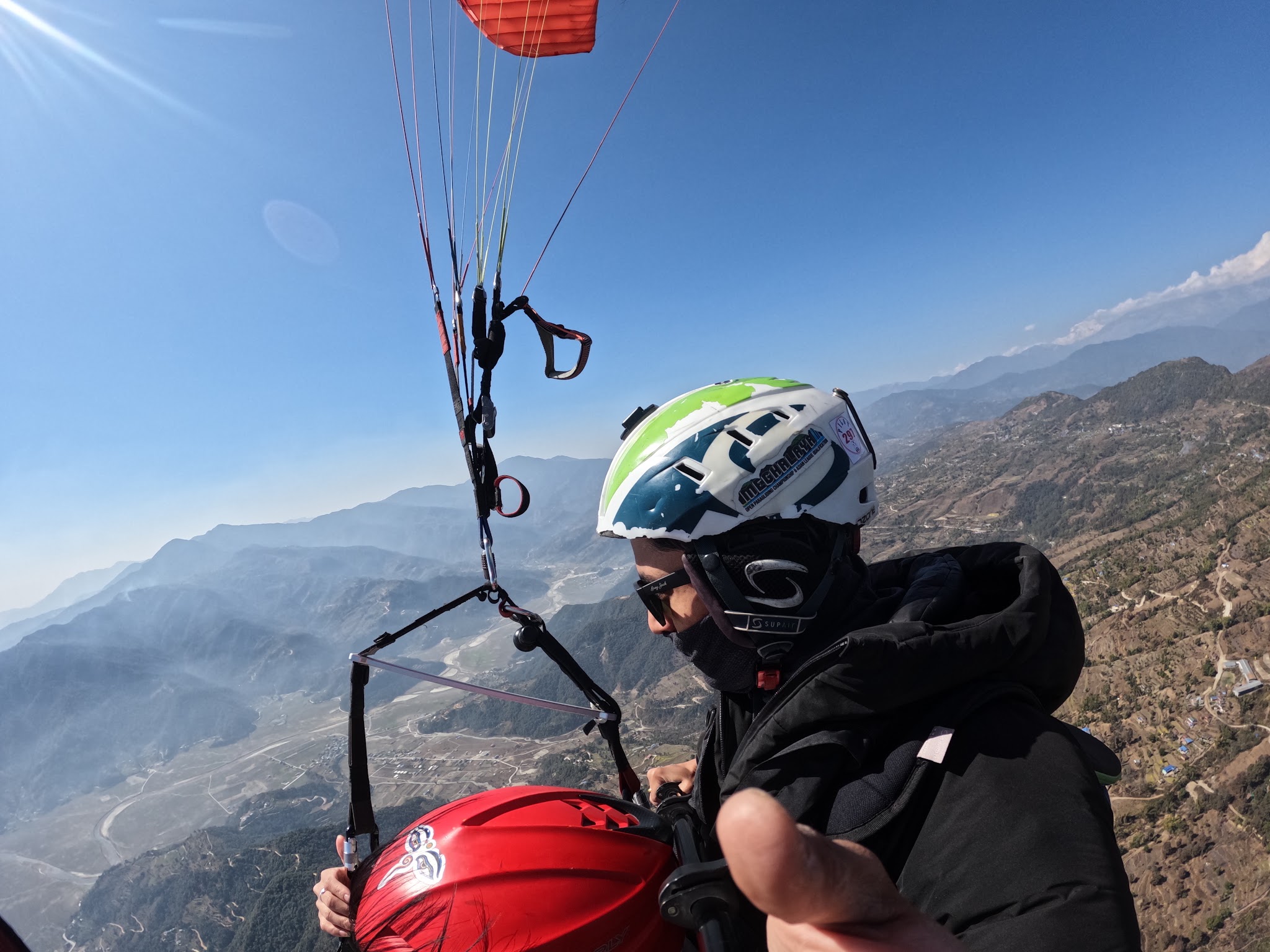
Our published hours are 7am to 6pm, weather permitting. How much daylight that covers changes a lot with the season. Sapa sits at latitude 22, so in summer the sun rises around 5:20am and sets around 6:50pm, giving more than 13 hours of daylight. In winter sunrise slips an hour and a half later, to about 6:40am, and sunset comes at about 5:25pm, leaving under 11 hours
In practice that means the last summer slot can run to 5:30pm with light to spare, while in winter 4:30pm is already the time to start wrapping up. If you are booking between November and February, keep that in mind and do not leave it late
A full session with us takes about 90 minutes: 15 minutes by car from the centre of Sapa up to the Hang Da take-off, the safety briefing and harness fitting, 8 to 15 minutes in the air, then the car picks you up at the Lao Chai landing field and brings you back. Book 9am and you are usually done by 10:30, so it does not eat your whole morning
🌫 7–9am: the clearest air, but often a wait for the fog
Early morning is when the air is cleanest and you can see furthest, with mist still rising off the rice terraces. It is also the slot most likely to find the take-off buried in fog
Fog at Hang Da usually burns off once the sun has warmed the slope, typically between 9 and 11am. Some days it is clear by eight, other days it takes until nearly midday. Book an early slot and be ready to sit on the hill for a while — in exchange you get the smoothest air of the day
🌤 9–11am: the smoothest air, best for a first flight
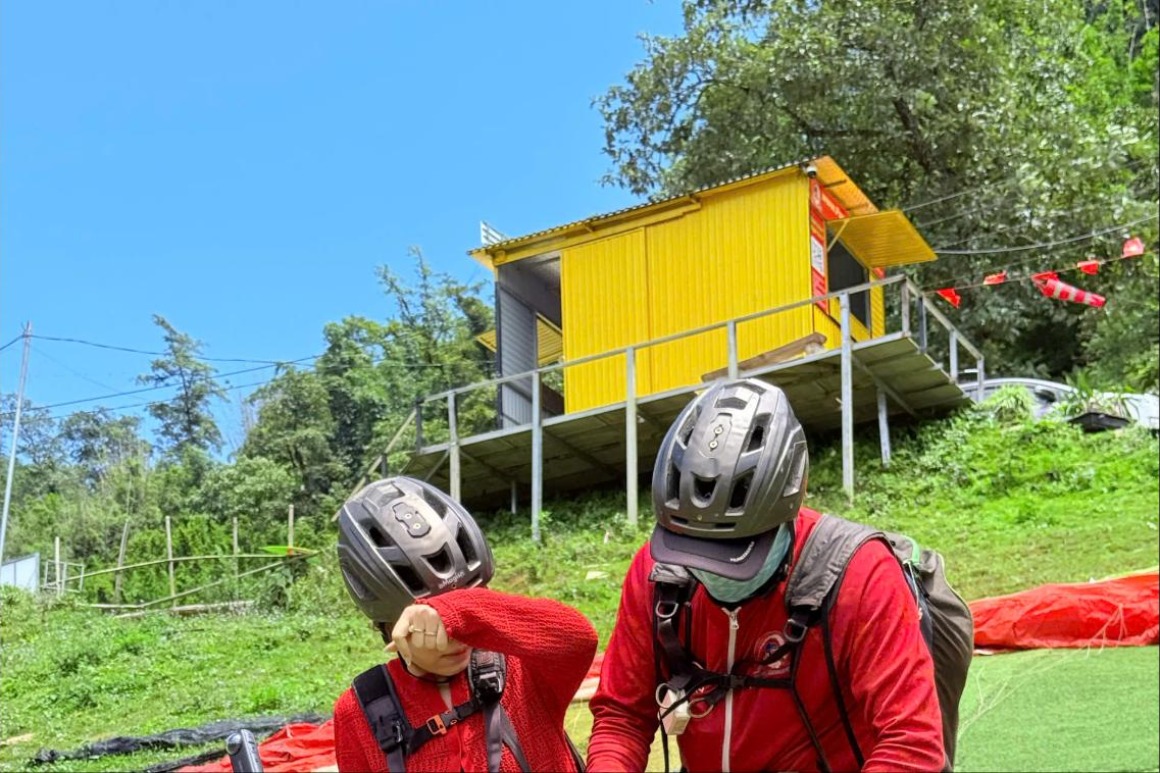
This is the slot I recommend to first-timers. The fog has just cleared, the sun is only starting to warm the slope, so the rising air is still gentle and the flight is smooth with very little bumping
If you are nervous about heights, if you get carsick easily, or if you are flying with small children or older passengers, take this one. A smooth flight means you actually look at the view instead of gripping the harness
☀️ 11am–3pm: strongest thermals, longest flights
At midday the sun cooks the slope, the air near the ground heats up and rises in columns, which pilots call thermals. Catch one and the wing climbs, so flights in this window run noticeably longer than in the morning
The trade-off is that midday flights are bumpier, a bit like driving over a rippled road. For a pilot that is routine, for a passenger who is nervous about heights it can be a lot. If you want the longest flight and you like a bit of action, this is your slot
Midday is also when the wind most often goes over our limits. We stop flying when wind from the north, north-east, east or west is stronger than 6 m/s at the take-off, or when the wind about 500 m above take-off blows from the west, east or north at more than 12 m/s. Calm at the hill does not mean calm upstairs
🌇 3:30–6pm: the golden hour for photos
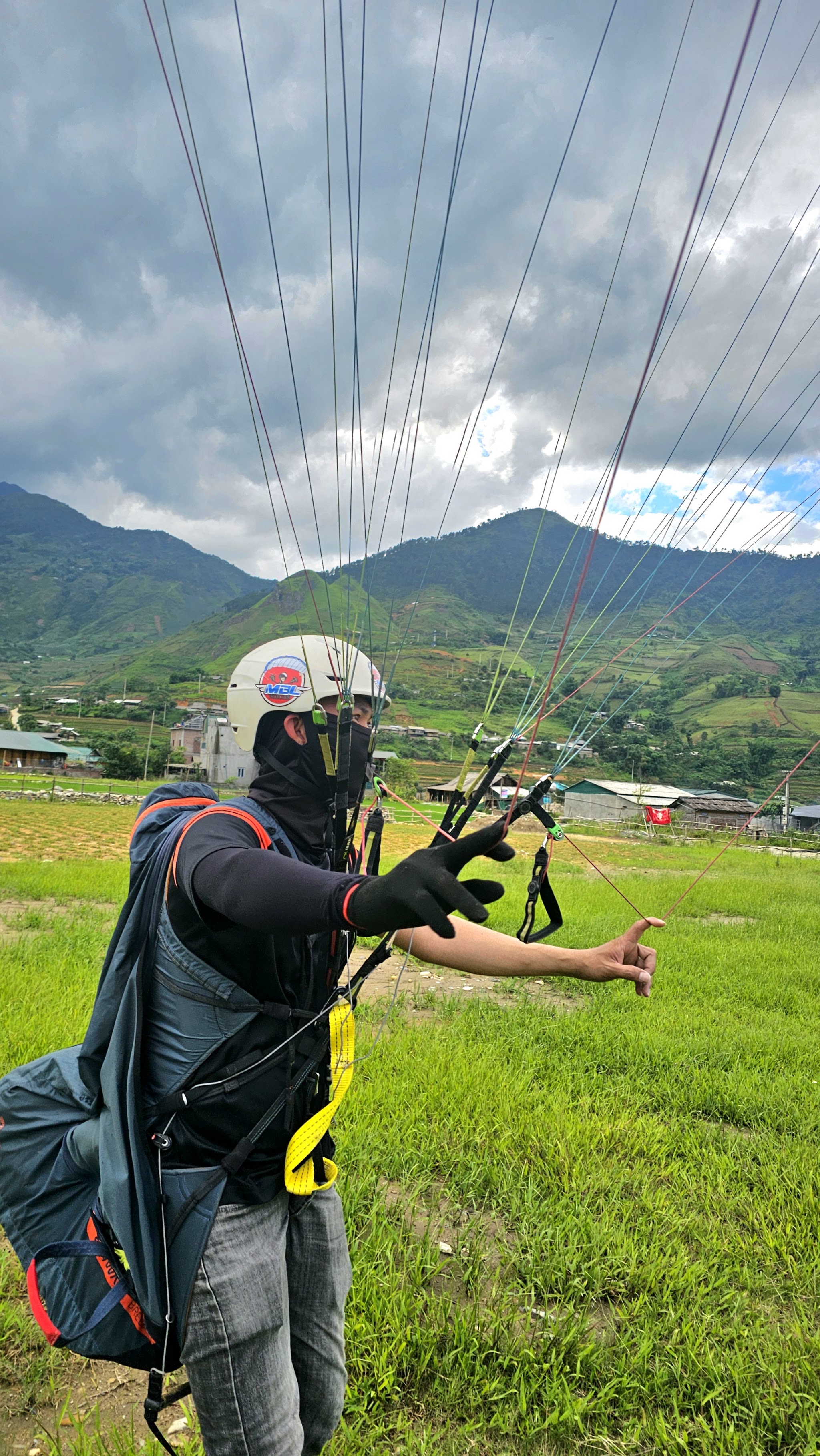
The hour before sunset is when the light comes in low, the rice terraces turn gold and the ridges separate into layers. Photos and video shot in this window look far better than midday shots, same camera, same wing
Late afternoon also settles down again as the sun stops heating the slope, so the flight is nearly as smooth as the morning. You get both things at once, which is why the late slots fill up first
Season matters: in summer the golden hour lands around 5:30 to 6:30pm, in winter it shifts to roughly 4:15 to 5:15pm. Book by the clock, not by habit
🧭 Which slot to pick
Short version
- First flight, nervous about heights, flying with children or older passengers: 9 to 11am
- Longest possible flight, you enjoy a bit of action: 11am to 3pm
- Photos and video come first: from 3:30pm, or from 3pm in winter
- Day trip up from Hanoi and back: the midday slot, since the early morning is still spent on the road
- Two days in Sapa: book the morning of day one, so if the fog holds or the wind turns you still have a whole day in hand
And if you ask which one I like best, it is 4pm in autumn. Still air, low gold light, ripe terraces, and you are back in town in time for dinner
❓ What passengers ask about timing
Will I fly at exactly the time I booked? Usually yes, but the time depends on wind and fog. If you cannot fly at your slot, the pilot moves you to a later one the same day, and if that cannot be arranged, to another day or a refund
Do early slots get cancelled often? Rarely cancelled outright, they are usually just delayed until the fog lifts. Fog in Sapa burns off with the sun, it does not normally sit all day
Can I fly in the evening? No. Paragliders fly in daylight only, and the last slot always has to finish before sunset
What about light rain? We do not fly in rain. Wet fabric gets heavy and loses its shape, so this is a technical limit, not a comfort one
🚀 Book with Sapa Paragliding
Sapa Paragliding was the first operator flying paragliders in Sapa, trading as CTCP Thể thao và Du lịch Dù lượn Sa Pa, with flight permission 17996/TC-QC from the Department of Operations under the General Staff, Ministry of National Defence, and paragliding business licence 02/GCN-SVHTT from the Lao Cai Department of Culture and Sports
About the author — Dang Van My, Vietnamese paragliding pilot and chief pilot at Sapa Paragliding. He surveyed the flying terrain around Sapa himself and opened the first paragliding site here