Paragliding Safety Gear in Sapa: Reserve, Harness, Helmet
The three pieces of gear behind every tandem flight in Sapa — reserve parachute, back-protected harness and helmet — and the check a pilot runs before take-off

Passengers standing on the Hang Da take-off in Sapa keep asking me the same honest question: what is actually protecting me up there. The answer is not a promise, it is the pile of gear our pilots load into the car every morning. This article goes through the three most important pieces strapped to a passenger on a tandem flight in Sapa: the reserve parachute, the harness and the helmet
Shared by Dang Van My — Vietnamese paragliding pilot, chief pilot at Sapa Paragliding
🪂 The Reserve Parachute — Nobody Wants It, Everybody Carries It
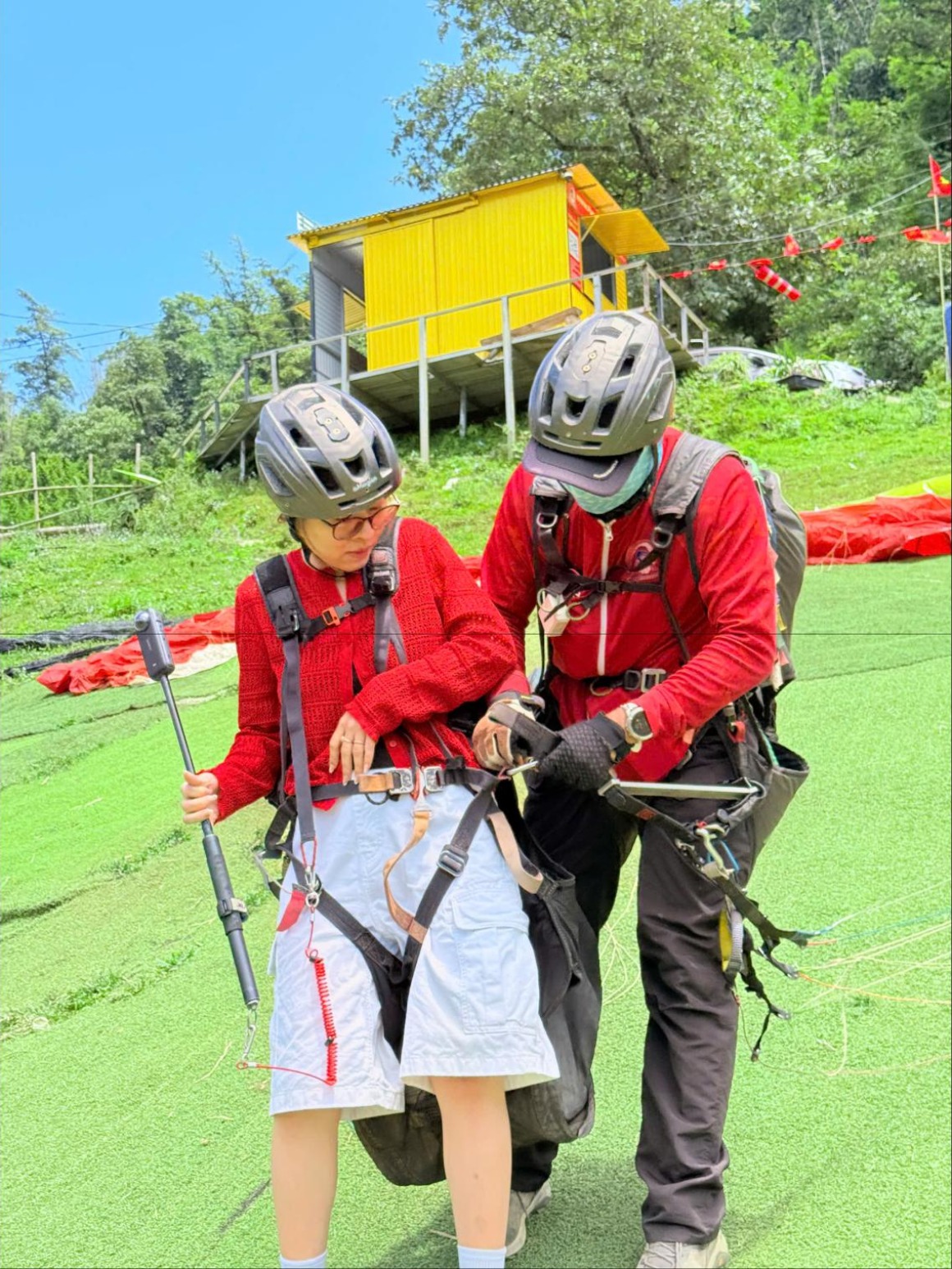
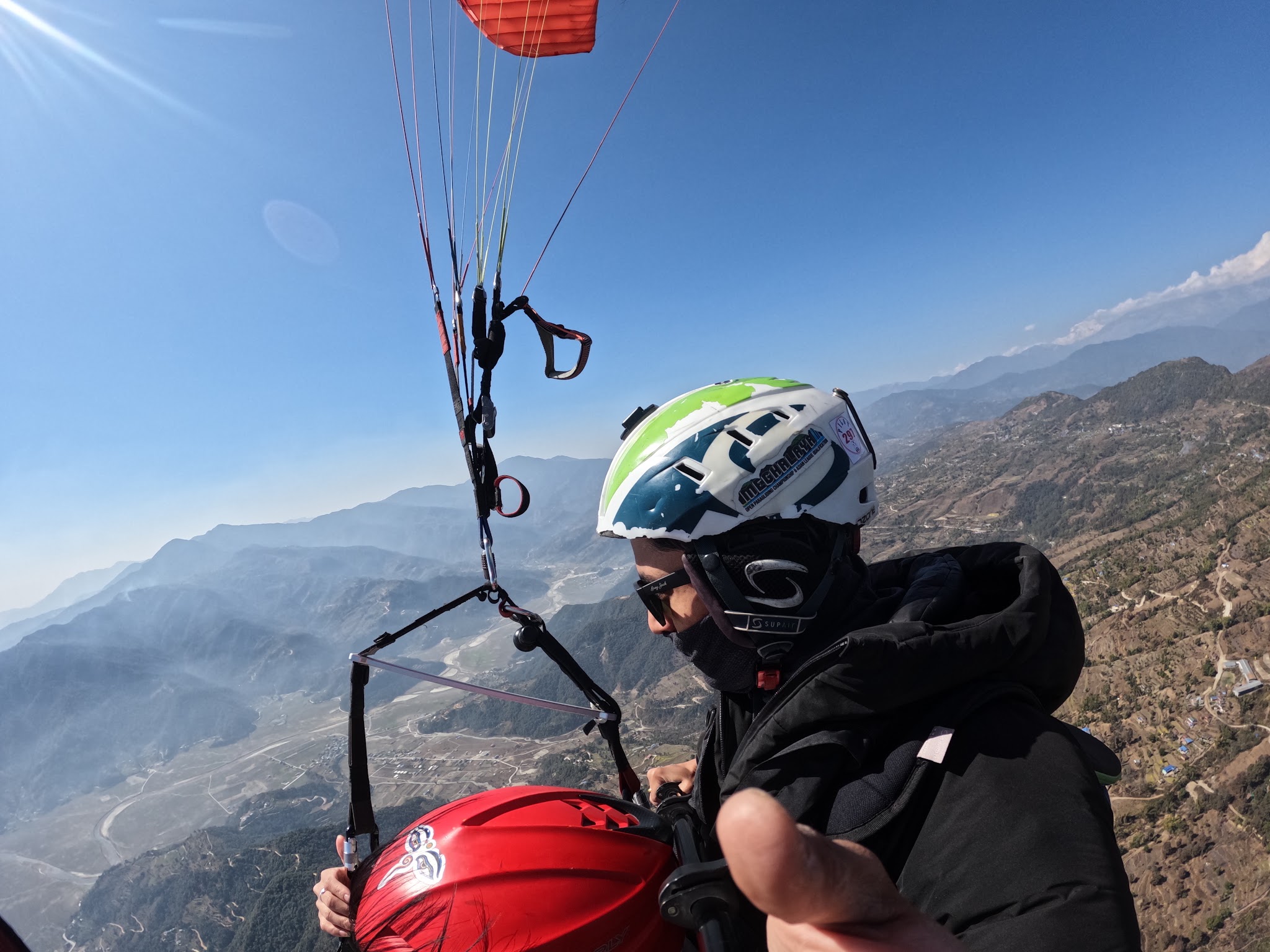
Every tandem harness carries a folded reserve parachute, sitting right under the seat or on the side of the harness. It is a separate round canopy with nothing to do with the main wing above your head. If the main wing has a problem the pilot cannot solve within the height available, the pilot pulls the handle, the reserve opens and brings both people down slowly and under control
What matters about a reserve is not whether it is there, every harness has one, but whether it gets opened, inspected and repacked on schedule. A reserve left packed too long is compressed, the fabric sticks together and it opens more slowly when it is needed. We lay ours out, check the fabric and the lines, repack them every six months and write the packing date on them so the next one is easy to schedule
Flying in Sapa helps here. The Hang Da take-off sits at around 1,500 m and the flight path runs over Muong Hoa Valley, so the pilot has height to spare most of the time. Height is exactly what makes a reserve useful, the more of it you have the more time you have to act
🎒 The Harness — What You Sit In Is Also What Protects You
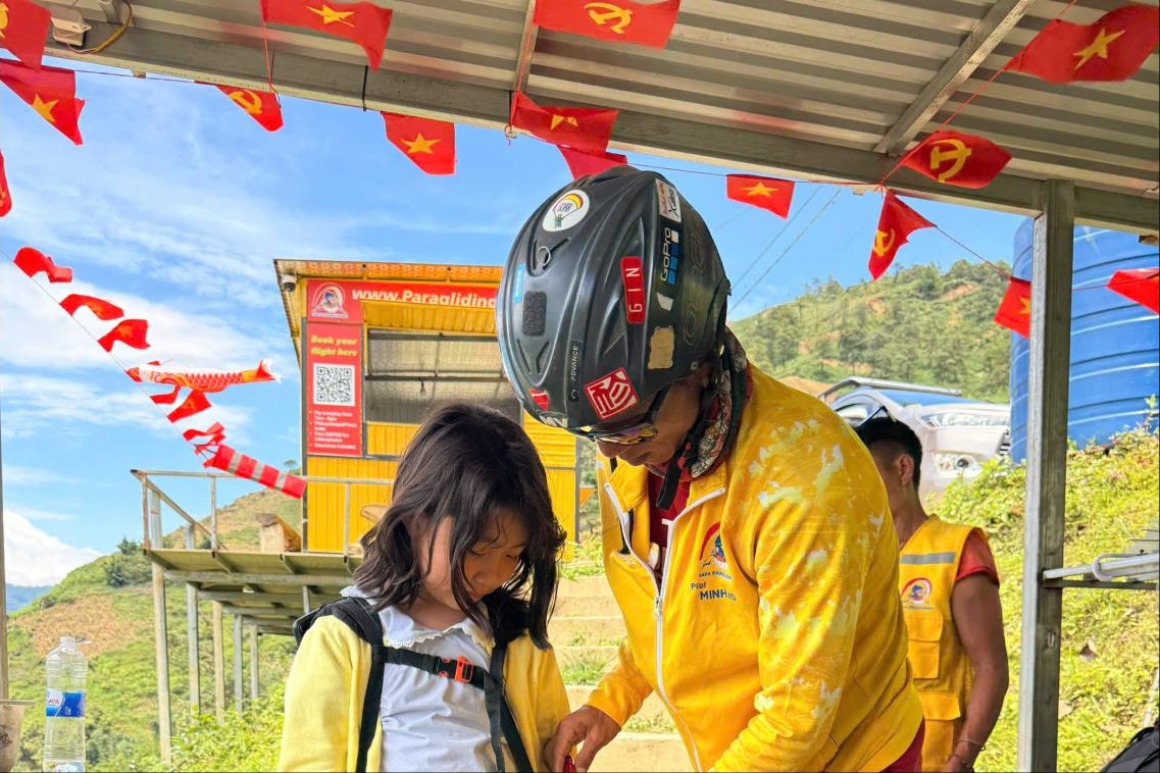
Most passengers think the harness is just a canvas seat so your legs do not get tired. It is actually the part that connects you to the wing, and the part that protects your back if the landing is firm
A tandem passenger harness has a protector pad behind the back and under the seat. If the wind shifts right at touchdown and both of you land a little hard, that pad takes the load instead of your spine
The only parts a passenger really needs to know about are the buckles
- Two main carabiners connecting your harness to the pilot harness, clipped and double-checked by the pilot himself
- The chest strap, which keeps the two sides of the harness from spreading
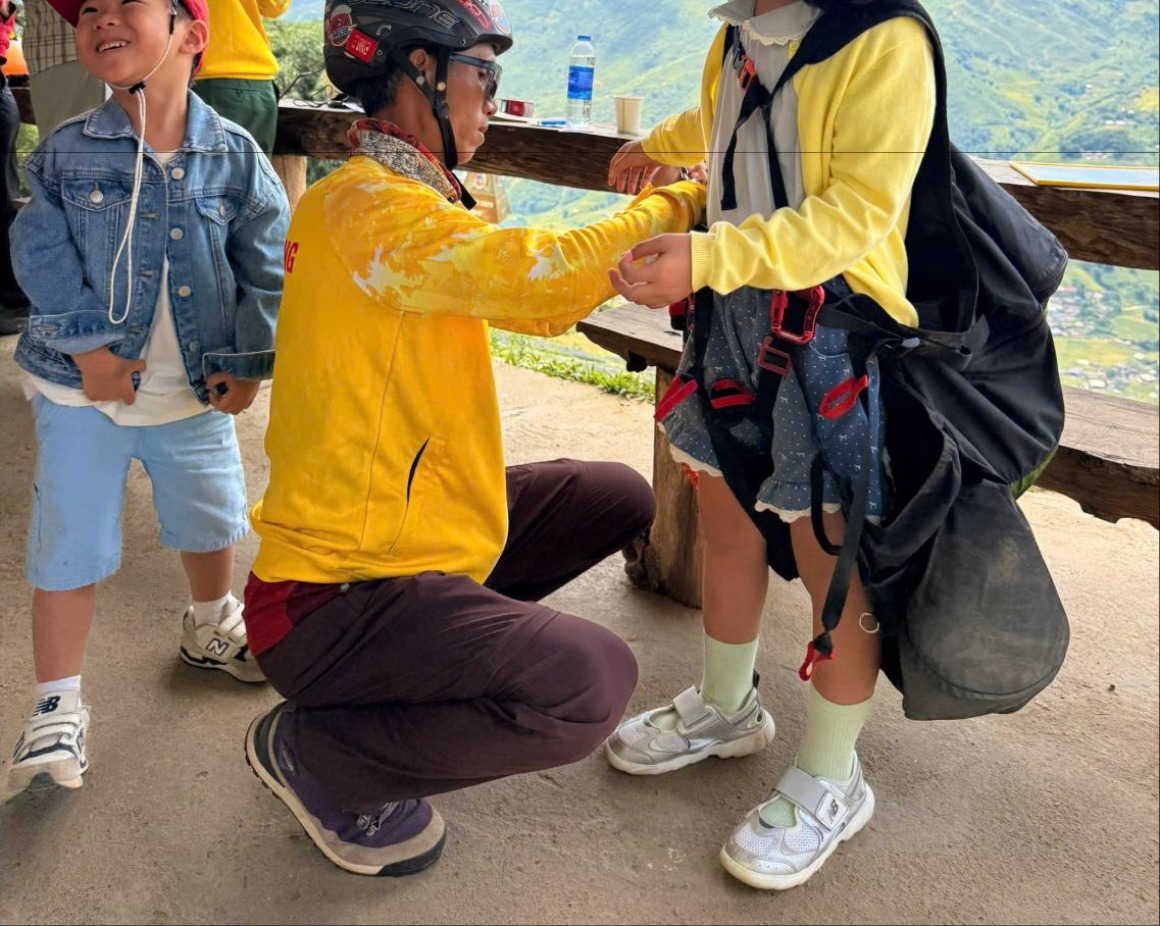
- Two leg straps, the ones most often forgotten and the most important while you are still standing on the slope
- A secondary link between passenger and pilot, depending on the harness
Our rule is simple: a passenger never unclips anything, not even after landing with both feet already on the ground. The pilot does the unclipping
📻 Helmet and Radio — Small Things, No Flight Without Them
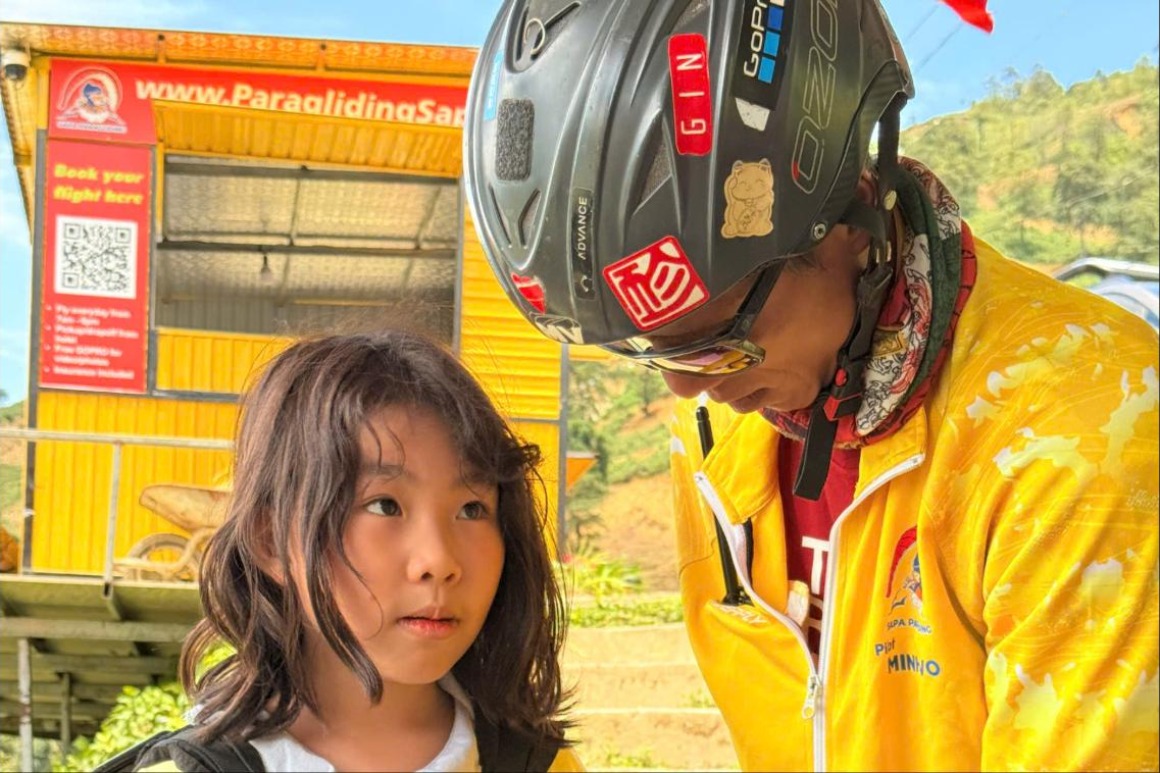
A flying helmet is not a motorbike helmet. It is lighter, it fits closer and it usually leaves the ears open, because in the air the pilot needs to hear the wind and hear the radio
If you have long hair, tie it back before the helmet goes on, then tighten the chin strap until you can shake your head without the helmet moving. A loose helmet turns in the wind during the run-up and blocks your view at the exact moment it should not
The radio gets almost no attention from passengers, but it is what connects the pilot in the air with the crew at the Hang Da take-off and the crew at the Lao Chai landing field. If the wind at the landing field changes, the crew calls it up and the pilot changes the approach. Without a radio a pilot flies alone, with a radio he flies with the whole team
🔍 What the Pilot Checks Before Every Flight
Passengers often think you just sit down and run. There is a check before that, it takes a minute or two, and you are standing right there watching all of it
- Lay the wing out, untangle the lines, run an eye down every row looking for twists or grass caught in them
- Check the reserve: pin in place, handle sitting where it should, nothing snagged
- Clip the passenger in, tighten the leg straps and chest strap, then check every buckle again by hand
- Helmet on, chin strap adjusted, radio on and a test call down to the landing field
- One last look at the wind: direction, strength and the wind flag on the slope
If the wind is wrong at that last step, the pilot waits. Ten minutes, half an hour, and some days the whole wait ends with rebooking the passenger for another day
🧭 Good Gear Is Only Half of It, the Decision Is the Rest
I will say this straight: the best gear in the world is only half the job. The other half is whether the pilot is willing to say no
I started Sapa Paragliding after surveying the flying terrain around Sapa myself, and one rule has not changed since day one: the pilot decides whether a flight happens, not the passenger and not the booking calendar. If you cannot fly because of the weather you do not pay, and that is the only way a pilot never feels pushed into flying to keep a schedule
❓ What Passengers Ask About the Gear
Do I need to bring anything? No. Main wing, reserve, harness, helmet, radio and insurance are all part of the package. Come dressed warm, in trainers you can lace up
Is the reserve parachute an extra charge? No. A reserve is mandatory equipment on every tandem flight, not an add-on we sell
How often is the reserve repacked? Every six months. Each repack means laying the canopy out in full, checking fabric and lines, folding it back in and writing the date on the harness
Will the harness fit a small or an older passenger? The passenger harness adjusts. We fly younger and older passengers regularly, just tell us the weight in advance so the pilot can pick the right wing and harness
What if the weather is bad on the day I booked? The pilot moves the time, or moves you to another day, and if that cannot be arranged you get your money back
🚀 Flying With Sapa Paragliding
Sapa Paragliding was the first operator flying paragliders in Sapa, trading as CTCP Thể thao và Du lịch Dù lượn Sa Pa. We hold flight permission number 17996/TC-QC from the Department of Operations under the General Staff, Ministry of National Defence, and paragliding business licence 02/GCN-SVHTT issued by the Lao Cai Department of Culture and Sports
Take-off is at Hang Da village, 15 minutes by car from the centre of Sapa, and the landing field is at Lao Chai village. If you want to ask more about the gear or about the flight itself, message our team
About the author — Dang Van My, Vietnamese paragliding pilot and chief pilot at Sapa Paragliding. He surveyed the flying terrain around Sapa himself and opened the first paragliding site here