Sapa Paragliding · Guide
Paragliding in Sapa in August: Weather & Best Flying Hours
August in Sapa is rainy but still very flyable. Real weather data, the best flying hours, which rain stops a flight, and how to book so you don't lose your trip.
☔ August in Sapa is rainy — but that is not a reason to cancel your flight
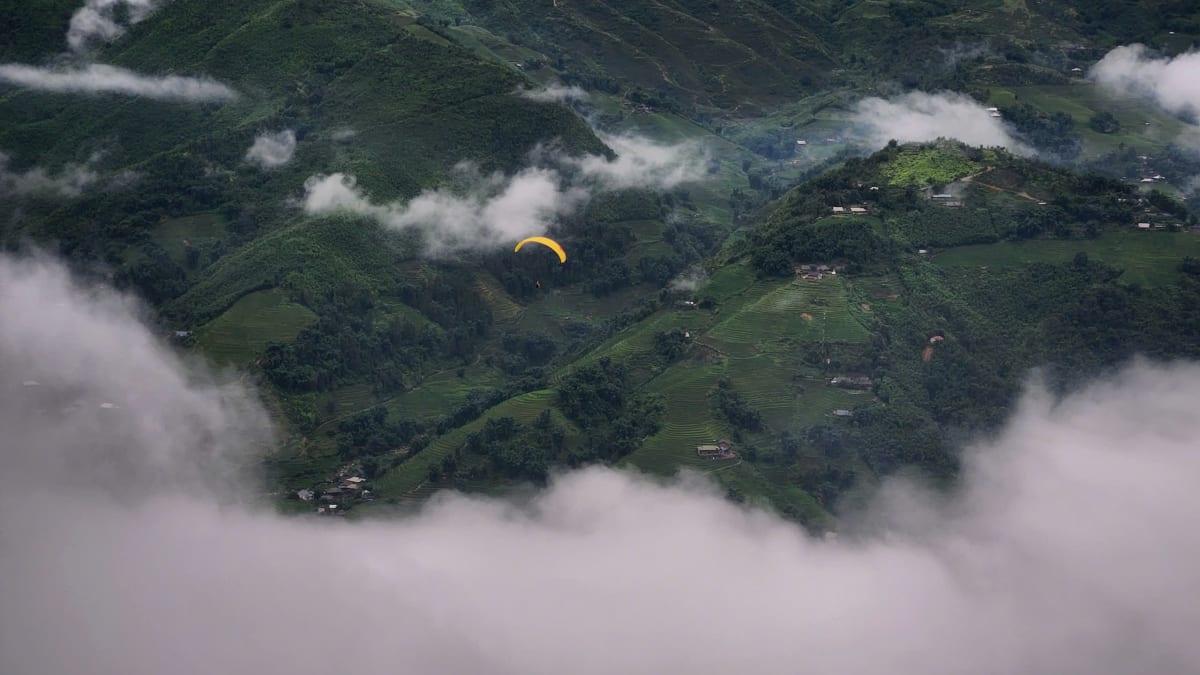
Almost every article about Sapa in August ends at the same sentence: it is the rainy season, so avoid outdoor activities. That is half true. The true half is that August really is one of the two wettest months of the year here. The half nobody mentions is that at 1,500m, rain almost never falls evenly across a whole day. It arrives in bursts, usually in the late afternoon and overnight, and then clears. The morning after a night of rain is when the air is cleanest, visibility is longest, and low sunlight strikes terraces that are still holding water. That is exactly the window we fly our passengers in. This article does not pretend August has perfect weather. It does the opposite — it gives you the real numbers, explains which rain still allows a flight and which rain grounds everyone, so you can plan around it instead of gambling.
🌡️ Sapa weather in August, in numbers
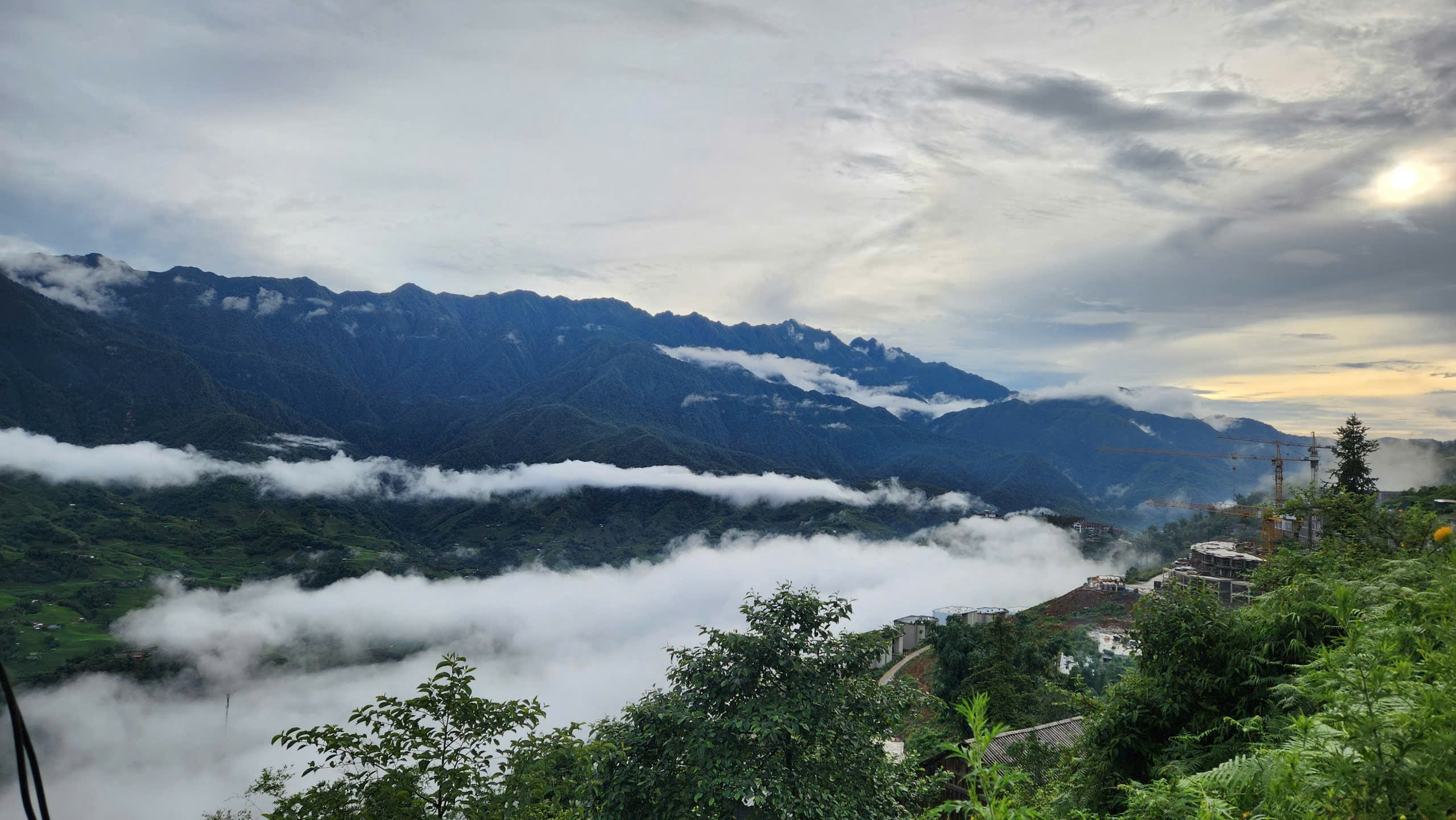
Sapa sits at roughly 1,500m, which makes it far cooler than Lao Cai or Hanoi. Long-term averages for August: Daytime temperatures run 18–24°C, with nights around 17–18°C. This is the most comfortable weather anywhere in northern Vietnam during summer — while Hanoi bakes at 35°C, you are standing at the take-off site in a light jacket. Rainfall averages around 430mm across roughly 23 rainy days. Twenty-three days sounds alarming, but it means rain appears at some point on those days — not that it rains all day. Sunshine averages 4–5 hours a day and humidity sits near 83%. In practice, most days still open a clear window, and that window usually falls in the morning. What decides your flight is not the monthly rainfall total but the weather pattern on the specific morning you are here. That is why the next section matters more than this table.
🕗 The best flying window in August: early morning until about 10:30
During the rainy season, air quality changes fast by the hour. A typical August day in Sapa runs like this: Early morning to about 10:30 — the best window. After overnight rain, haze and dust are washed out and visibility opens up to the far ranges. The air is still stable, valley wind is light, and the flight is smooth — ideal for first-time passengers and families with children. Low, angled light also gives the terraces their strongest depth, which makes this the best hour of the day for photos and video. Late morning into early afternoon — the ground heats up and thermal activity builds. Sport pilots love these conditions, but for a tandem tourist flight the air becomes bumpier, and cumulus clouds start stacking up. Late afternoon — in August this is when cumulus most easily overdevelops into storm cloud. Most of the month's rain falls in this window. We generally do not schedule afternoon flights during the rainy season. The conclusion is simple: in August, book a morning flight. If your itinerary only has an afternoon free, tell the coordination team in advance so they can rearrange — rescheduling is free.
🌦️ Which rain still allows flying, and which does not
This is the part you will not find in ordinary travel articles, because it belongs to the trade. Normal flying: heavy cloud but with a cloudbase above the take-off site, and steady wind from the right direction. Overcast days in Sapa can actually produce beautiful footage — the canopy colours stand out against deep green mountains without harsh sun blowing out the highlights. Wait and watch: light drizzle that is clearing, or low cloud still sitting on the slope but burning off. In the rainy season a clear window can open in as little as 30 to 45 minutes. The team monitors conditions on site and makes the call at the take-off point, not from a phone forecast. No flying: cloudbase below the 1,500m take-off altitude, meaning the launch is inside cloud and the flight path is not visible; active heavy rain; any sign of a thunderstorm; or strong or unfavourable wind. A wet glider is heavier and responds differently — flying in heavy rain is something no serious tandem pilot does. Multi-day systems: when a tropical depression or typhoon reaches northern Vietnam, rain can run continuously for two or three days. This is the genuine risk of August, and the only real answer is a buffer day in your itinerary — more on that below. To see the terrain and wind direction of the site before you travel, take a look at the Sapa flying site page.
🌾 In return: August gives you the best scenery of the year
If August flew as easily as the dry season, it would not look this good. The rain is what creates the landscape. In early August, the whole Muong Hoa Valley is covered in young green rice that rolls along the slopes like a green sea from above. From mid to late month the rice starts turning gold — and this is the finest stage of all, when a single frame holds both green and turning gold, something September's uniformly golden fields no longer offer. Then there is the signature of the wet season: seas of cloud. After a rainy night, low cloud settles in the valley at dawn and dissolves as the sun climbs. Flying through that dissolving moment is something the dry season simply cannot give you. To understand exactly how a flight over Muong Hoa Valley unfolds from start to finish, read "Sapa Paragliding: Fly Over Muong Hoa Valley From 1,500m" And if your trip continues into September, late August is also when the Northwest flying season comes alive at Khau Pha Pass (Tu Le – Mu Cang Chai), ranked among the most beautiful flying sites in the world during the golden rice season.
📅 How to book in August so you don't lose your flight
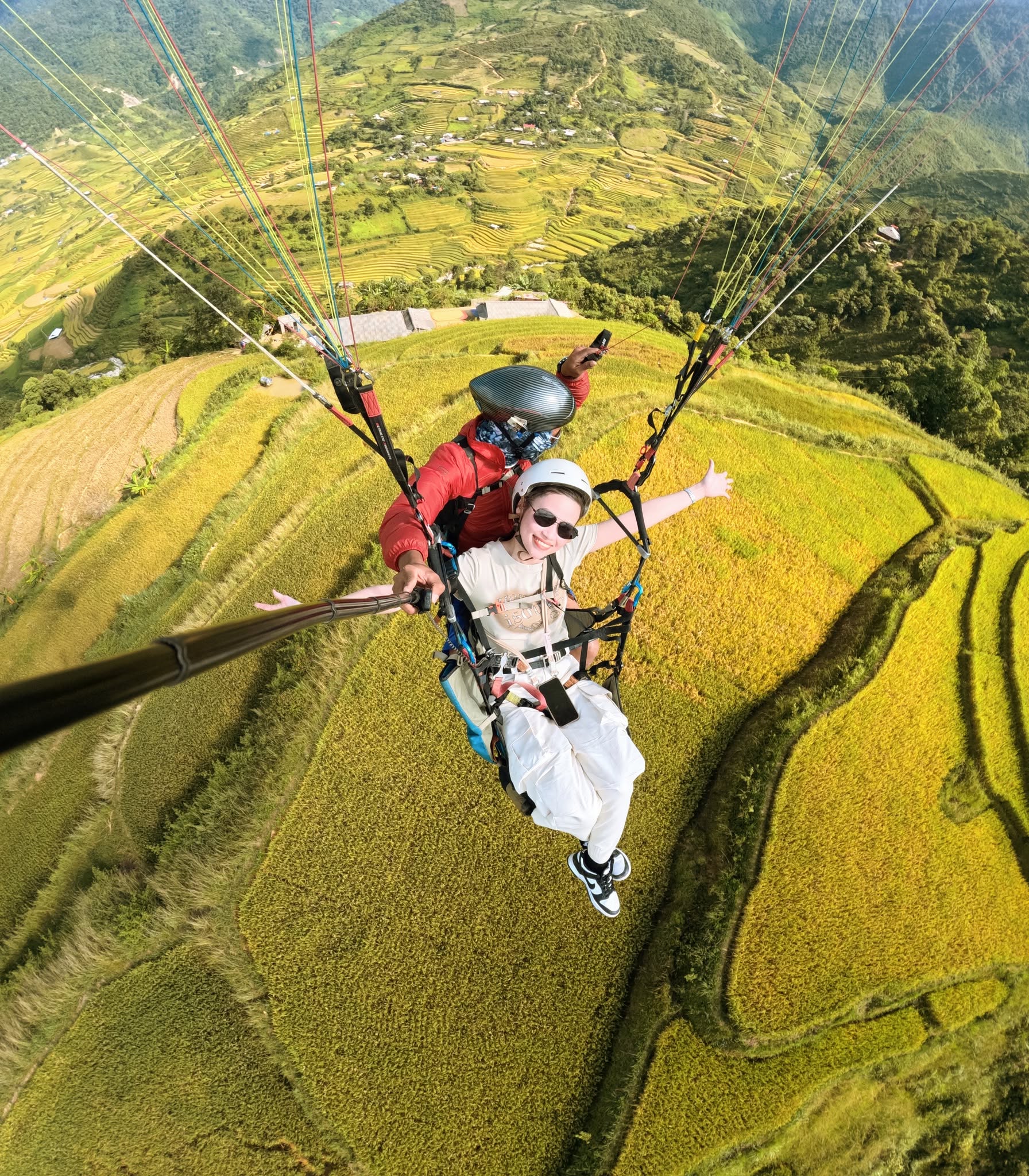
August is peak domestic season and the least predictable weather month at once. Three rules remove nearly all of the risk: 1️⃣ One, book your flight for the first day of your trip. If that morning does not allow flying, you still have every following day to fly instead. Booked on your last day, you have no fallback. 2️⃣ Two, keep at least one buffer day if your schedule allows. During long rain systems, this is the difference between flying and going home without a flight. 3️⃣ Three, reserve in advance. August is high season and the good morning slots fill up first. Booking early carries no risk, because every flight can be refunded, cancelled or rescheduled for free, with no penalty and no forfeited deposit. You only need to let the team know a few hours ahead so they can rearrange.
🎒 What to bring for a Sapa paragliding flight in August
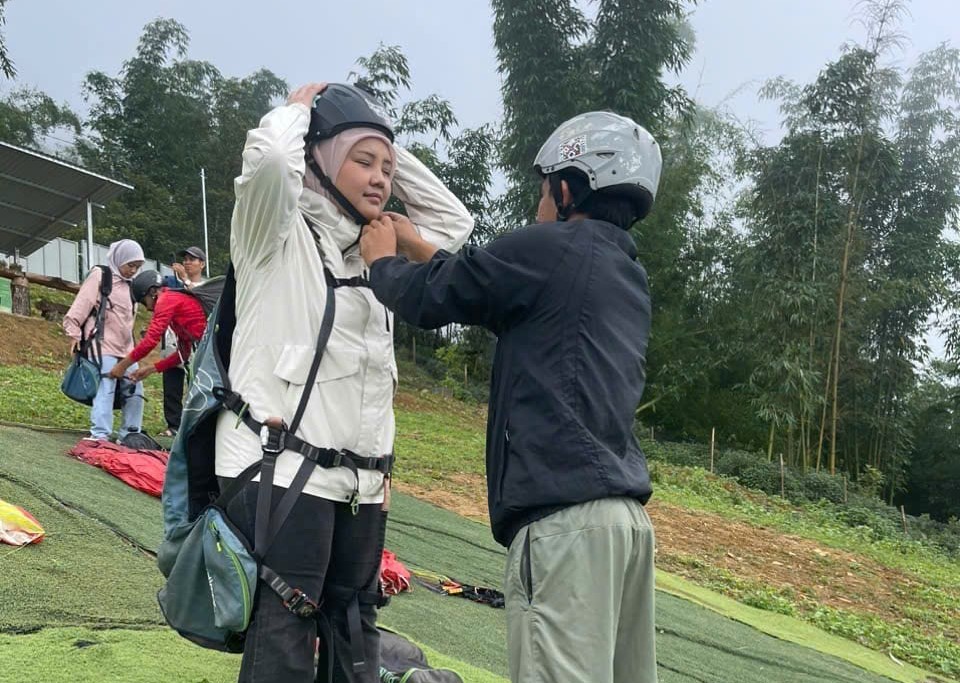
August differs from other seasons in two ways: it is humid, and the ground is slippery. ✔️ Sneakers with good grip — the ground at take-off can be damp after overnight rain. No flip-flops, no heels. ✔️ A light windproof jacket. It is always cooler in the air than in town, even at midday. ✔️ A thin rain shell packed in your bag — for waiting out a shower, not for flying. ✔️ Bright clothing (red, yellow, white) to stand out against green mountains and grey sky. August skies are often grey, which makes colour matter even more for your photos and video. ✔️ Tie long hair back, sunglasses for sunny spells, and eat lightly before flying. Phones and personal items need a secure strap or should be left on the ground — your pilot films the whole flight for you anyway. Full health, age and weight conditions are listed on the pre-flight notice page, which is worth reading before you book.
❓ Sapa paragliding in August: frequently asked questions
Can you fly in August?
Yes. We fly year-round. The share of flyable days is lower than in the dry season, but most mornings still open a weather window.
What if it rains?
If the rain is light and clearing, the team waits and watches. If flying is not possible, you reschedule or receive a full refund at no cost.
Morning or afternoon?
Morning. During the rainy season, afternoons bring storm cloud.
Is the rice already gold in August?
It is green early in the month and starts turning gold towards the end. That transition gives the most colourful frames of the year.
Do I need experience?
No. You fly tandem with a professional pilot, and your only job is to run a few steps at take-off on command.
The dry season gives you a reliable sky. August gives you something else: rice mid-transformation, cloud still caught in the valley, and air so clean after rain that you can count the mountain ranges stacking toward the horizon. In exchange, it asks for a little flexibility — fly in the morning, keep a spare day, and trust the team's call at the take-off site. That is all. The rest is wind. Author: Pilot Dang Van My