What to Wear for Paragliding in Sapa: Packing List by Season
What to wear paragliding in Sapa: long sleeves, sneakers, sunglasses and the right layers for each season, plus what to bring, what to leave and a quick packing checklist.
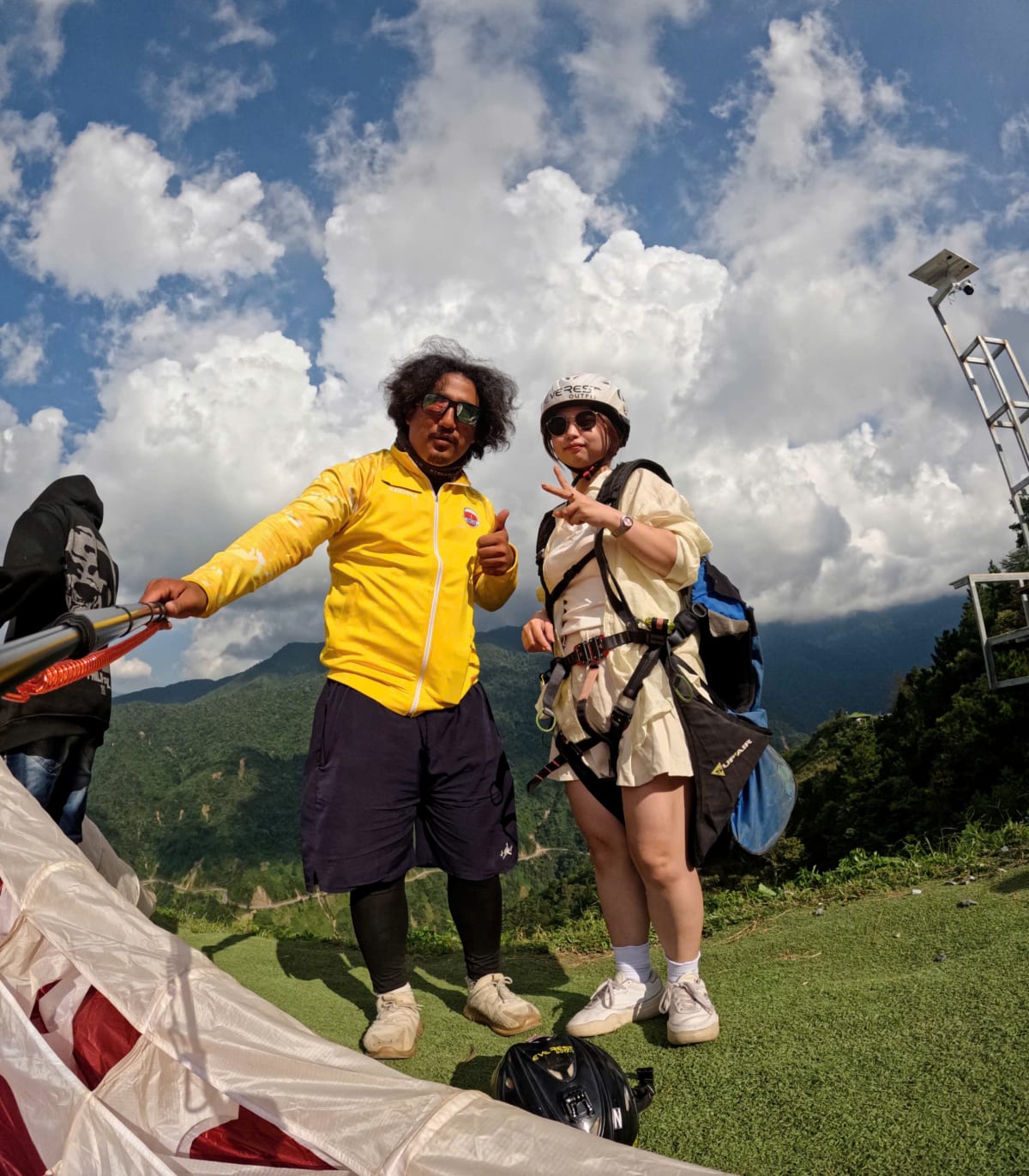
You do not need special gear to fly tandem over Muong Hoa Valley — the wing, harness, helmet and insurance come with every package. What you do control is what you wear and what you carry up to the take-off at Hang Da village. Get it right and you stay warm, comfortable and look great in the GoPro video. Get it wrong and you spend the flight thinking about cold hands or a skirt in the wind. Here is the practical checklist we give our own passengers, season by season.
👕 The Short Version: Dress for a Mountain Walk, Not a Beach
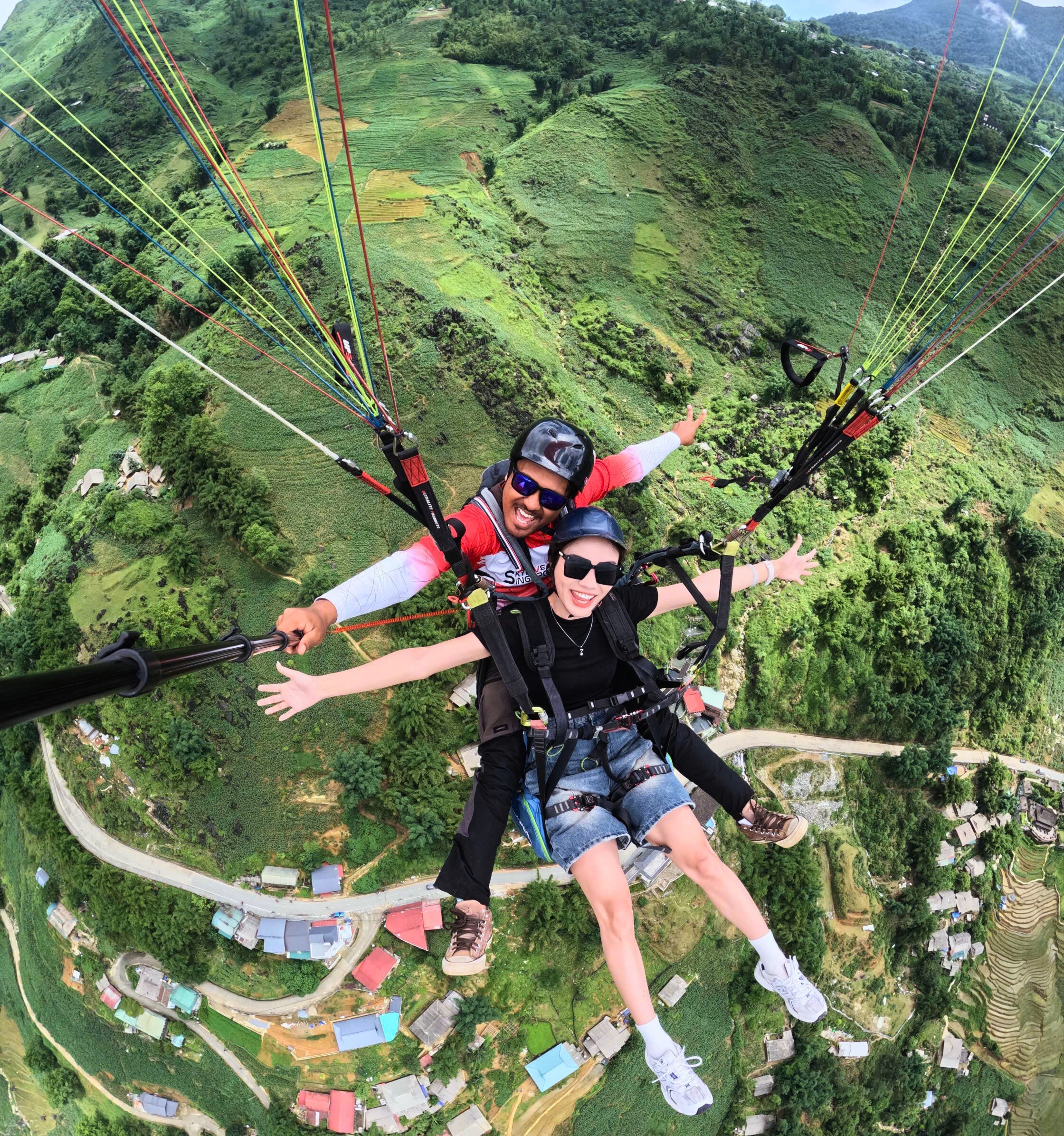
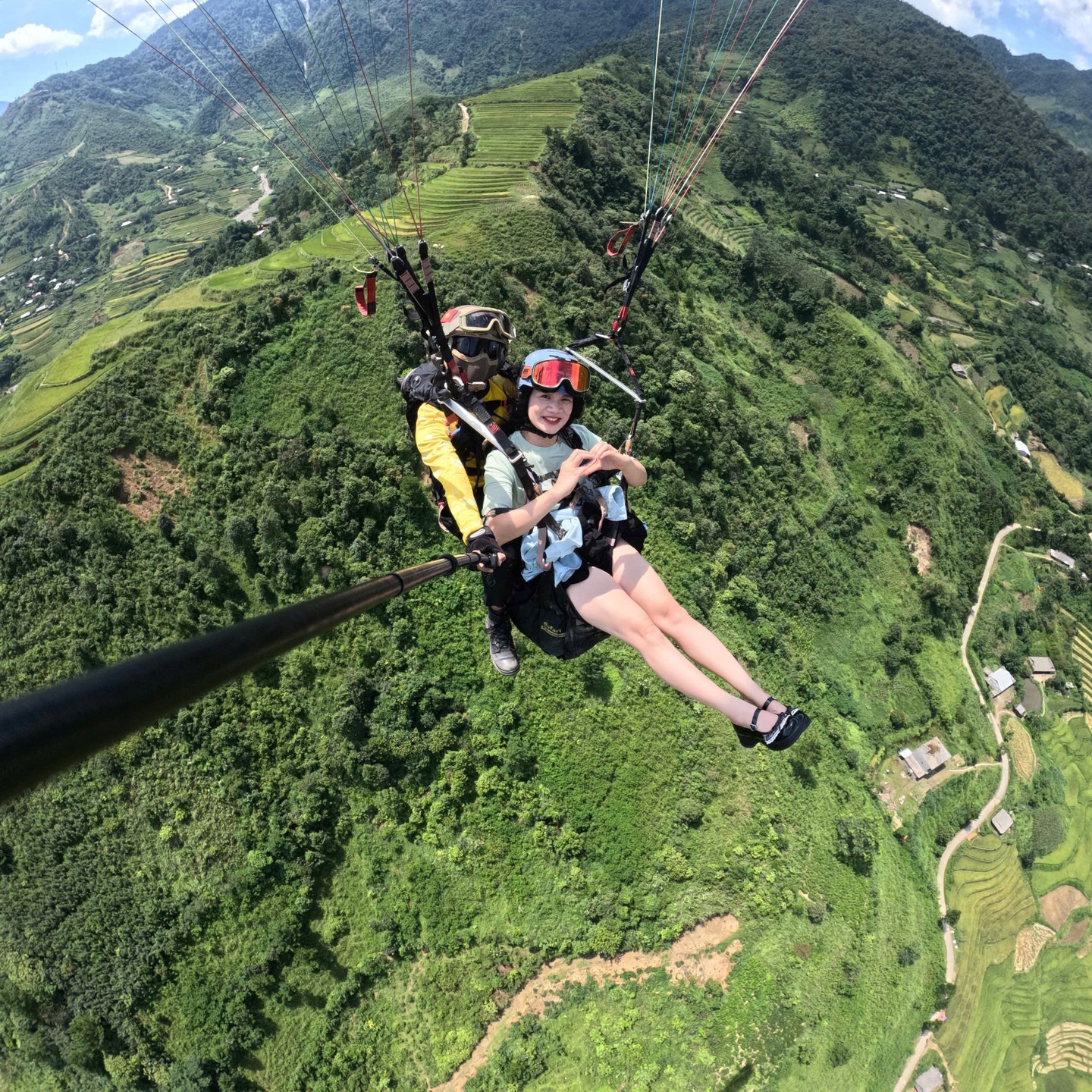
The rule is simple: comfortable sportswear with long sleeves and long trousers. Long clothing protects your arms and legs from sun and wind in the air, and from grass and the harness straps on the ground. Skirts and dresses are not suitable — you sit in a harness with your legs forward and you need to run a few steps at take-off. Jeans are fine if they let you run freely; leggings or trekking trousers are even better. One tip for the photos: bright colours — red, yellow, orange, blue — stand out beautifully against the green or golden terraces. Dark or dull clothes tend to disappear into the landscape.
👟 Shoes: Grip Matters More Than Style
Take-off means a short, firm run down a grassy slope, and your pilot will ask you to keep running until he tells you to stop. Wear sneakers or hiking boots with a good grip. High heels are not allowed, and flip-flops or loose sandals are a bad idea too — they come off or twist an ankle at exactly the wrong moment. Forgot proper shoes? No problem: we can lend you a pair free of charge Just let us know when you book.
🕶 Sunglasses and Prescription Glasses
In flight you meet wind of around 40 km/h in your face, plus strong UV at altitude. Sunglasses are recommended — they keep your eyes from watering so you can actually see the terraces. If you wear prescription glasses, you can keep them on; you will see the valley much better. Choose a pair that sits snugly, and your pilot can help check they are secure under the helmet before take-off.
🌦 Layers by Season: What to Wear Month by Month
The take-off at about 1,500 m is 2–3 °C colder than Sapa town, and the airflow in flight makes it feel cooler still. So whatever the season, bring one more layer than you think you need — you can always leave it with your belongings at take-off.
September (golden rice) and October–December (autumn)
Two of Sapa's best seasons: golden rice in September (harvested by early October), then autumn from October to December, with plenty of sunshine, dry air, clear blue skies, stable weather and little morning fog. A long-sleeved T-shirt or light shirt with a thin jacket or windbreaker on top is usually perfect. Bright colours look stunning against the golden terraces in September. By late November and December mornings turn cold, so dress as for December–March below.
May–June (water-pouring season)
Another of the best seasons, when the terraces are flooded and mirror the sky. Similar outfit to autumn: light long sleeves plus a windbreaker, and sunglasses for the reflected light off the water.
July–August (green rice season, afternoon storms)
Afternoon thunderstorms are common, while mornings usually fly. Morning flights can still be fresh at take-off, so keep a light layer, and pack a compact rain jacket for the rest of your day in the valley. Quick-dry fabrics beat cotton.
December–March (cloud-hunting season, cold)
This is the cloud-hunting season. The north-east monsoon brings drizzle and persistent fog, and on many days it is below 10 °C at take-off. Flights happen on chosen days, often 2–3 days after a cold front passes. Dress properly: thermal base layer, fleece or sweater, and a windproof down or padded jacket, warm trousers, thick socks. A scarf or neck warmer that tucks inside your collar and warm gloves make a big difference at 40 km/h of wind.
🎒 What to Bring — and What to Leave at the Hotel
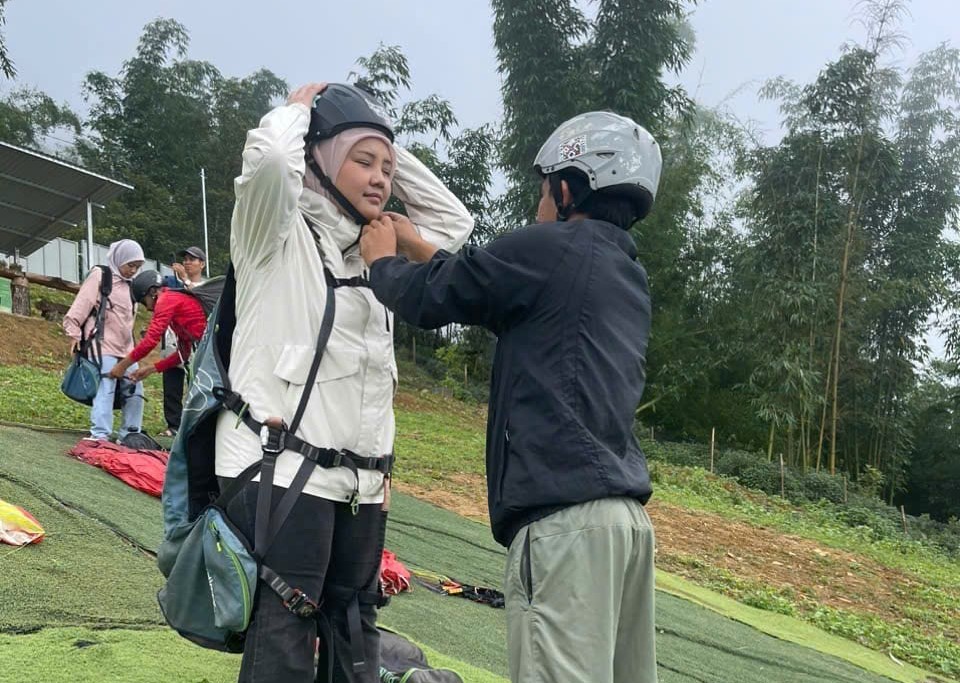
You can fly with a small personal bag of 1–2 kg for the essentials: phone, keys, documents. Anything you do not need in the air can be left during the briefing at take-off, and phone storage is available if you prefer not to carry it. You do not need to bring cash for a deposit — there isn't one. You pay when you arrive at the flying site, in cash, by bank transfer or by card.
Leave behind: big backpacks and suitcases (keep them at your hotel), and anything loose that the wind can take — caps, sun hats, scarves that flap, loose jewellery. A cap will not fit under the helmet anyway, and anything dropped over the valley is gone for good.
📸 Phone and Camera: Let the GoPro Do the Work
Many passengers plan to film with their phone. You do not need to: GoPro photos and video of your whole flight are included in the basic package, and the files are yours after landing. Holding a phone in 40 km/h of wind is how phones get dropped, and you will enjoy the view more with free hands. Want footage from outside the wing? Add drone filming (+300,000 VND) or a 360° camera (+500,000 VND) when you book.
💇 Hair, Sun and Small Details
Tie long hair back in a low ponytail or braid so it fits under the helmet and does not whip your face (or your pilot's). Put on sunscreen before you leave the hotel — at altitude the sun burns faster than you expect, even on a cool day. Lip balm helps in the dry winter wind. And empty your pockets of anything you would not want to lose.
🧒 Dressing Kids for the Flight
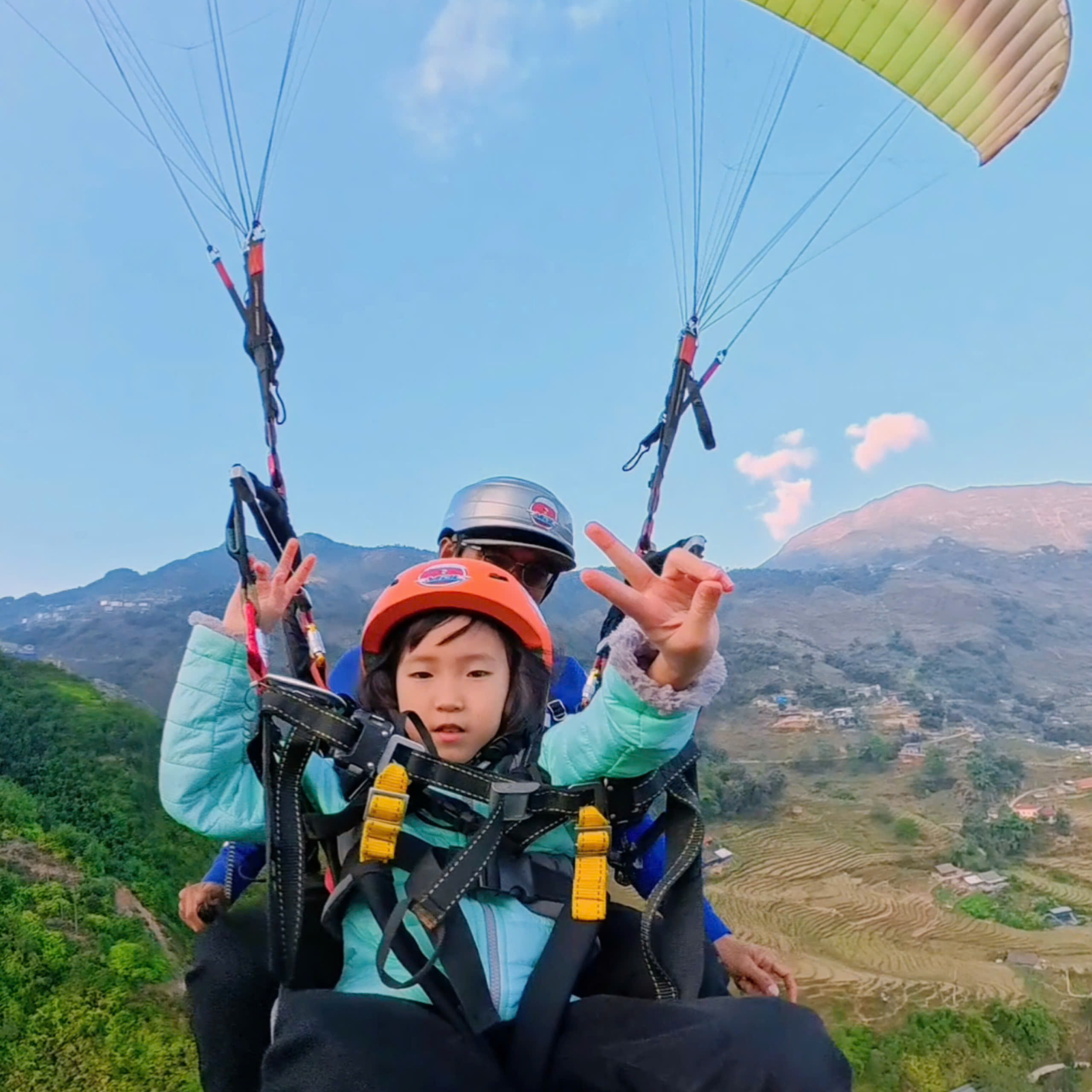
Children can fly from 3 years old; anyone under 18 flies with a parent or legal guardian who signs the consent. Kids get cold faster than adults, so give them the same outfit as yours plus one extra layer: long trousers, closed shoes, a warm jacket, and gloves in winter. Tie long hair back and skip hair clips that could press under the helmet.
✅ Quick Packing Checklist
- Long-sleeved top and long trousers (no skirt or dress)
- Sneakers or hiking boots — free shoe loan if you need it
- One extra warm layer (take-off is 2–3 °C colder than town)
- Nov–Mar: thermal layer, down/padded jacket, warm gloves, neck warmer
- Jul–Aug: compact rain jacket for the afternoon
- Sunglasses (prescription glasses are fine)
- Long hair tied back, sunscreen on
- Small bag 1–2 kg: phone, keys, documents
- Payment at the flying site: cash, bank transfer or card
- Leave at the hotel: big bags, caps, loose items
Finally, be ready at your meeting point 15–30 minutes before your pick-up time, dressed and with your layer in hand. The whole experience takes about 1 hour 30 minutes including pick-up, briefing, flight and return. Before your flight day, also read the Pre-flight notes page on our website (paraglidingsapa.com/en/pre-notice).
❓ FAQ: What to Wear for Paragliding in Sapa
❊ Can I wear a dress or skirt? No. You sit in a harness with your legs forward and run at take-off, so long trousers are required. Leggings or trekking trousers work best. ❊ Can I fly with my glasses on? Yes. Prescription glasses are fine, and sunglasses are recommended against UV and the roughly 40 km/h wind in flight. Pick a pair that sits snugly. ❊ Can I bring my phone? Yes, in a small bag of 1–2 kg with your keys and documents, or leave it in phone storage at the site. Since GoPro photos and video are included, you do not need to film yourself. ❊ Do I need gloves in winter? Not required, but warm gloves are a very good idea from November to March, when many days are below 10 °C at take-off and the wind in flight makes it feel colder. ❊ What if I don't have suitable shoes? Let us know in advance — we lend shoes free of charge. Just avoid high heels and flip-flops.