Sapa Paragliding · Guide
Sapa Paragliding + Lao Chai Trekking: A 1-Day Itinerary in Muong Hoa (2026)
Take off in the morning for a paragliding flight over the Muong Hoa valley from 1,500m, then trek Lao Chai – Ta Van in the afternoon. Hour-by-hour itinerary, 2026 prices, flight requirements and what to pack.

- What This Combo Is and Why Pair Them
- Leg 1 — Paragliding Over Muong Hoa
- Leg 2 — Trekking Lao Chai – Ta Van – Giang Ta Chai
- Why Fly First, Walk After
- Hour-by-Hour Itinerary
- All-Inclusive Pricing
- Flight Requirements: Weight, Age, Health
- What to Pack
- Best Season to Go
- Getting to Sa Pa
- Photo Highlights on Each Leg
- Frequently Asked Questions
1. What This Combo Is and Why Pair Them
Come to Sa Pa and sooner or later you'll face this question: should you trek through the Muong Hoa Valley, or fly over it on a paraglider? Most people pick one. Time is tight, so you keep it simple. But here's a detail few travellers notice: the landing field sits right in Lao Chai village — the very starting point of Sa Pa's most famous trekking route. You unclip your harness, walk a few dozen steps, and you're already on the trail. No taxi to catch, no trip back to the hotel, no half a day lost in transit. In other words, these two experiences aren't rivals. They fit together perfectly. The route has two legs
| Leg 1 – Paragliding | Leg 2 – Trekking | |
|---|---|---|
| Start point | Hang Da Village | Lao Chai Village |
| End point | Lao Chai Village | Giang Ta Chai |
| Altitude | 1,500 – 2,000m | 900 – 1,400m |
| Duration | 8–15 min in the air (~90 min full package) | 4–6 hours |
| Distance | - | 9–12 km |
| Difficulty | No experience needed | Easy – moderate |
To recap: departure at 7:00 AM, returning to Sapa town centre around 4:30 PM.
💡 Note: If you only have half a day, skip the Giang Ta Chai leg and finish at Tả Van. The shortened route is about 6 km, getting you back to Sa Pa by 2 PM.
2. Leg 1 — Paragliding Over Muong Hoa
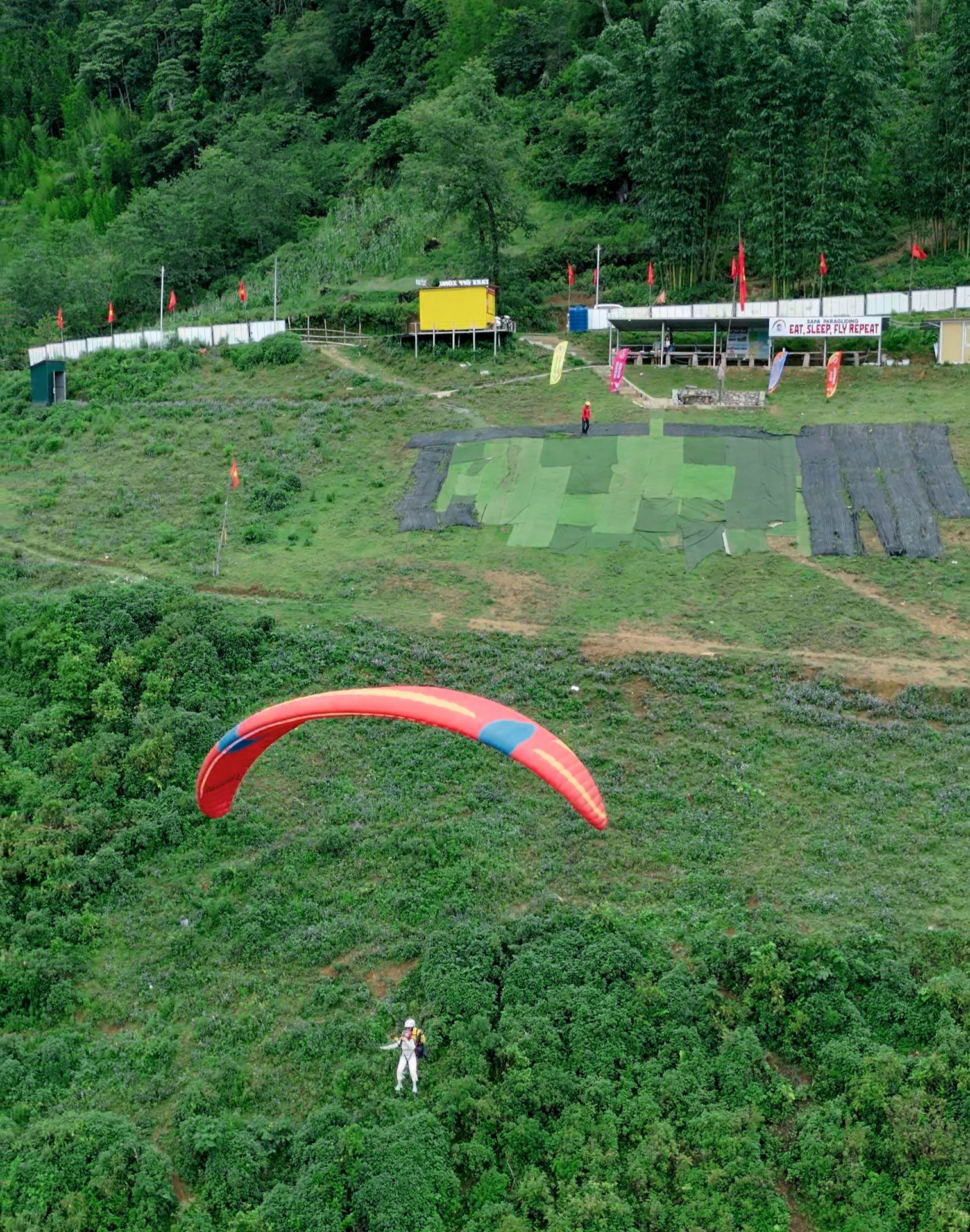
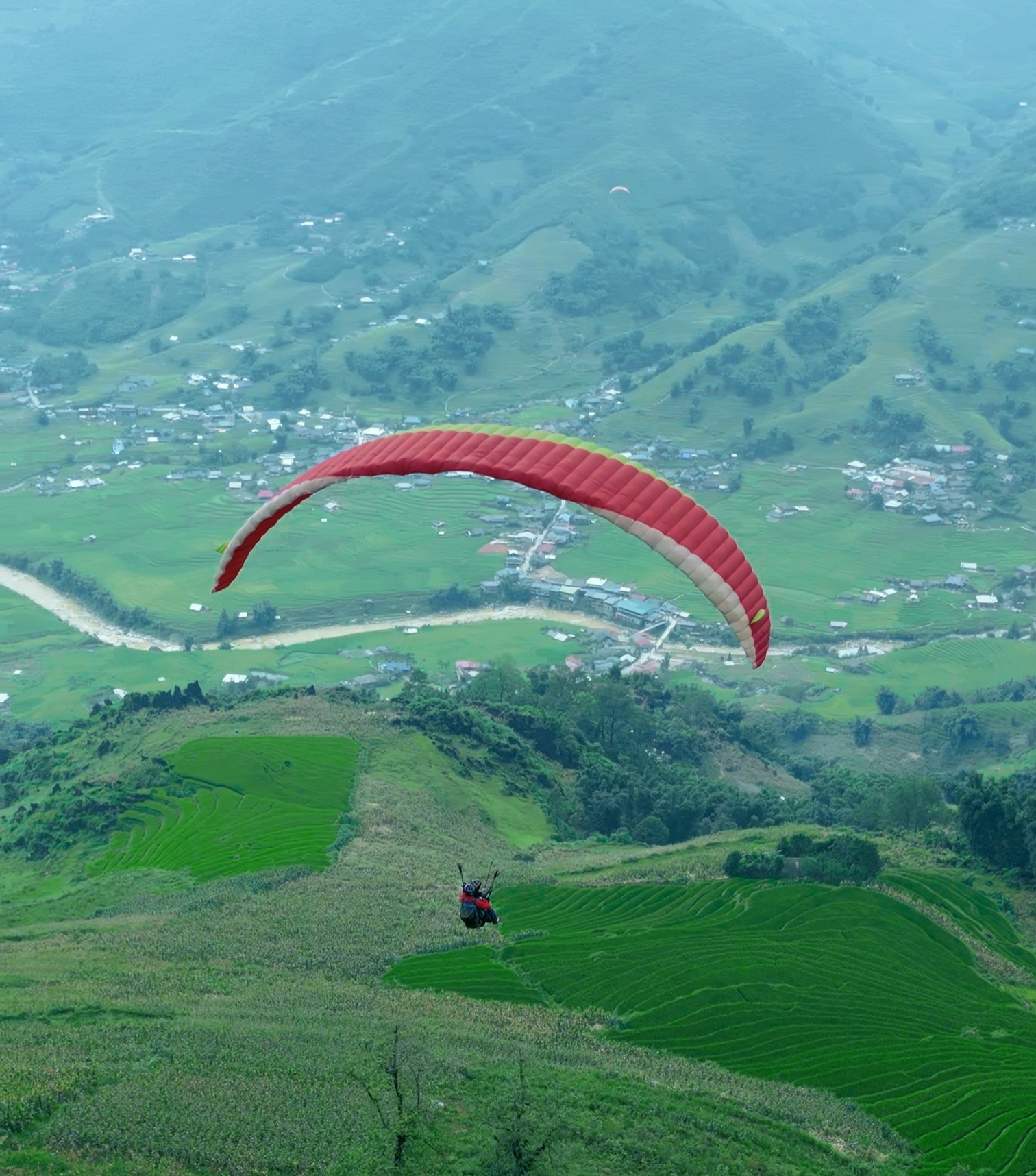
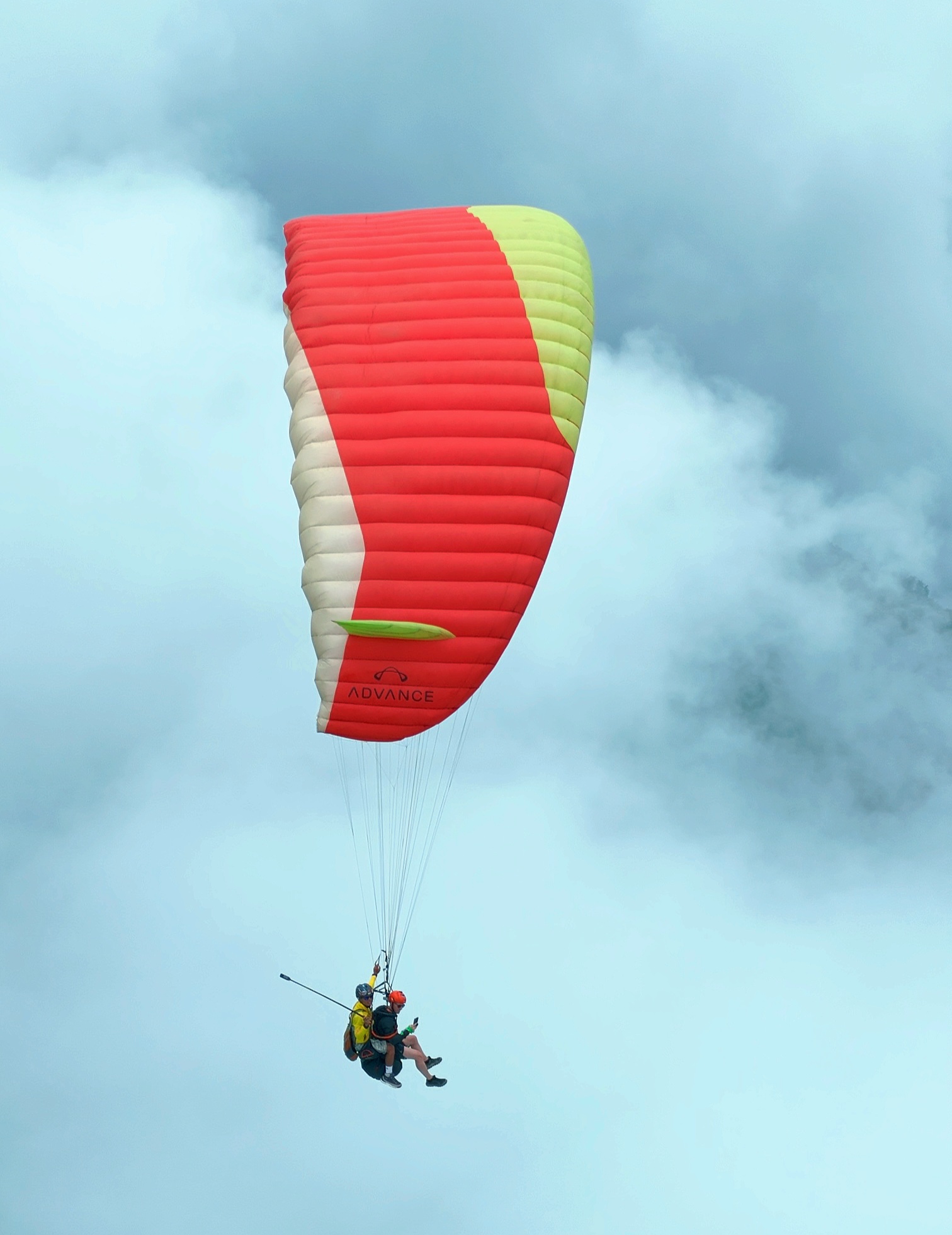
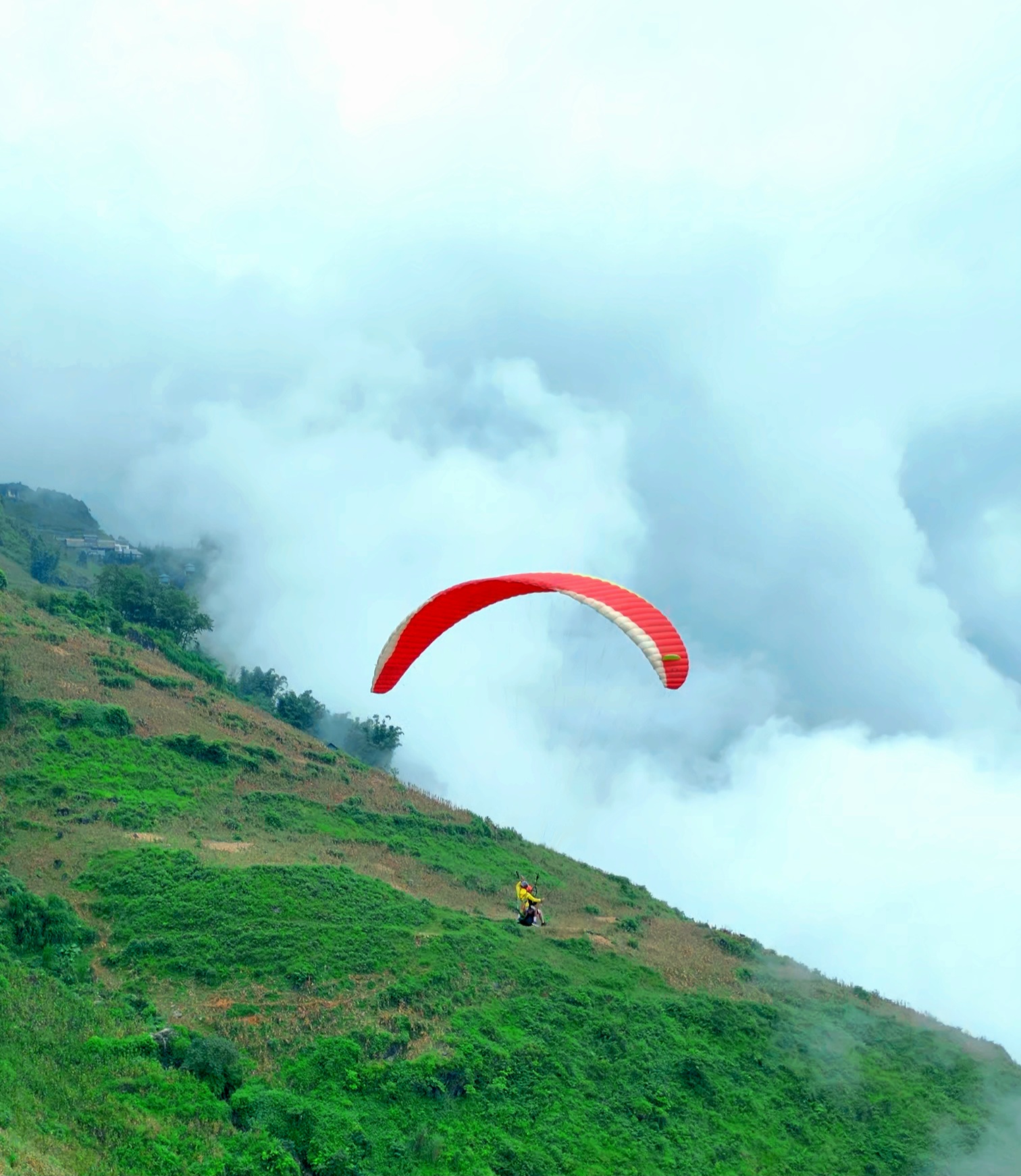
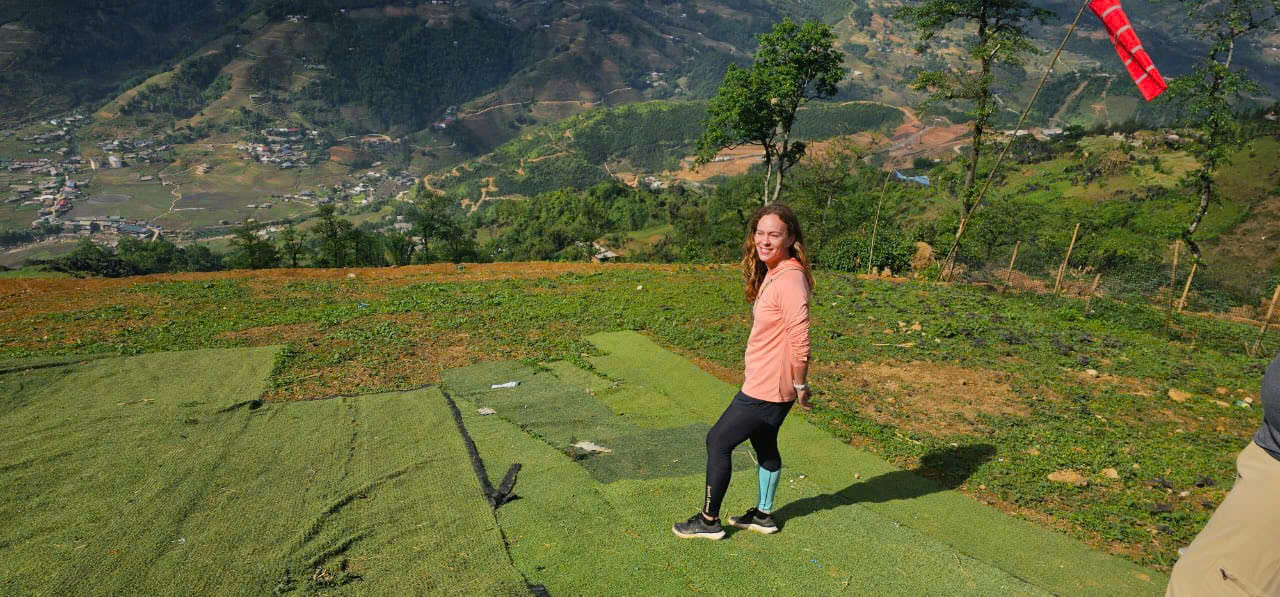
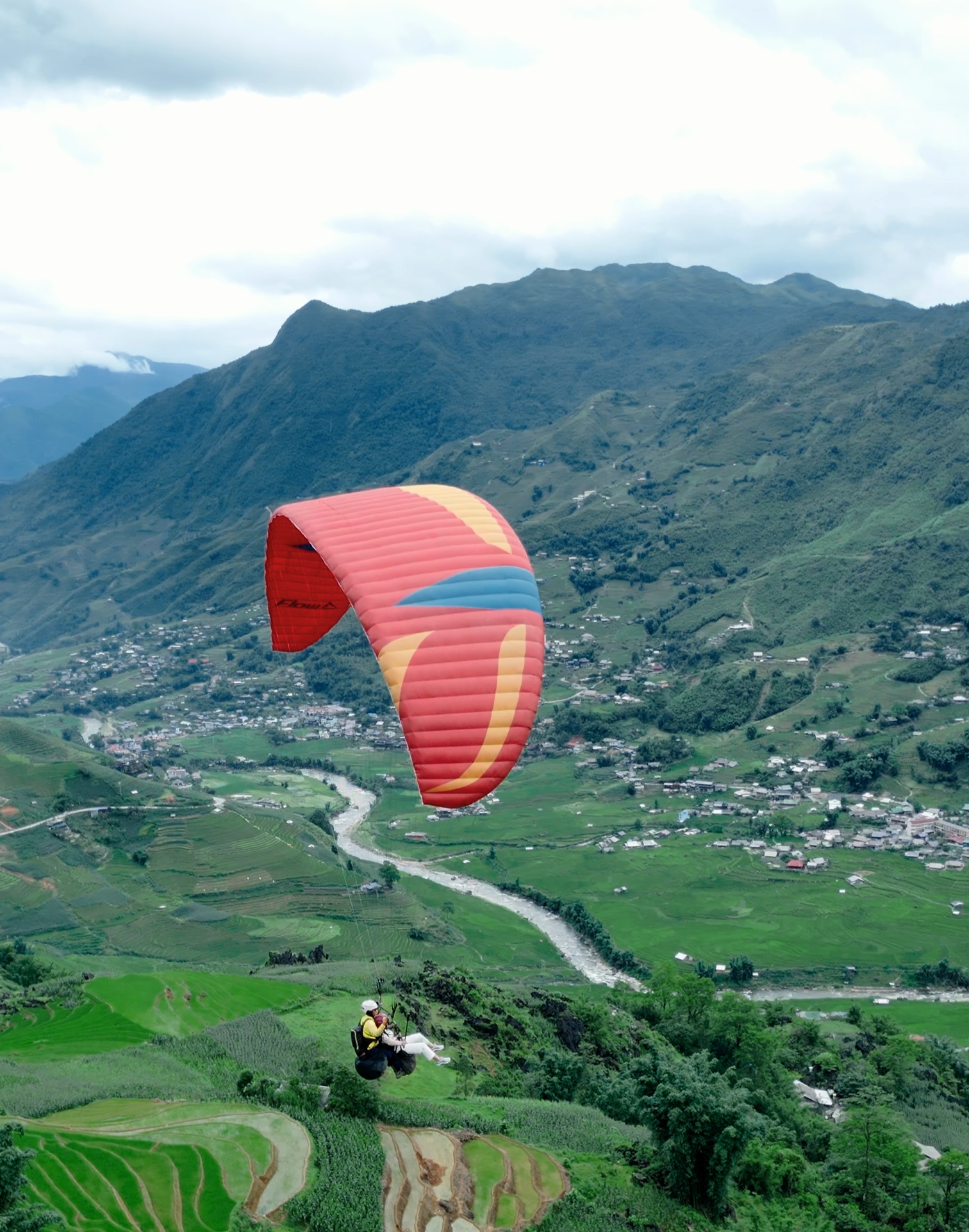
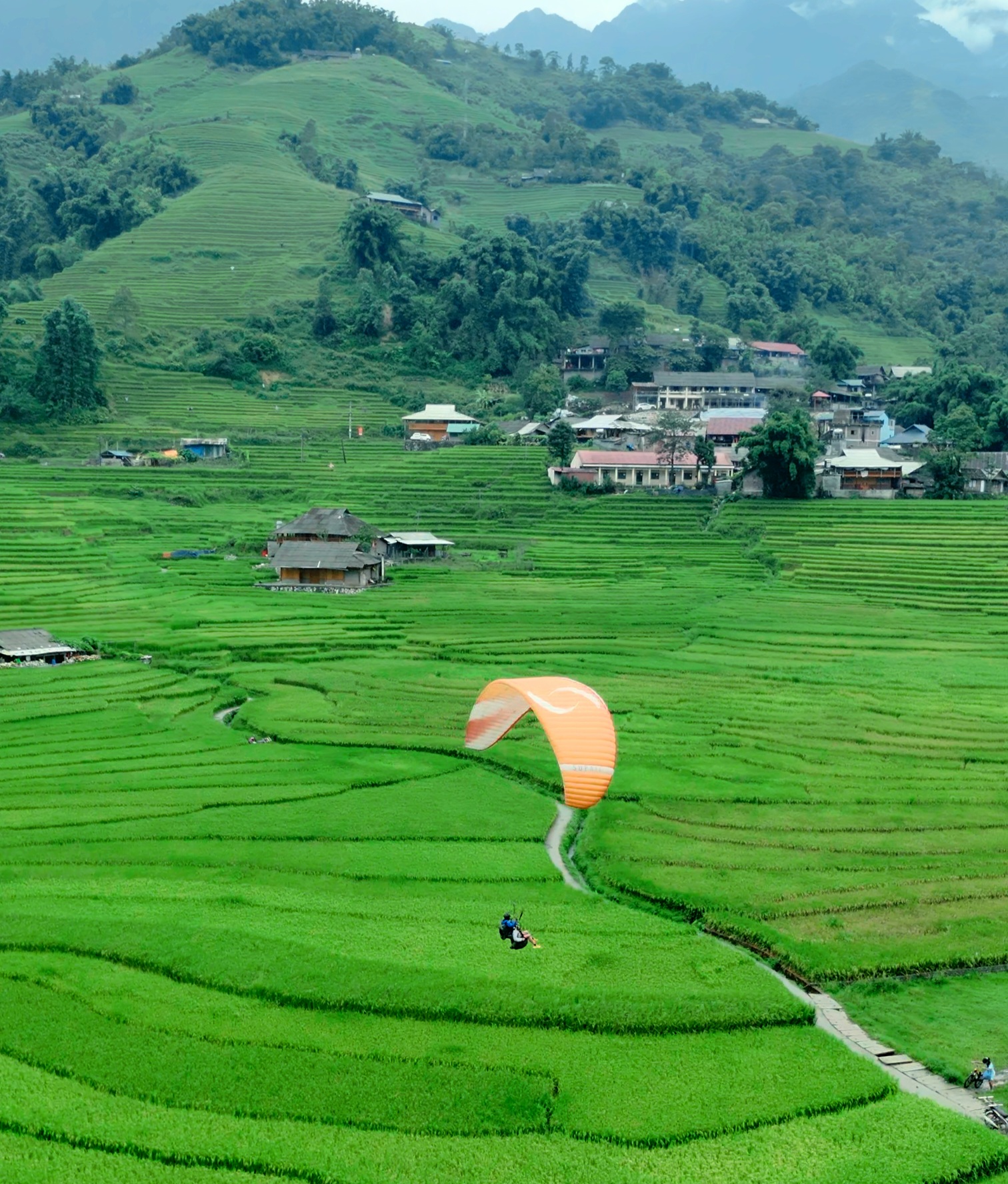
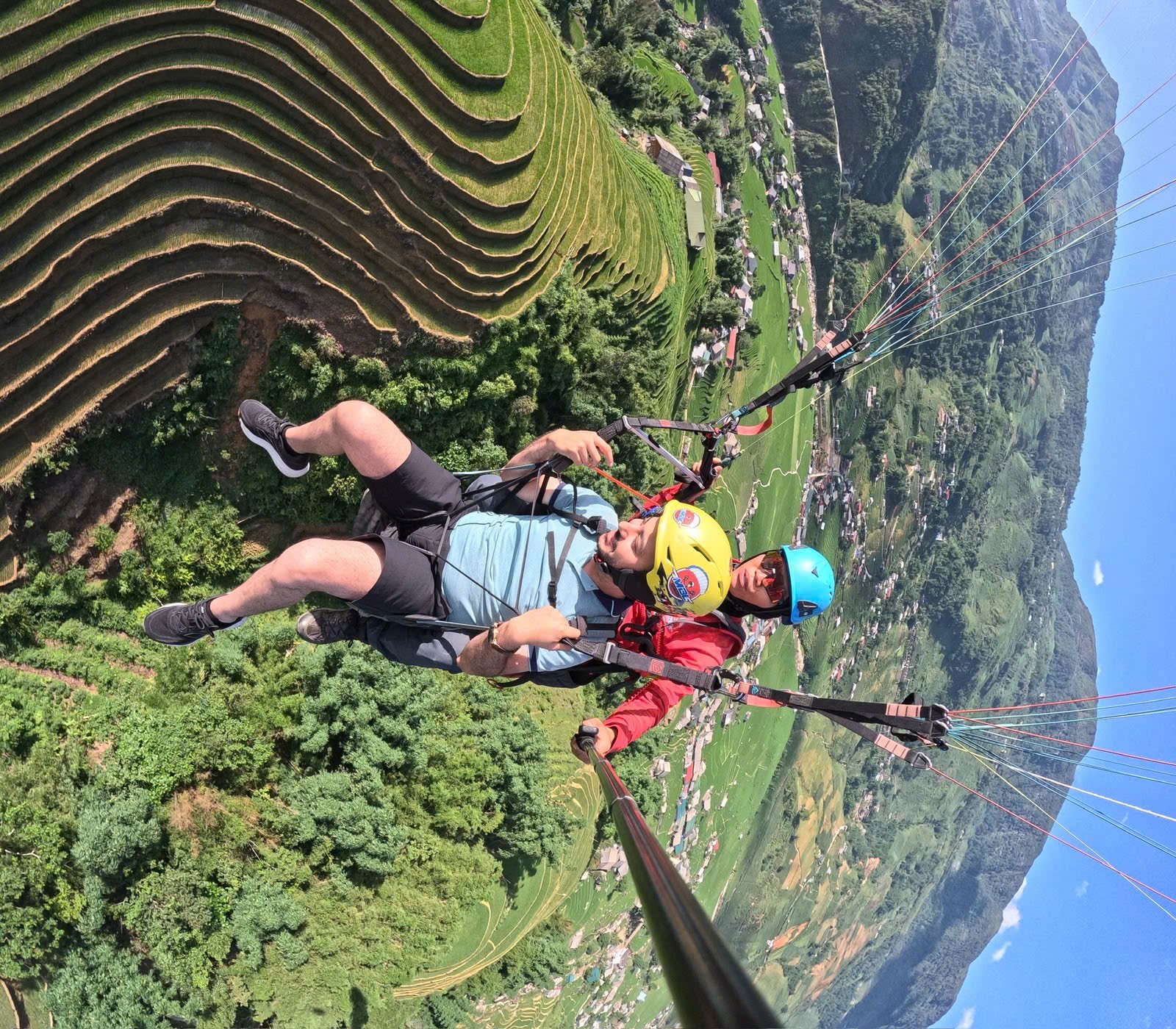
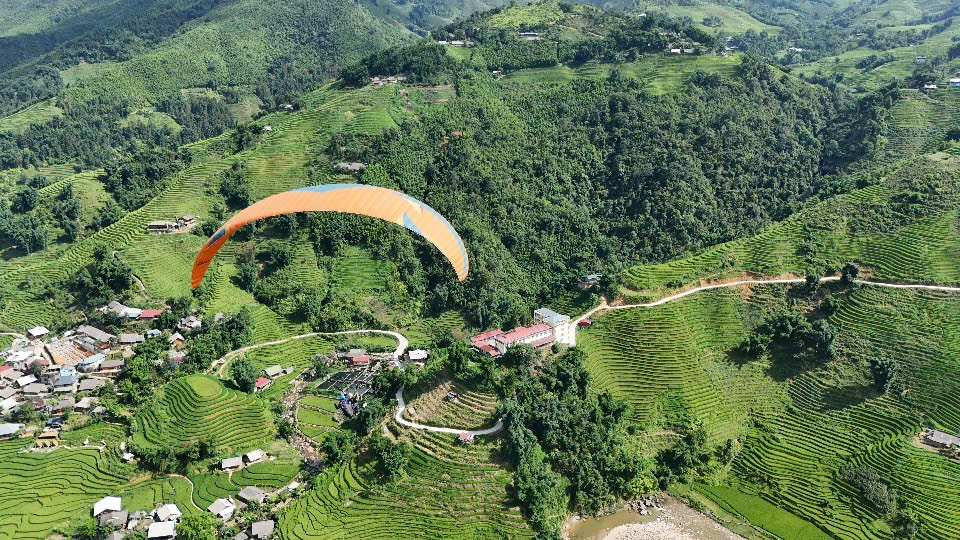
The launch site sits in Hang Da village, on a mountainside looking straight down into the valley. You take a few running steps, your feet leave the ground, and that's it. Tandem flying means a pilot sits behind you and handles everything. Your job: run at takeoff, then sit back and enjoy. No paragliding experience needed. What you'll see in those 8–15 minutes The first few minutes — the whole valley at once. What would take you five hours to walk now fits into a single glance. The Mường Hoa stream is a silver thread running along the valley floor. On either side, terraced rice fields climb the slopes, layer after layer. Mid-flight — Fansipan. On a clear day the 3,143m peak stands right to the west, and you see it almost at eye level instead of craning your neck. Morning flights often catch clouds pooling in the gullies below — meaning you're looking down on the clouds. There's nowhere on the ground you can get this view. Coming down lower — the villages sharpen. Rooftops in Lao Chải separate from the green. Then you make out people, water buffalo, tiny winding footpaths — the very trail you'll walk later. Landing in the middle of the Lao Chai fields. Leg 1 done.
Three things you can only see from above The path of the water. The Muong Hoa rice terraces survive thanks to a network of channels that draws water from mountain streams and carries it across hundreds of paddies, entirely by gravity — no pumps, no electricity. On foot, all you notice is a tiny ditch by your feet. From the air, the whole system reveals itself at a glance, and you understand right away why the valley stays green even in the dry season. The grain of the terraces. Every paddy ridge follows a contour line curving around the mountainside. Thousands of these lines stack one above the other, and seen from above they look exactly like wood grain or a fingerprint. This is the image that made the rice terraces of the Northwest famous. Why the villages sit where they do. Why is Lao Chai down on the valley floor while Giang Ta Chai clings to the mid-slope? Fly up and it becomes obvious: each community chose an elevation suited to the way it farms. Villages, terraces, water and footpaths link together into a single map — one you only ever glimpse in fragments from the ground.
⚠️ Please note: Paragliding depends entirely on the wind. If the wind turns against us or picks up beyond safe limits, your flight will be pushed back or moved to the following day. This is perfectly normal, not a mishap. We recommend booking your flight on the first day of your trip so you have a backup day.
3. Leg 2 — Trekking Lao Chai – Ta Van – Giang Ta Chai
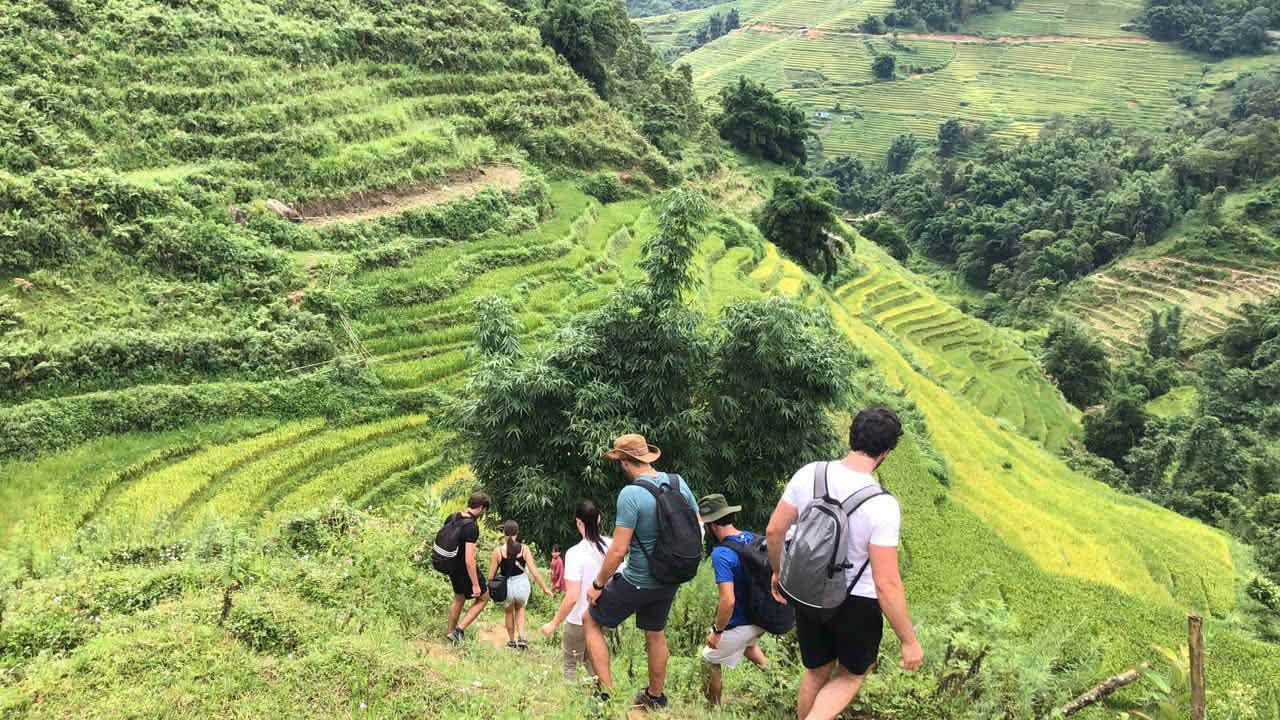
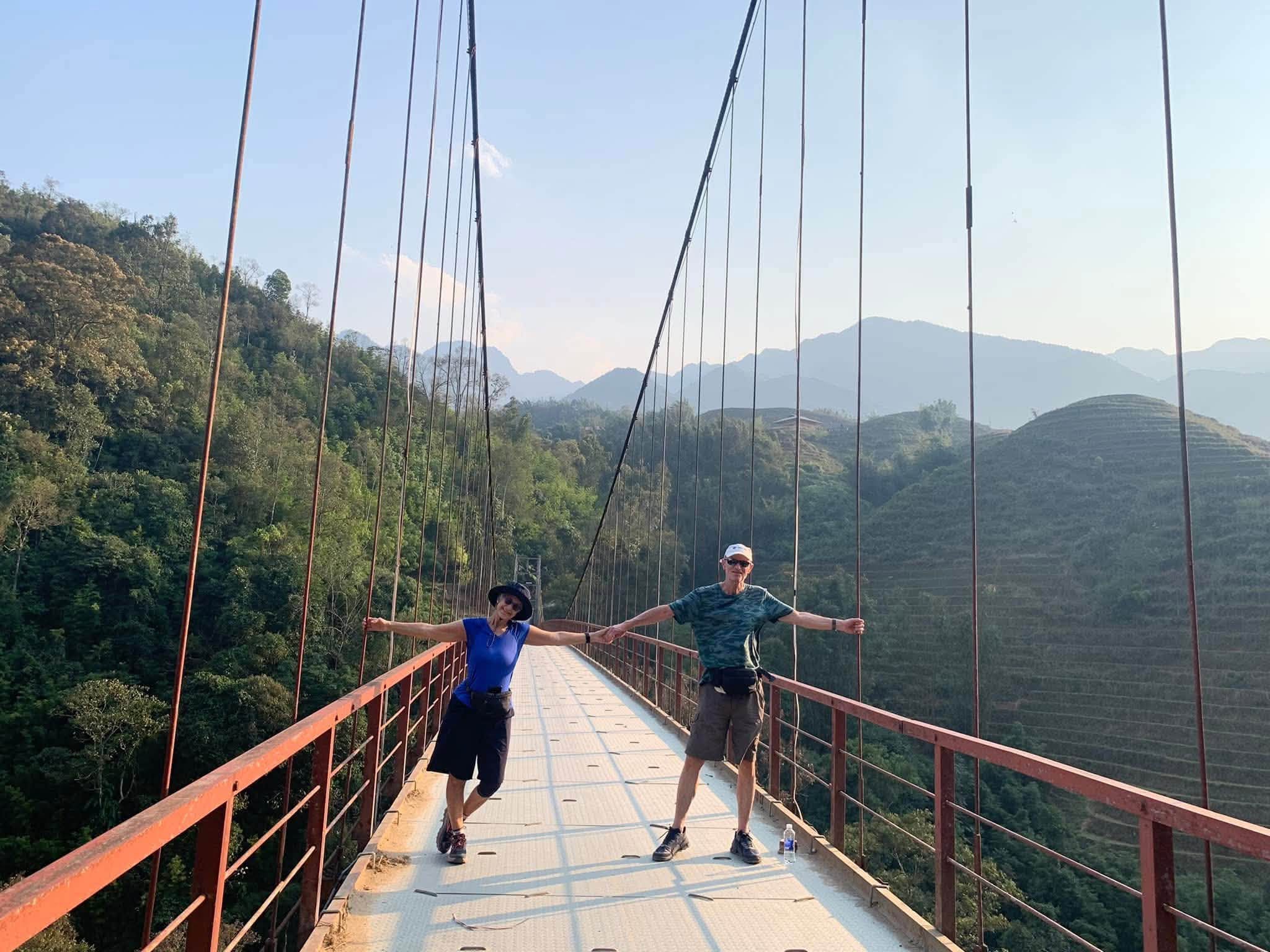
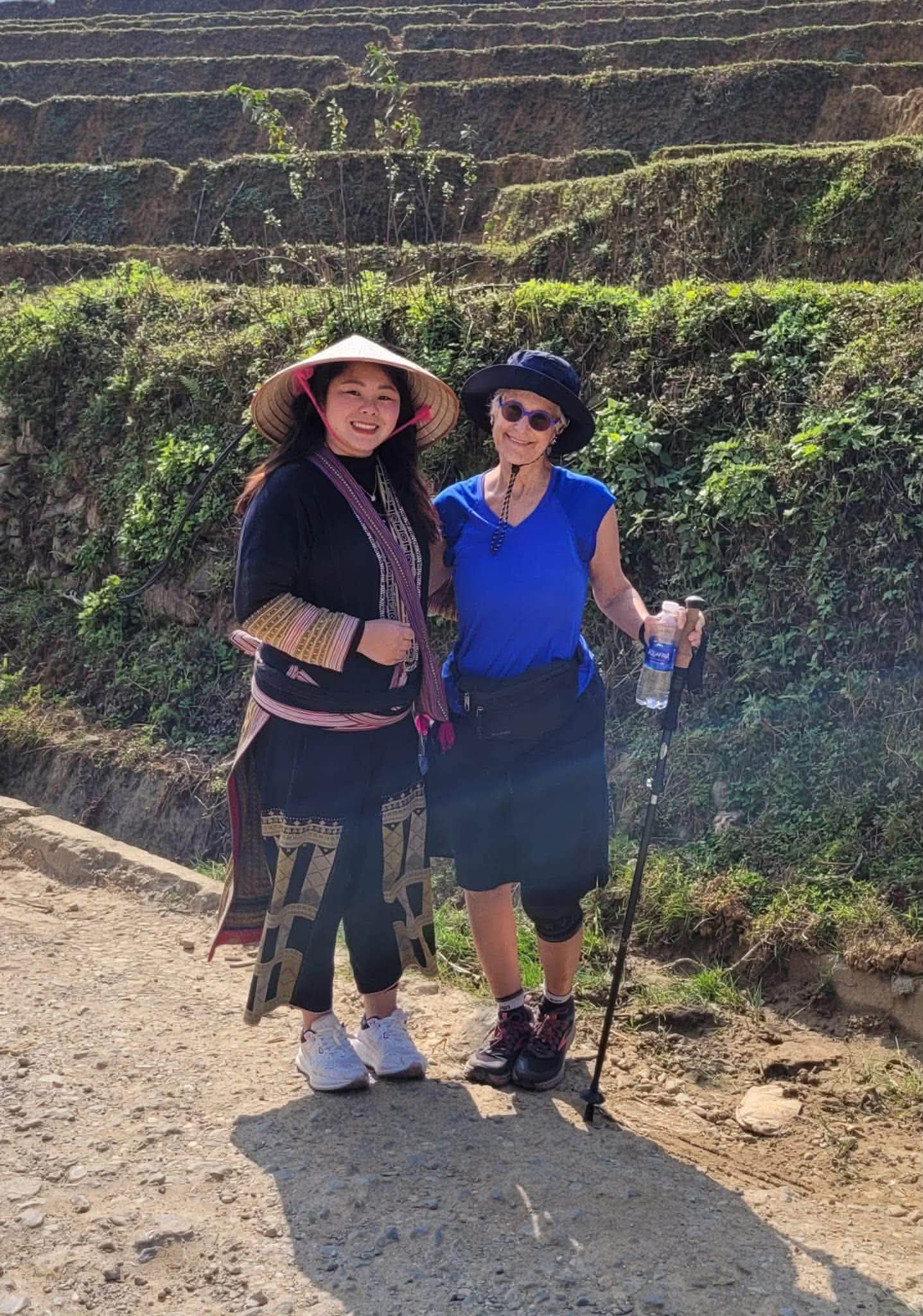
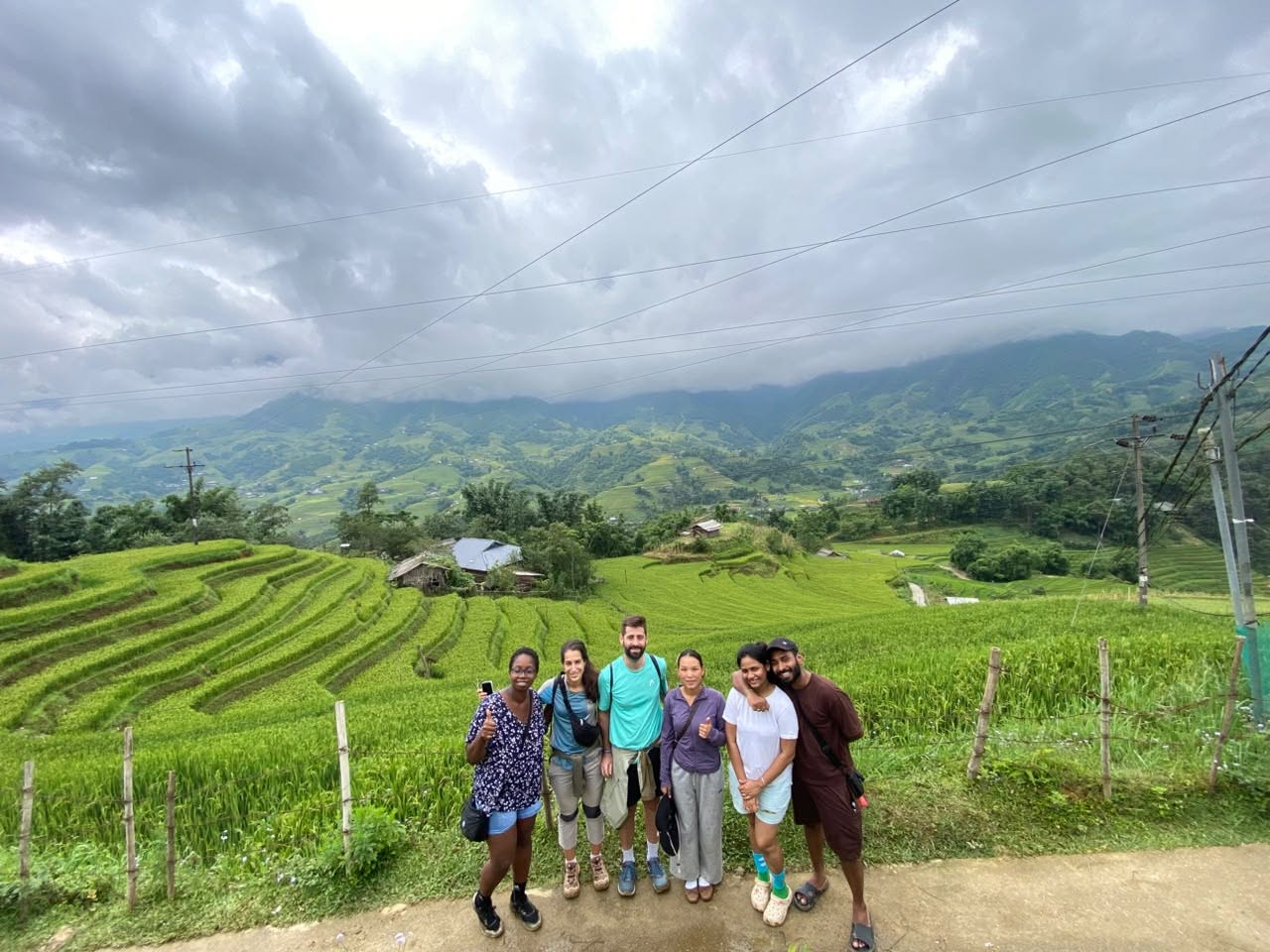
You're standing right at the trailhead. From here the route follows the Muong Hoa stream, passing through three villages belonging to three different ethnic groups — and here's the fascinating part: they're only a few kilometres apart, yet the clothing, the houses and the languages are completely different. Lao Chai — a Black H'Mong village, set where the valley opens out at its widest. The rice terraces here are among the most beautiful in Sa Pa, thanks to the gentle gradient and the long, softly curving fields. H'Mông women here still dye with indigo and embroider by hand. Tả Van — a Giay village, about 3 km downstream from Lao Chai. The stilt houses, the language and the food are nothing like Lao Chai. Ta Van has a suspension bridge across the Muong Hoa stream and the greatest concentration of homestays — the perfect lunch stop. Giang Ta Chai — a Red Dao village, higher up on the opposite mountainside. Fewer visitors, steeper paths, but from up there you look back across the whole of Ta Van below. The Red Dao here are famous for their herbal bath remedies. Three things you can only see on foot The Sa Pa ancient rock field. Scattered across some 8 km² in the heart of the valley are more than 200 carved stone slabs: rice terraces, pathways, notched circles that many researchers believe are sun symbols, and human figures too. To this day no one has decoded their meaning. French professor Victor Goloubev of the École française d'Extrême-Orient began studying the rock field in August 1925, when only around 30 blocks had been recorded. In 1994 the site was recognised as a national historical and cultural heritage site. From the air they're just grey specks lost among the paddies. You have to stand right beside them and run your hand over the stone in the slanting sunlight before the carvings emerge.
Life in the village. The clack of a weaving loom. The smell of indigo dye. Kitchen smoke. A child carrying a younger sibling on her back. Water trickling through bamboo pipes. No camera lens can capture this layer. The terrace walls up close. Only when you stand beneath an earthen wall as high as your chest does it sink in: this was built by hand, one fistful of soil at a time, across more generations than anyone can count.
💡 Note: Some villages in the Muong Hoa Valley charge an entrance fee (usually 40,000–75,000đ per person, collected at the checkpoint at the village entrance). It's a good idea to carry small change. Fees may change from year to year — check with your guide before you set off.
4. Why Fly First, Walk After
There are three very practical reasons. First, the wind. Mornings in Muong Hoa tend to bring calmer, steadier air. As the day wears on, temperature swings grow wider and the wind gets harder to read. Leave the flight until the afternoon and your chances of a delay go up sharply. Second, it's simply on the way. You land right at the starting point of the trek. No extra transfers, no waiting around for a ride, no doubling back to town. Third — and this is the best part — flying first gives you a map in your head. All through the walk, every few minutes there's an "ah, that's the stream I just saw from above," or "that village over there is the one I flew across." The hike becomes far more fun, because you're not just looking — you're recognising. If you have two days, you can flip it around: trek on the first day, fly the next morning, and finish your trip with a proper "zoom out." A whole day of tired legs on the trail, captured in ten seconds from the sky — that feeling is well worth it too.
5. Hour-by-Hour Itinerary
| Time | Activity | Notes |
|---|---|---|
| 07:00 | Hotel pickup in central Sa Pa | Transfers included from the Standard package up |
| 07:30 | Arrive at Hang Da village | Mountain road, about 20–25 minutes |
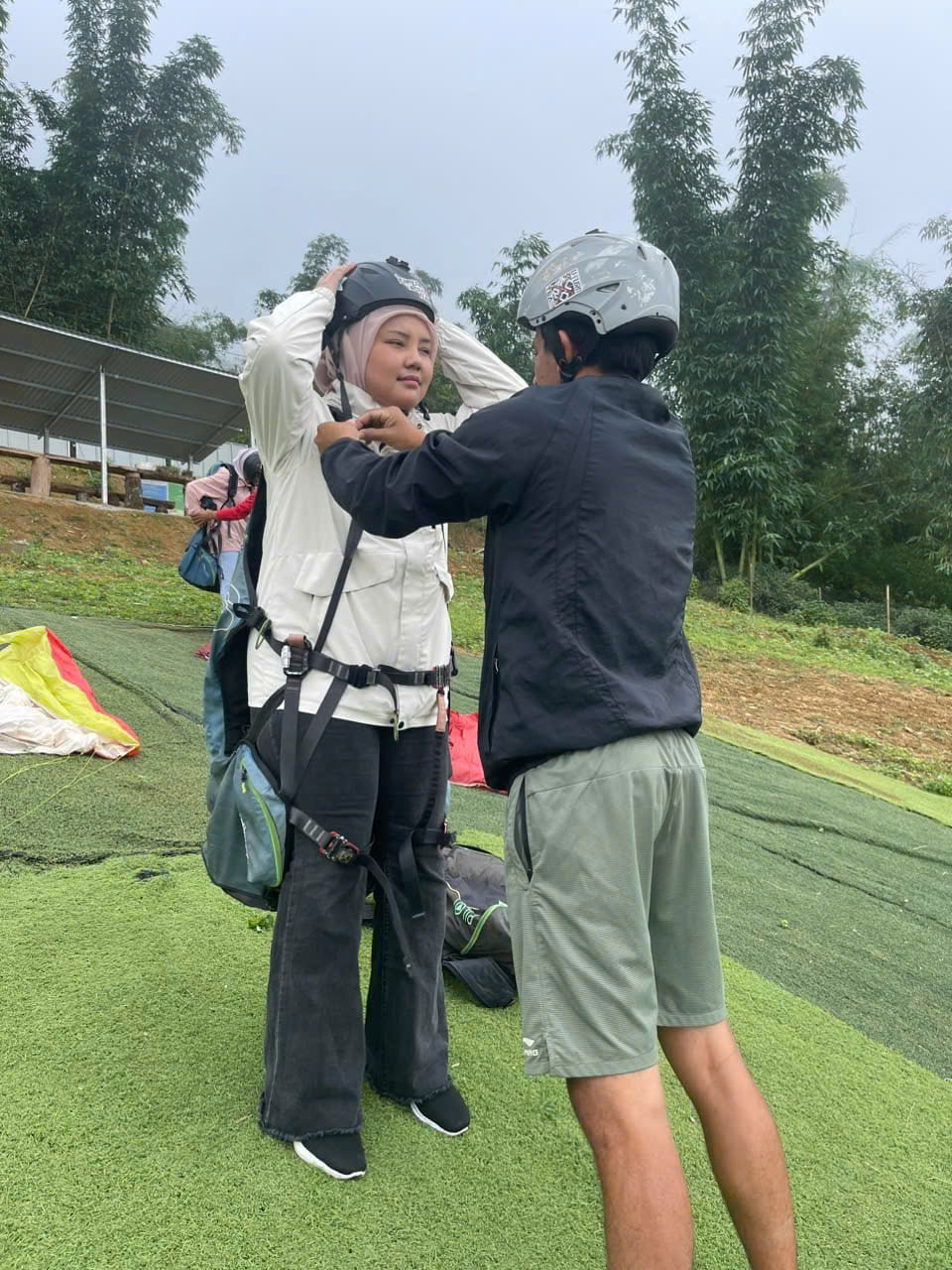
| 07:45 | Harness fitting, gear check and safety briefing | About 15 minutes |
| 8:15 | Take off. 8–15 minutes flying over the valley | Flight order by group, short wait possible |
| 8:45 | Land at Lao Chai, receive GoPro photos and video | Water and a short break |
| 9:00 | Start trekking from Lao Chai along the stream | Change into walking shoes |
| 10:30 | Stop at the Sa Pa ancient rock field | Allow at least 45 minutes |
| 12:00 | Reach Ta Van, lunch at a Giay homestay | 100,000–200,000đ per person |
| 13:30 | Climb up to Giang Ta Chai | Steepest section of the day |
| 15:30 | Descend, finish the trek, van pickup | Pickup point arranged in advance |
| 16:30 | Back in central Sa Pa |
⚠️ A note on timing: The schedule above is ideal. In reality, take-off times depend on the wind and how many guests are flying that session. Please allow an extra 30–60 minutes, and avoid booking a train or bus out of Sa Pa before 7 PM the same day.

6. All-Inclusive Pricing
Paragliding Flight
| Package | Price | Includes |
|---|---|---|
| Basic | 2.090.000đ (~82 USD) | 8–15 min flight, GoPro video, drinking water, insurance, certificate |
| Standard ⭐ | 2.190.000đ (~88 USD) | Same as Basic + hotel pick-up & drop-off |
| Premium | 2.990.000đ (~116 USD) | Same as Standard + drone footage + 360° camera |
No deposit required — reserve your spot now, pay only after you fly. If the weather doesn't allow flying, you get a 100% refund.
💡 Which package should you pick? For this trekking combo, Standard makes the most sense — it already includes transfers, so you won't have to sort out your own ride up to Hang Da at 7 in the morning. Go for Premium if you want drone footage shot from the outside, something the GoPro mounted on the glider simply can't capture.
Remaining charges on the day
| Item | Estimated cost |
|---|---|
| Village entrance fee (if applicable) | 40,000 – 150,000đ |
| Lunch at a Ta Van homestay | 100,000 – 200,000đ |
| Local guide (optional) | 300,000 – 500,000đ/group |
| Water and snacks | 50,000 – 100,000đ |
| Full-day total (Standard package) | ~2.5 – 3 million đồng/person |
7. Flight Requirements: Weight, Age, Health
Tandem paragliding is far more accessible than most people imagine. You don't need special fitness, you don't need to know how to swim, and you don't need any experience. Usually not suitable for: ✔️ Women who are pregnant ✔️ People with heart conditions or uncontrolled blood pressure ✔️ People recovering from recent surgery, or spinal or lower-limb injuries ✔️ People unable to run a few steps on their own at take-off On weight: there are both upper and lower limits, depending on the wing and the pilot in charge. Just give us your true weight when you book — our flight team will match you with the right wing. There's no need to lose weight before flying. On age: children and older travellers can still fly as long as they're in good health and able to walk unassisted. Anyone under 18 must be accompanied by a guardian.
⚠️ Please note: Specific weight and age limits vary depending on the equipment and current regulations. Confirm the details directly with us when you book rather than relying on information from third-party ticket sites.
8. What to pack
What makes this route special is that you need to prepare for two very different activities in the same day. That's the part most people underestimate. Essentials: ✔️ Sports shoes or trekking shoes with good grip. You'll wear them for both the flight and the walk. Absolutely no flip-flops, no sandals, no heels — you need to run at take-off and cross muddy field paths on foot. ✔️ A light jacket. It's about 5–7°C colder up high than down in the valley, plus the wind. ✔️ Long, fitted trousers. Avoid skirts and wide-leg pants. ✔️ Drinking water — at least 1.5 litres for the trekking part. ✔️ Small cash notes — village fees, lunch, shopping in the village. Many places don't accept bank transfers. Good to have: ✔️ Sunglasses (protection from wind and sun while flying) ✔️ Sunscreen ✔️ A light raincoat or poncho (Sa Pa weather changes very fast) ✔️ Trekking poles if you're not used to slopes ✔️ A small backpack — leave the big one in the car, you can't carry much while flying Before the flight: ✔️ Tie your hair back ✔️ Empty your pockets (phone, keys, loose glasses) or pack them away safely — anything dropped mid-flight is gone for good ✔️ Have a light snack — don't fly on a full stomach, but don't fly on an empty one either
9. Best Season to Go
| Season | Aerial Views | Trekking Conditions | Good to Know |
|---|---|---|---|
| May–June Water-pouring season | ⭐⭐⭐⭐⭐ Flooded terraces mirroring the sky | Slippery trails, frequent afternoon rain | The year's finest views from above |
| July–August Green rice season | ⭐⭐⭐⭐ Lush green rice | Wettest months | High chance of postponement |
| September Golden rice season | ⭐⭐⭐⭐⭐ The whole valley glowing gold | Good, drier underfoot | Peak season — book early; rice harvested by early October |
| October–December Autumn | ⭐⭐⭐⭐ Sunny, dry, clear blue skies, farthest visibility | Excellent, cool and dry | Most stable flying; no rice (already harvested) |
| December–March Cloud-hunting season | ⭐⭐⭐ Rolling clouds, some fog | Cold, occasional drizzle | Beautiful cloud-hunting season, but flights may be postponed |
💡 Note: If stunning aerial photos are your priority, come in May–June or September. If you'd rather be sure the flight goes ahead, come in autumn, October–December.
10. Getting to Sa Pa
There are three main ways to get here from Hanoi: Limousine van / sleeper bus — about 5–6 hours via the Noi Bai – Lao Cai expressway. Fares run 300,000–500,000đ. Overnight departures get you into Sa Pa at first light — the best option for this trip, since you can fly that very morning. Hanoi – Lao Cai train — around 8 hours, travelling overnight. From Lao Cai station, it's another hour by road up to Sa Pa. Private car / self-drive — the most flexible choice, but the mountain passes call for a driver who knows the roads.
11. Photo Highlights on Each Leg
From the air: ✔️ The whole valley in one frame, with the Muong Hoa stream leading the eye ✔️ Terrace patterns shot straight down — at their best in the water season, when the fields turn to mirrors ✔️ Fansipan at eye level, with clouds drifting through the foreground ✔️ One frame with the shadow of your wing on the fields — so viewers can feel the height From the ground: ✔️ Terrace edges backlit in late afternoon, with the curves as your subject ✔️ Close-ups of the carvings on the ancient rock field, shot in raking light so the grooves cast shadows ✔️ Portraits — always ask first. Black H'Mong in Lao Chải, Giáy in Ta Van, Red Dao in Giang Ta Chai ✔️ The Ta Van suspension bridge, shot from the far bank
💡 Note: Your flight package includes full GoPro video and photos of the whole ride. No need to hold your phone in the air — it's risky, and honestly the shots won't look as good. Just leave it to your pilot.
12. Frequently Asked Questions
I've never flown before — can I still do this? Absolutely. On a tandem flight, the pilot handles everything. All you have to do is run a few steps at takeoff, then sit back and enjoy the ride. Is it scary? Paragliding feels far gentler than most people expect — more like floating in a hanging chair than free-falling. The most nerve-racking part is the few seconds of takeoff; after that, it's pure calm. Will I get motion sick? It's rare, but if you're prone to car sickness, just let your pilot know beforehand and they'll fly straight lines instead of doing turns. Will I be too tired to walk 10km after flying? Flying takes almost no effort. The tiring part is the afternoon climb up to Giang Ta Chai. If you're not confident, finishing at Ta Van is plenty. Can children join? Kids can fly as long as they're healthy and accompanied by a guardian. The 9–12km trek is worth thinking twice about — for children under 10, go with the shortened Lao Chai – Tả Van route. What if we can't fly that day? You get a 100% refund or a free reschedule. You can still do the trek as planned — you'll just need to arrange your own ride down to Lao Chai. How far in advance should I book? In high season (May–June, August–October), book at least 3–5 days ahead. In low season, one day's notice is usually enough. Do I need a guide for the trekking part? Not required — the Lao Chai – Ta Van trail is well marked and has phone signal. That said, a local guide will give you a much deeper understanding of the ancient rock carvings and life in the three villages.
In short
Mường Hoa never changes. Only your altitude does. Up in the air, you see how the whole valley works. Back on the ground, you hear the streams, catch the woodsmoke, run your fingers over rock carvings no one has ever managed to decipher. Doing both in a single day isn't greedy. It's simply the fullest way to understand a place.
📍 Take off at Hang Da village — land in Lao Chai, right at the start of the trekking trail ⏱️ 8–15 minutes in the air, around 90 minutes all in 🎥 Free GoPro photos and video of your whole flight 💳 No deposit required — reserve now, pay after you land 🌦️ Bad weather: 100% refund or free rescheduling 🕖 Open 7:00 – 18:00 daily
📞 Hotline: 0964 073 555 — 0385 907 789
📷 照片库