Ban Ho is Tay country, at the end of Muong Hoa Valley furthest from town. It sees far fewer visitors than Lao Chai or Ta Van, and suits travellers who want to sleep in a stilt house and soak in a hot mineral spring after a long day.
Overview
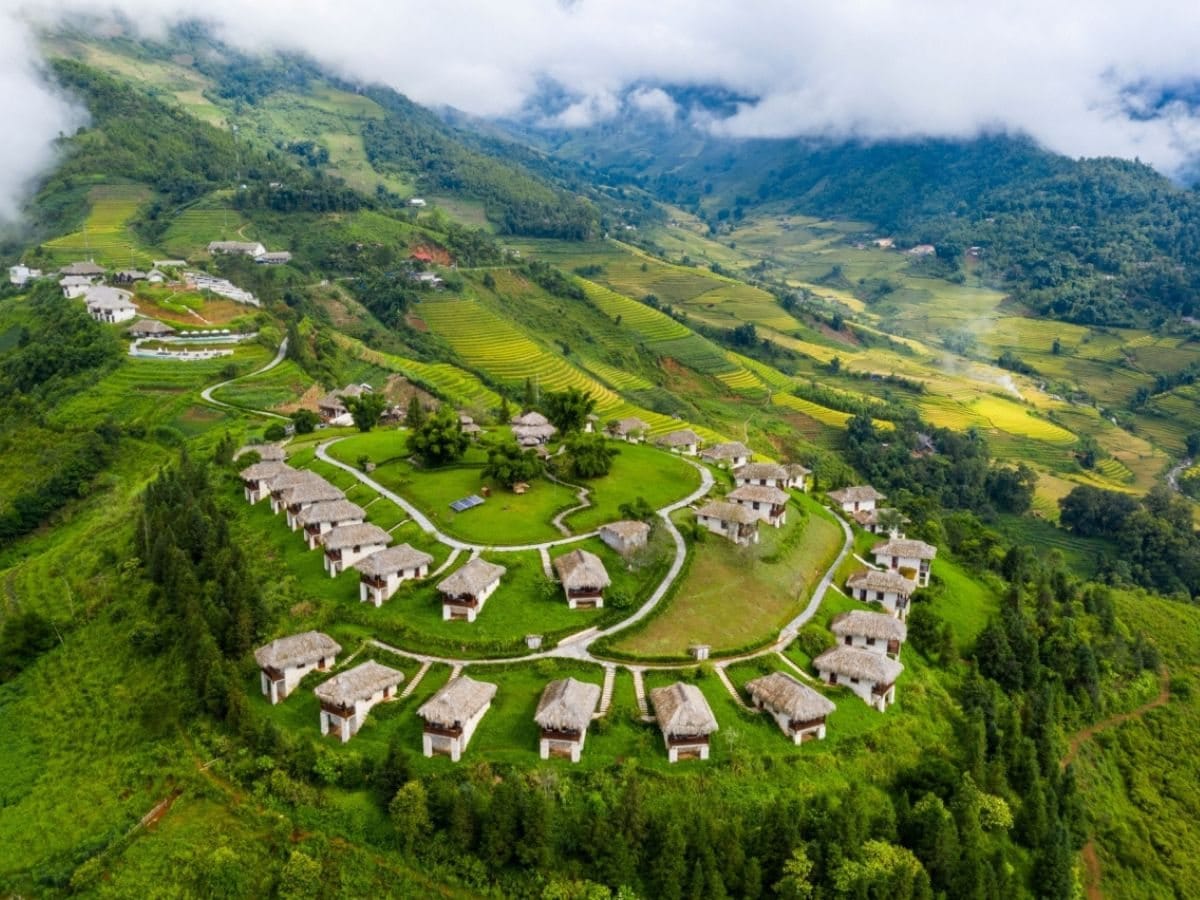
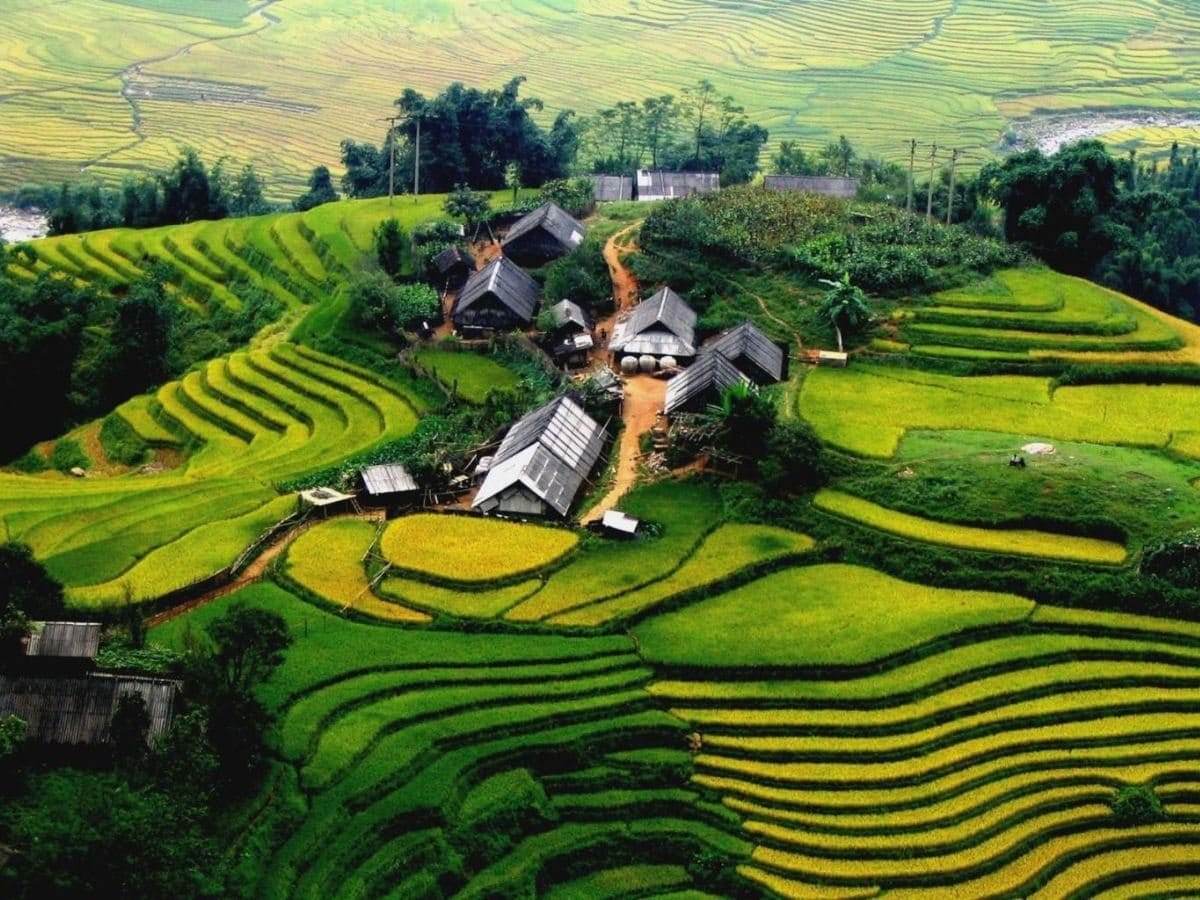
Ban Ho sits where the Muong Hoa stream meets the La Ve stream, far lower than Sapa town, so the air is usually warmer. Around it are Tay stilt houses and rice terraces.
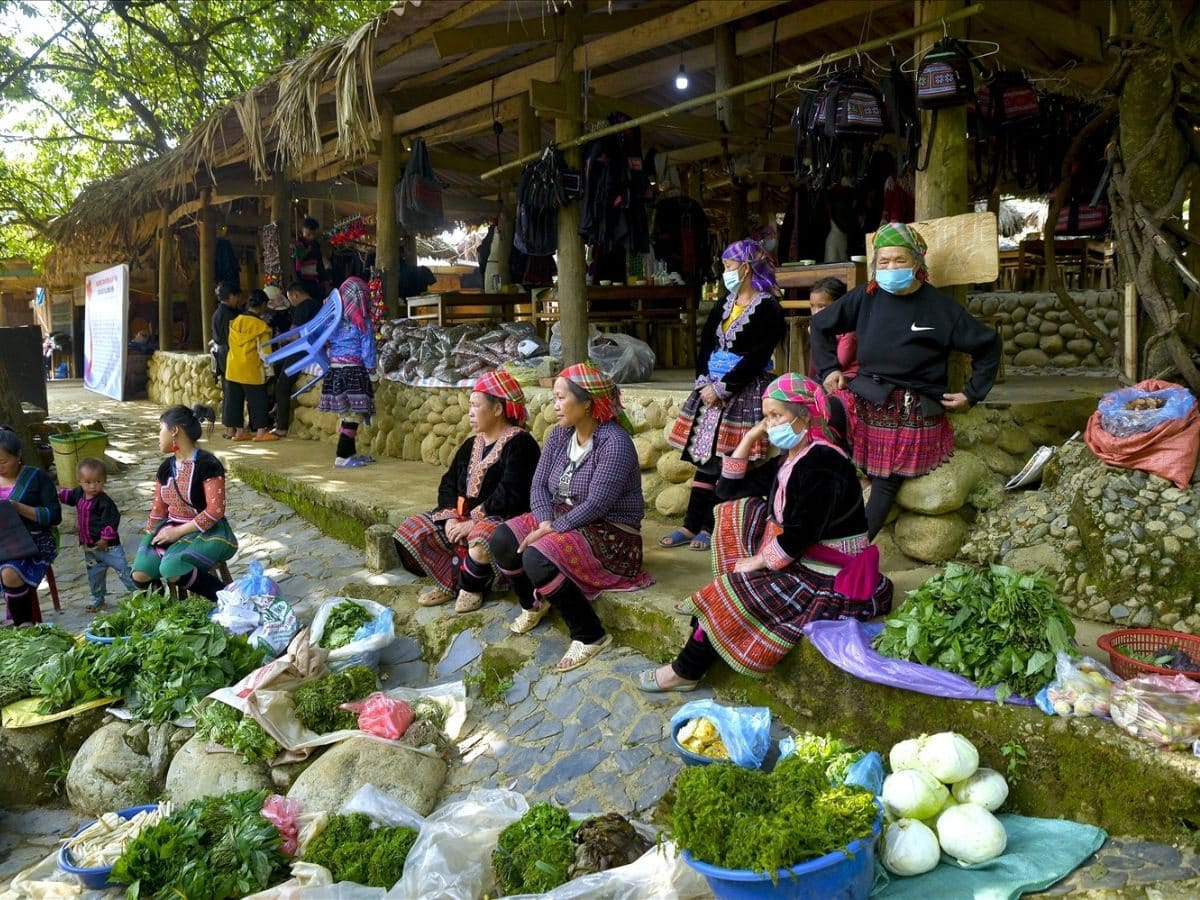
The Tay are the majority; Hmong, Dao and Giay families also live in the area. A homestay dinner typically includes stream fish, pickled bamboo shoots and sticky rice.
The story of the hot spring
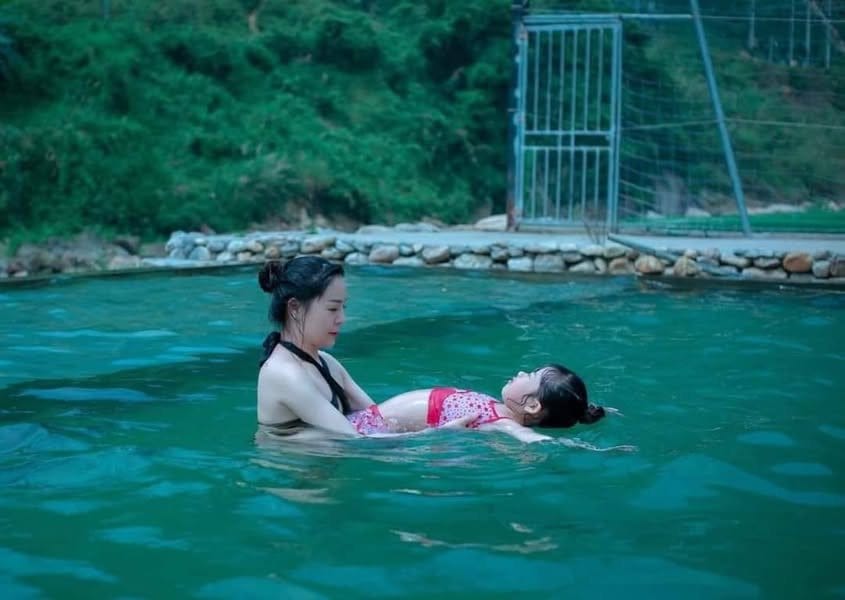
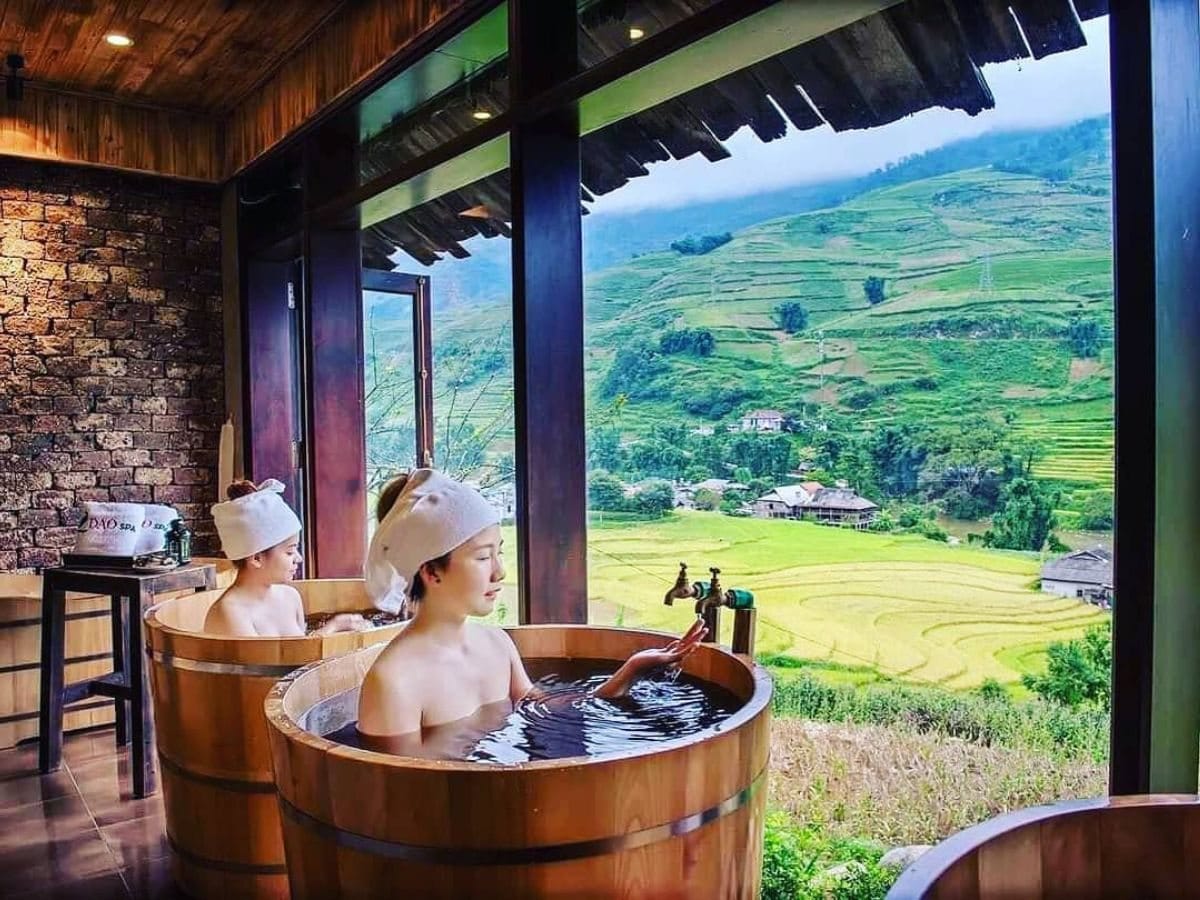
The hot mineral spring is in Ban Den hamlet, on the edge of the valley beside the Muong Hoa stream. According to Lao Cai Newspaper (March 2021), the source had once been buried; villagers located it again, piped the water down and built shared and private bathing pools with water overflowing continuously from the source. The water is about 30–40°C, comfortable all year. Boarding-school students from the commune also come here to wash in the cold months.
Ban Ho is also tied to Seo My Ty Lake up on the mountain: water from the lake is piped down to the Seo Chong Ho hydropower station, which stands in Ban Ho commune. Since June 2025 the new Ban Ho commune combines the former Thanh Binh and Ban Ho communes.
Getting there
Ban Ho is about 23.6 km by road from Sun Plaza, down the valley past Lao Chai and Ta Van. The mountain road is winding and rough in places after rain – travel in daylight.
- Motorbike: fine if you are used to mountain roads; fill up in town.
- Taxi / hired car: agree the return in advance, since cars are hard to find in the village.
- On foot: Giang Ta Chai to Ban Ho is about 11.9 km, the longest leg of the Muong Hoa trek (26 km in total from Sapa). Most people split it over two days and sleep in Ta Van.
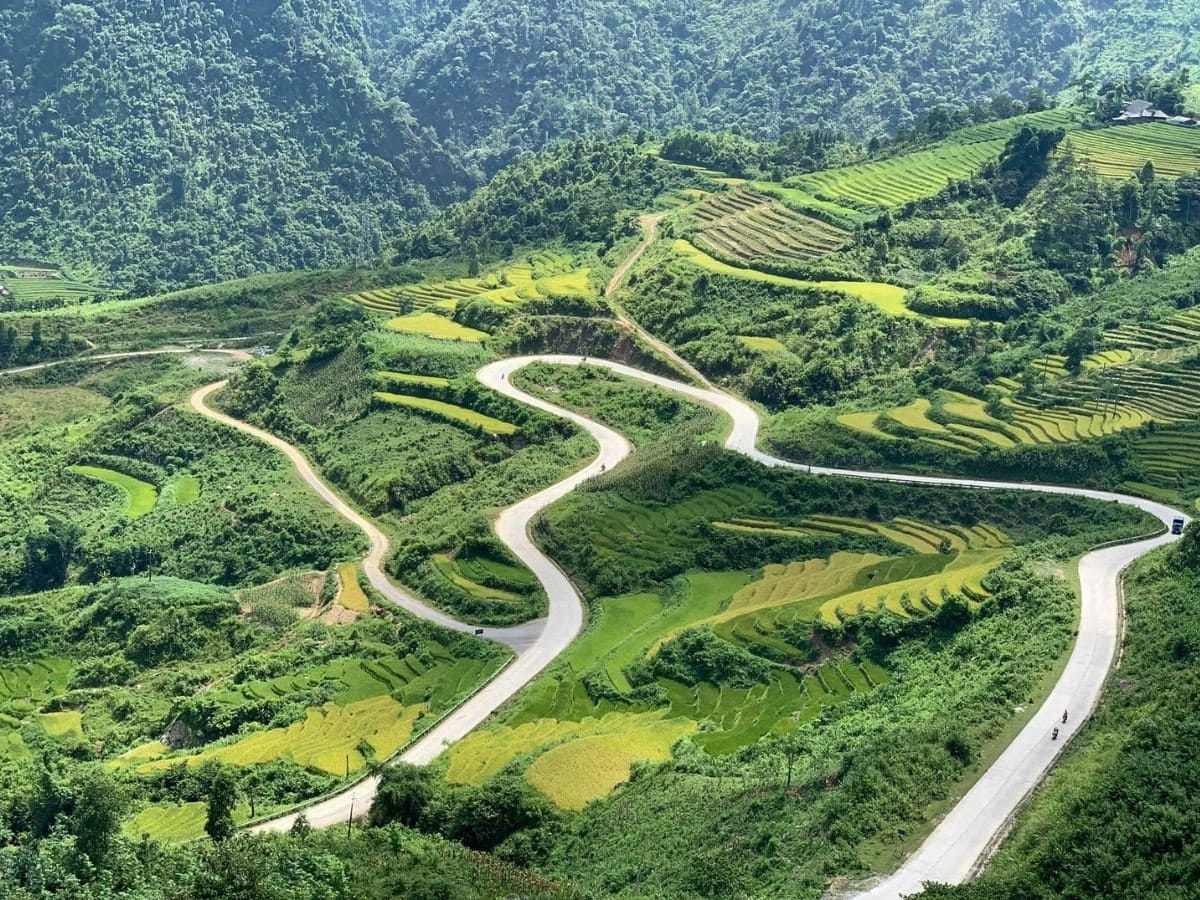
Photo spots & things to do
- Soak in the hot spring: in Ban Den hamlet; shared or private pools, at their best after a day's walking.
- Walk the Tay village: stilt houses and fields along the stream.
- The confluence: where the La Ve stream joins the Muong Hoa.
- Sleep in a stilt house: stay a night and eat with your hosts.
- Photograph the terraces: along the road down from Ta Van, best in the green- and golden-rice months.
Best time to visit
- May–June: water-pouring season on the terraces.
- July–August: green rice, but the wettest months – slippery roads, landslides and fast-rising streams.
- September: golden rice along the valley.
- October–December: sunny, dry and clear – the easiest time for both riding and walking.
- December–March: cold weather, when a hot soak is most welcome.
Tips & safety
- We could not find an official price list for the baths; Lao Cai Newspaper only describes prices as modest. Ask your homestay about prices and opening hours.
- Bring small cash, swimwear and a towel.
- Do not swim in the natural stream after heavy rain – it rises quickly and runs fast.
- The Giang Ta Chai – Ban Ho leg is long and empty: carry at least 1.5 litres of water, start early and take a local guide.
- Head back to town before dark.
Combine it in a day
By vehicle: visit Lao Chai and Ta Van in the morning, have lunch in Ta Van, then continue to Ban Ho for the hot spring. On foot it is the end of the two-day trek through Cat Cat, Lao Chai, Ta Van and Giang Ta Chai. Seo My Ty Lake is on a different branch road that turns off at Ta Van – do not try to fit both into one day.
Add a paragliding flight
Ban Ho is in the same valley as the flying site: the landing field by Lao Chai bridge is about 9.3 km from Sun Plaza, and Ban Ho lies further down towards the end of the valley. You can fly in the morning (about 90 minutes for the whole package) and then drive on down to Ban Ho.
If you are walking the full long trek, keep a separate morning for the flight rather than squeezing everything into one day.
Quick questions
How far is Ban Ho from Sapa?
About 23.6 km by road from Sun Plaza (many articles round it up to nearly 30 km from the centre). The road is winding, so travel in daylight.
Where is the Ban Ho hot spring and how hot is it?
In Ban Den hamlet, beside the Muong Hoa stream. Lao Cai Newspaper reports water of about 30–40°C, piped into pools built by local families.
How much does the hot spring cost?
We have no verified figure; the local newspaper describes prices as modest. Bring cash and ask on the spot.
Can I visit Ban Ho in one day?
Yes, by motorbike or taxi. If you walk from Sapa (26 km), split it over two days and sleep in Ta Van or Ban Ho.
More photos