Cat Cat is a Hmong village south-west of town at the foot of the Hoang Lien Son range, about 2–3 km from Sun Plaza and walkable downhill. It is also the first leg of the Muong Hoa Valley trek.
Overview
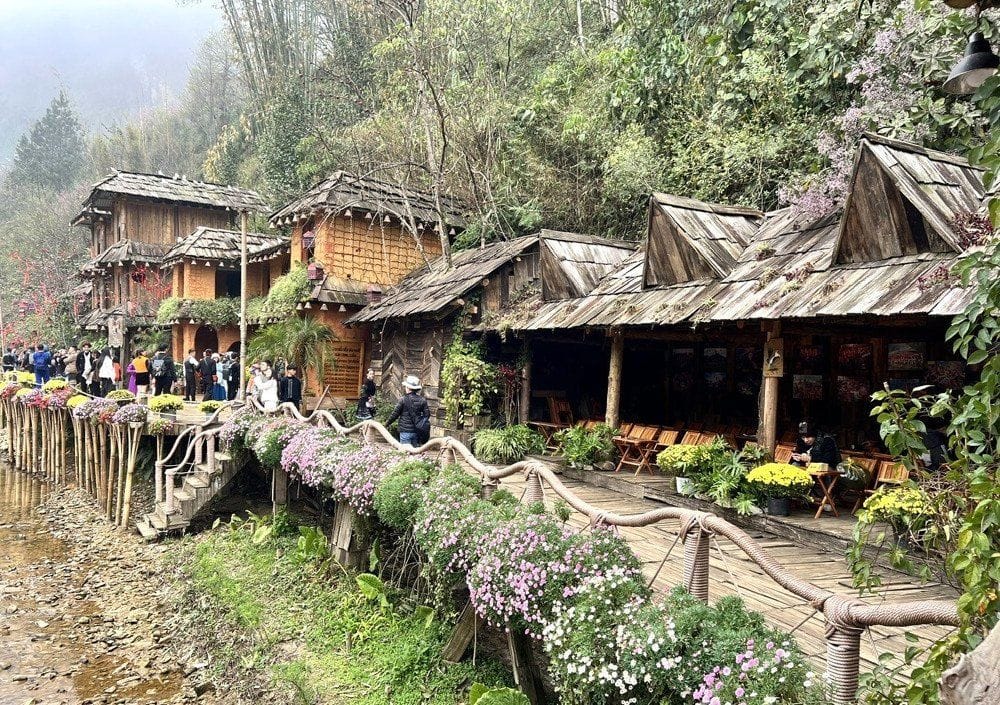
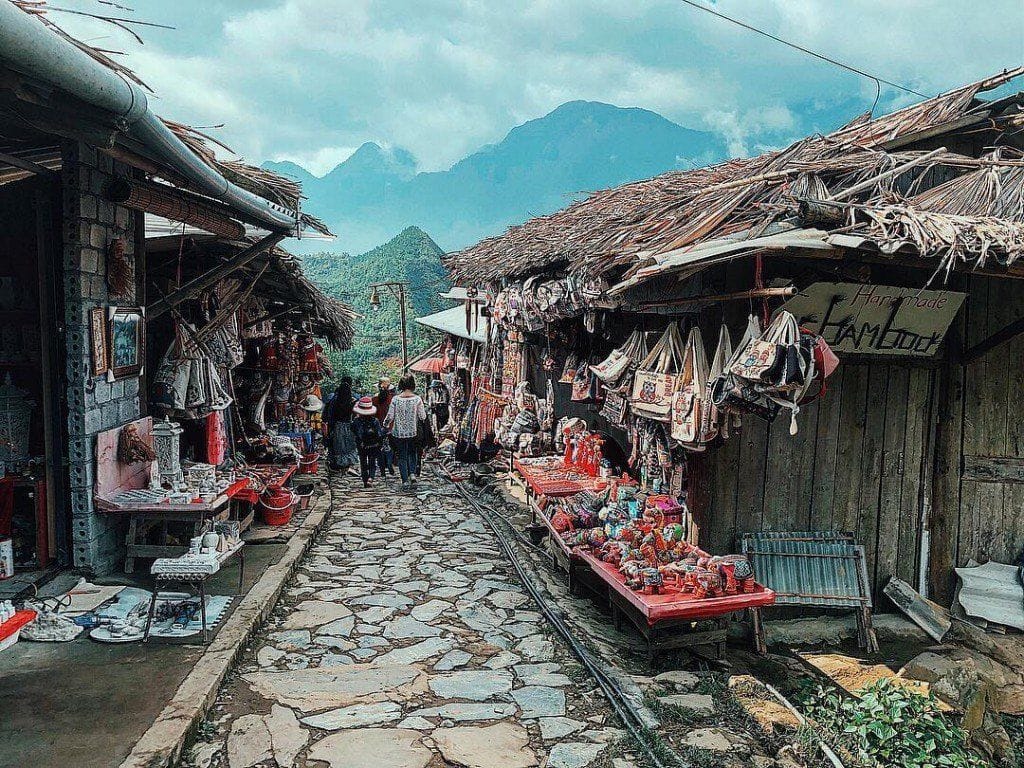
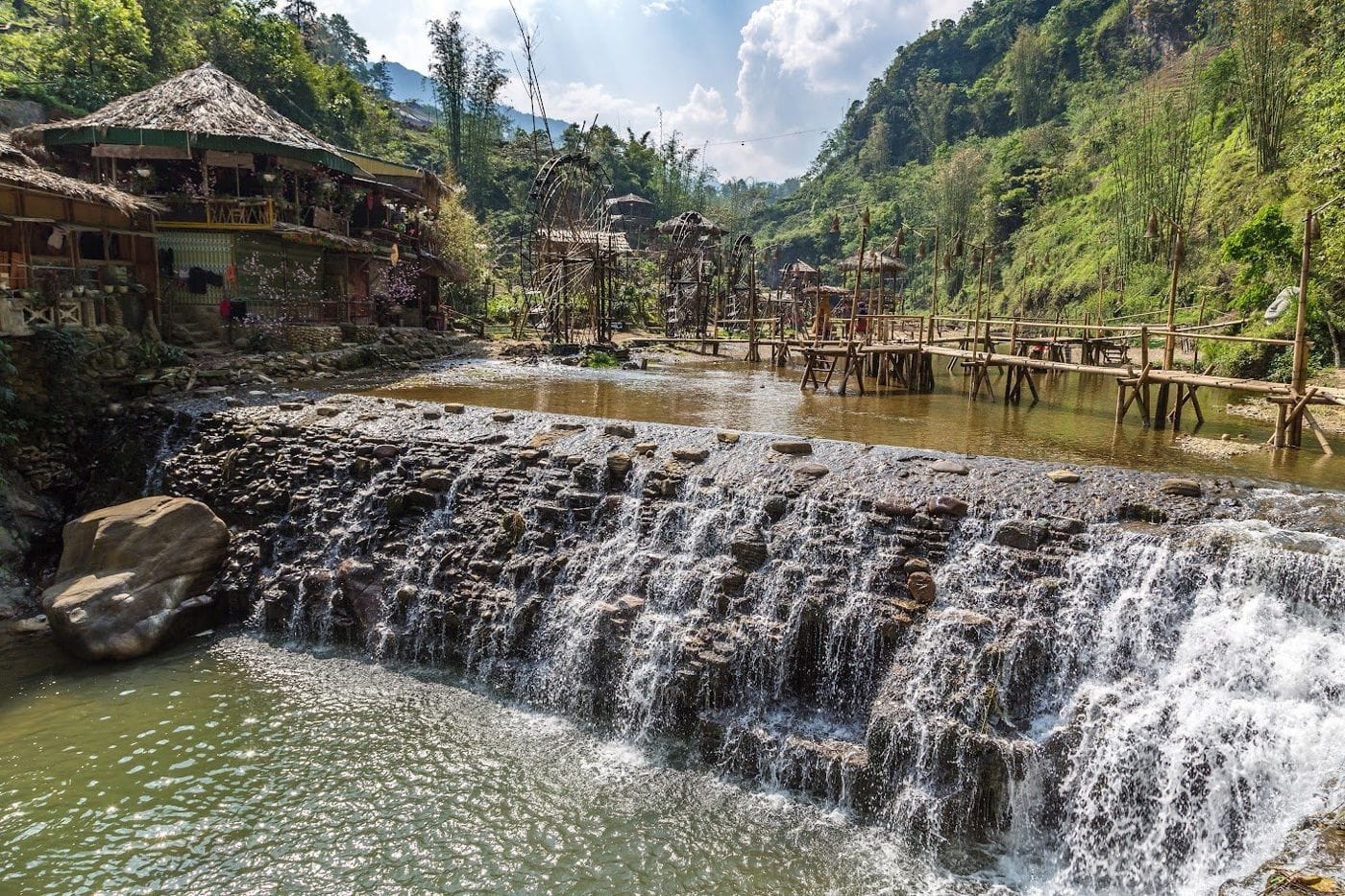
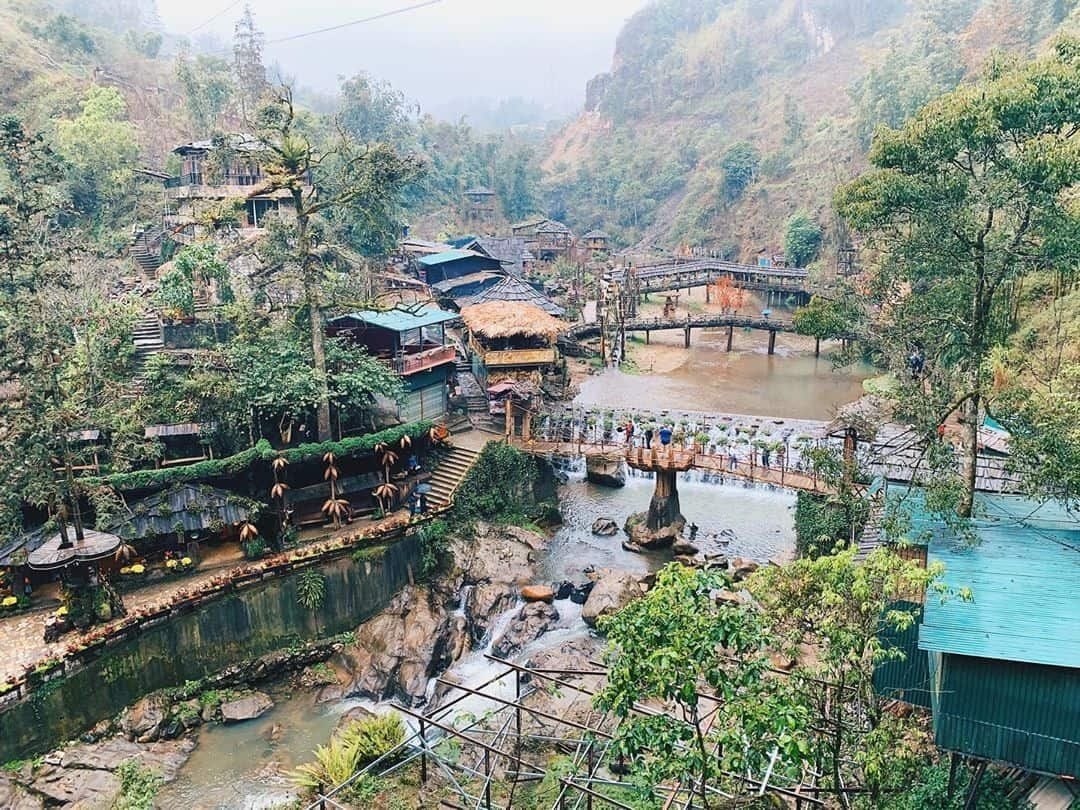
You walk down into the village on a stone-paved path, past rammed-earth houses, linen-weaving workshops and big bamboo water wheels, ending at Cat Cat waterfall on the valley floor.
According to Lao Cai Newspaper, the heart of the village is where three streams meet, Tien Sa, Vang (Gold) and Bac (Silver); beside the waterfall are two suspension bridges, Si and A Lu. The whole visit takes about two to three hours.
History, the name and culture
Cat Cat is a Hmong village that took shape in the mid-19th century. There are two explanations for the name. The most common is that in the early 20th century the French called the waterfall here a "cascade", which local speech turned into Cát Cát. The other is that the name means "below the market" in Hmong.
The valley floor holds another trace of the French period: Cat Cat hydropower station, built from 1925 with an original design capacity of 50 kW, mainly to power the telegraph system and the French garrison in Sapa. Lao Cai Newspaper describes it as one of the first two hydropower stations the French built in Indochina. It stopped generating in 1993, when the national grid reached Sapa; today the building is a visitor site and a stage for traditional performances.
A traditional Hmong house in Cat Cat usually has three bays, a roof of po mu (cypress) planks and posts resting on stone slabs. Villagers still grow flax and weave it, dye with indigo, work silver and forge farm tools.
Getting there
From Sun Plaza head south-west, the same direction as the Fansipan cable-car station. The way down is easy; the way back up is steep and more tiring.
- Motorbike or taxi: as far as the ticket gate; inside the village you mostly walk
- Electric buggy: an optional ride back up from the valley floor, charged separately
- Continuing the Muong Hoa trek: Sapa → Cat Cat 2.9 km → Y Linh Ho 4.1 km → Lao Chai 2.4 km → Ta Van 2 km
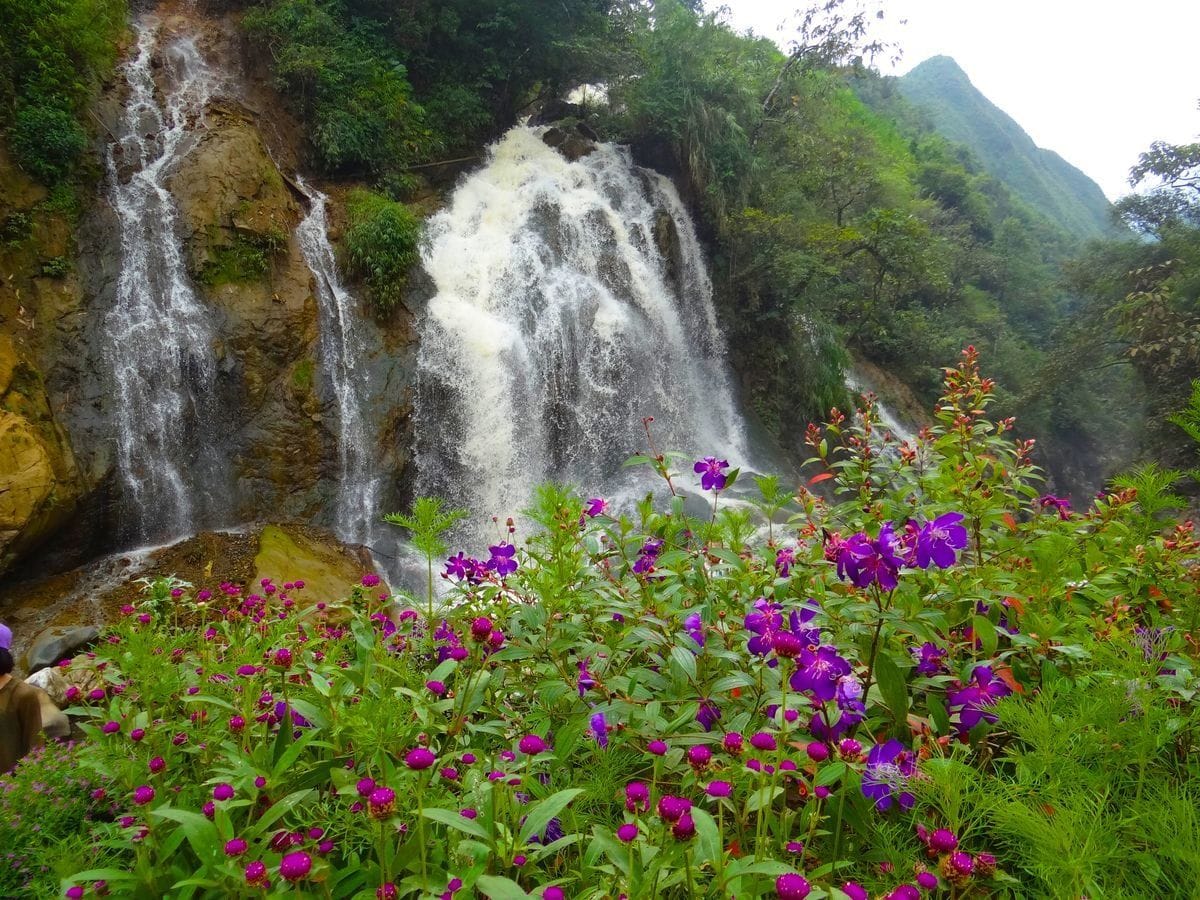
Photo spots and things to do
- Rammed-earth and timber houses: traditional homes along the path down
- Linen and indigo workshops: watch flax being spun, woven and dyed
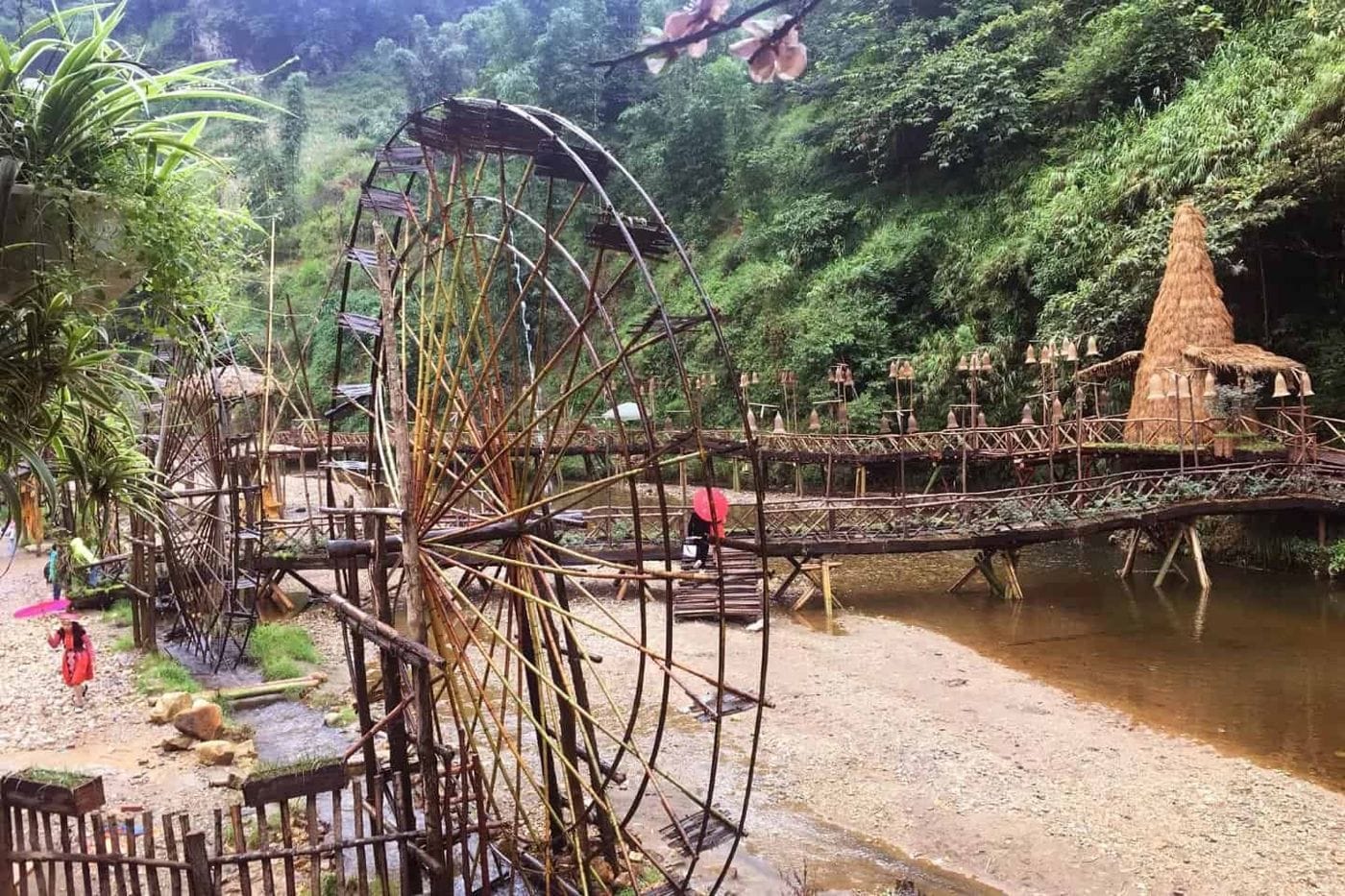
- Water wheels: large bamboo wheels beside the fields and stream, with a plank walkway alongside
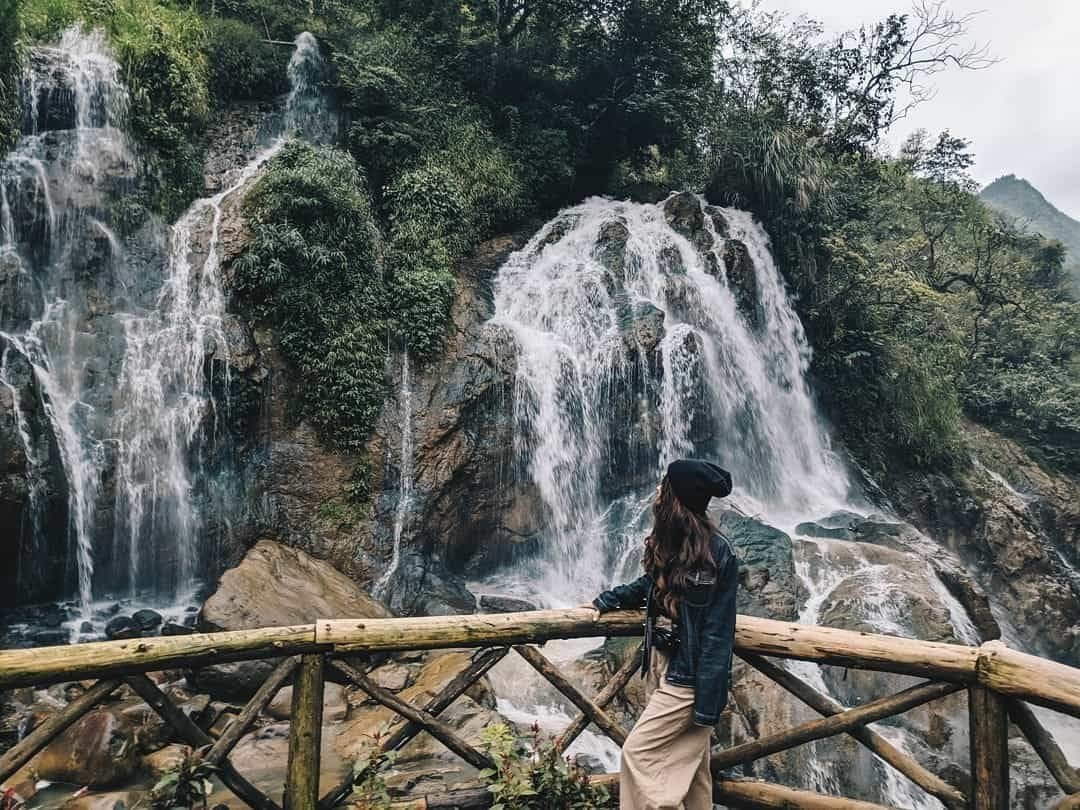
- Cat Cat waterfall (Tien Sa): the end point on the valley floor
- The old hydropower station: now a venue for traditional performances
Best time to come
The terraces around the village change with the season: flooded in May and June, green in July and August, golden in September. October to December is sunny, dry and clear, the most comfortable time to walk. In cloud-hunting season, December to March, mist often fills the valley and the stone path is damper and more slippery.
Reference costs
Adults 150,000 VND, children 80,000 VND (prices gathered in August 2026; check before you go). Some older sources list lower prices, so treat this as a guide. The buggy back up is extra. Opening hours differ between sources; if you plan to arrive very early or late, ask first.
Tips and safety
- Wear shoes with grip; the stone path and steps are slippery in rain.
- With older travellers, or tired legs after Fansipan, take the buggy back up.
- At the waterfall, stay inside the railings; the rocks by the stream are wet and very slippery.
- Ask before taking portraits of villagers.
- It is very close to the centre, so you are back at your hotel quickly if it rains.
Pairing it with other stops
Cat Cat is on the same side as the Fansipan cable-car station, so Fansipan in the morning and Cat Cat in the afternoon is the tidiest plan. Keen walkers can carry on through Y Linh Ho to Lao Chai and Ta Van. Moana Sapa is on the other side of town, so leave it for another half-day.
Combine with paragliding
The paragliding take-off at Hang Da village is south-east on the Muong Hoa road, so it is not on the same route as Cat Cat. The sensible pairing is to fly in the morning, when the wind is usually calmer, and walk down to Cat Cat in the afternoon. A flight takes about 90 minutes including the ride back to the centre, which leaves your whole afternoon for the village.
Quick questions
How far is Cat Cat village from central Sapa?
About 2–3 km south-west of Sun Plaza. You can walk down; the return is uphill.
How long does a visit take?
About two to three hours, including photo stops.
How much is the ticket?
Adults 150,000 VND and children 80,000 VND, as gathered in August 2026. These are reference prices; check before you go.
Why is it called Cat Cat?
The most common explanation is that the name comes from "cascade", the French word for the waterfall here. Another view is that it means "below the market" in Hmong.
More photos